Mood Boards and PPC Advertising
Mood boards may sound more like something from a designer’s toolkit than a PPC strategy, but they can be a surprisingly useful way to brainstorm stronger Performance Max image assets. So, to me, this is more of a fun visual brainstorming concept you can try with pretty low lift on your part. The concept here is to use ChatGPT (or the AI-image generation tool of your choice) to analyze a business’s visual style and message tone, and then have it create stylish mood boards based on different concepts, from which you then can create images that meet the Google Ads’ image specifications for use in your Performance Max (PMax) campaigns.
The business we are using for this example is WetPlants, a company that sells aquatic plants for ponds and aquariums. (Check them out at wetplants.com.)
I like simple prompts, so I used this one to get the ball rolling: “Analyze our business and provide a visual Mood Board that fits our style/our products/our messaging. And then we’ll play with different moods to adjust our messaging based on the mood. Understand?” And I provided the URL https://www.wetplants.com/. That was it.
ChatGPT gave me the response below, which confirmed it understood my directive.

I understand. I’ll first anchor the mood board in what WetPlants actually sells and how the brand presents itself, then create an initial visual direction we can adjust into alternate moods afterward.
WetPlants’ strongest natural lane is “lush, approachable aquascaping,” not sterile aquarium supply. The business signals family owned, value conscious, and plant- passionate, with key shopping paths around Build Your Tank, plant package deals, aquarium plant types, pond plants, hardscape, and wholesale.
For the first mood board, I’m grounding it in: dense aquatic greens, glass and water reflections, natural driftwood/stone textures, beginner friendly plant bundles, healthy shipped plants, and a warm “we love this hobby too” voice. Package deals like Starter Package, Turtle Safe Aquatic Plant Packs, Betta Fish Package, Low Maintenance Plant Pack, and Bulk Aquatic Plants Box suggest messaging should make plant buying feel guided, easy, and exciting rather than technical or intimidating.
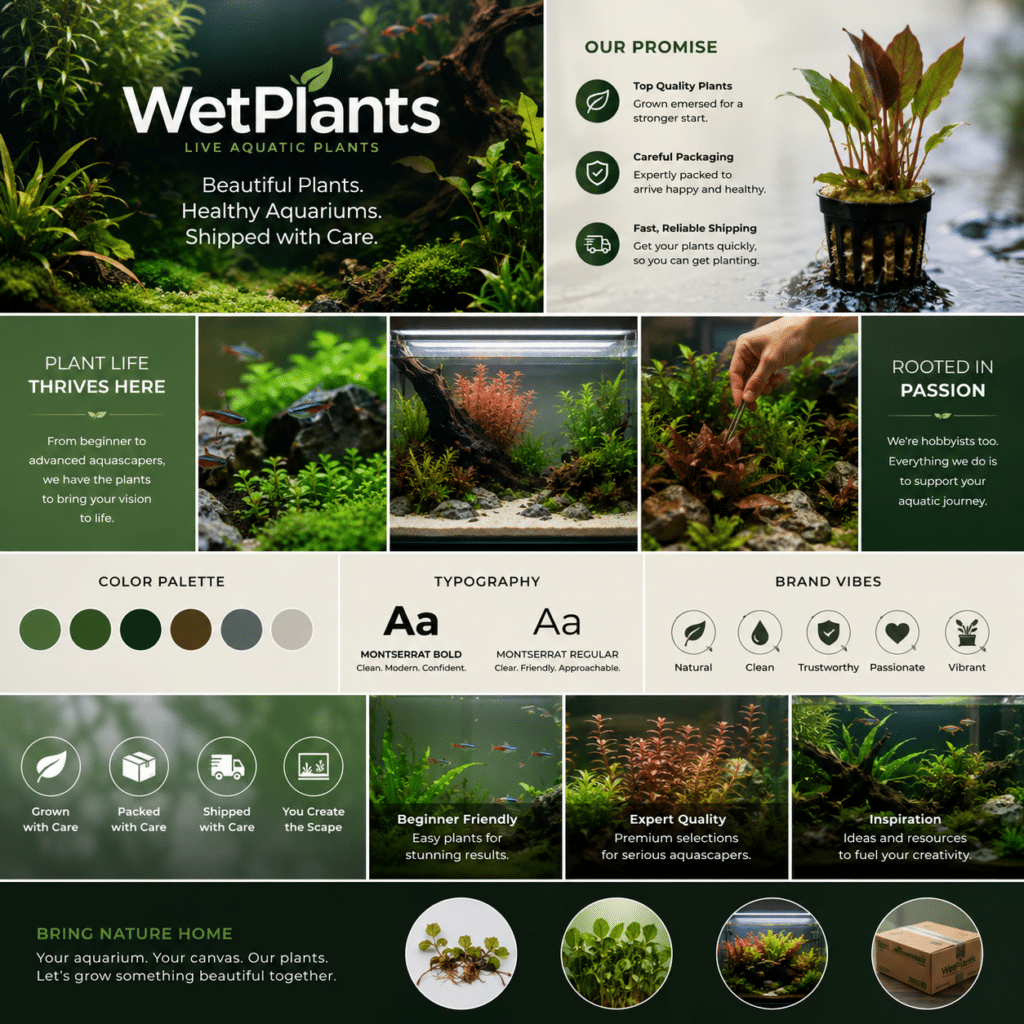
Initial mood direction: “Freshwater Sanctuary.” It should feel alive, calm, clear, healthy, and hobbyist friendly. Think emerald aquatic plants, soft filtered light, clear tank glass, floating leaves, driftwood, smooth stones, subtle bubbles, natural packaging, family shop warmth, and CTAs like Build Your Tank, Bring Your Aquarium To Life, Healthy Plants, Happy Tanks, and Picked, Packed, Shipped With Care.
The first mood board result came in as shown below.
Then I asked: “Now how can we directly translate our Mood Board into the 4 accepted Google Ads Performance Max image sizes?”
ChatGPT gave me a reply, plus a detailed plan of how it was going to approach the images.
The right way to do it is to treat the mood board as a creative system, not as one single image that gets resized. The goal: Translate the WetPlants mood board into a modular ad framework that can be reformatted into the core Performance Max asset sizes while keeping the brand consistent.
And that answer was key, especially the part about treating the mood board as a creative system and not as some image to just sloppily resize.
ChatGPT also gave me a very detailed step-by-step plan on how to approach the images. Here is a summarized version of it:
- Extract the mood board’s core ingredients into clear visual, messaging, and tone rules.
- Build a flexible master layout system with a hero visual, brand anchor, short message, and CTA.
- Adapt the system into the four PMax formats rather than simply resizing one image.
- Design each format for its best use case, with landscape for wide storytelling, square for versatility, portrait for mobile, and vertical for immersive placements.
- Create multiple creative themes so each image set has a distinct message angle while staying on brand.
- Use safe zones so logos, text, and key visuals stay readable across crops and placements.
- Keep on-image text minimal so the image supports the ad instead of trying to explain everything.
- Lock consistent brand elements like palette, logo treatment, typography, and visual style across the full set.
- Produce one complete four-size set per mood before moving to the next mood direction.
And then ChatGPT produced the four images below from the mood board.
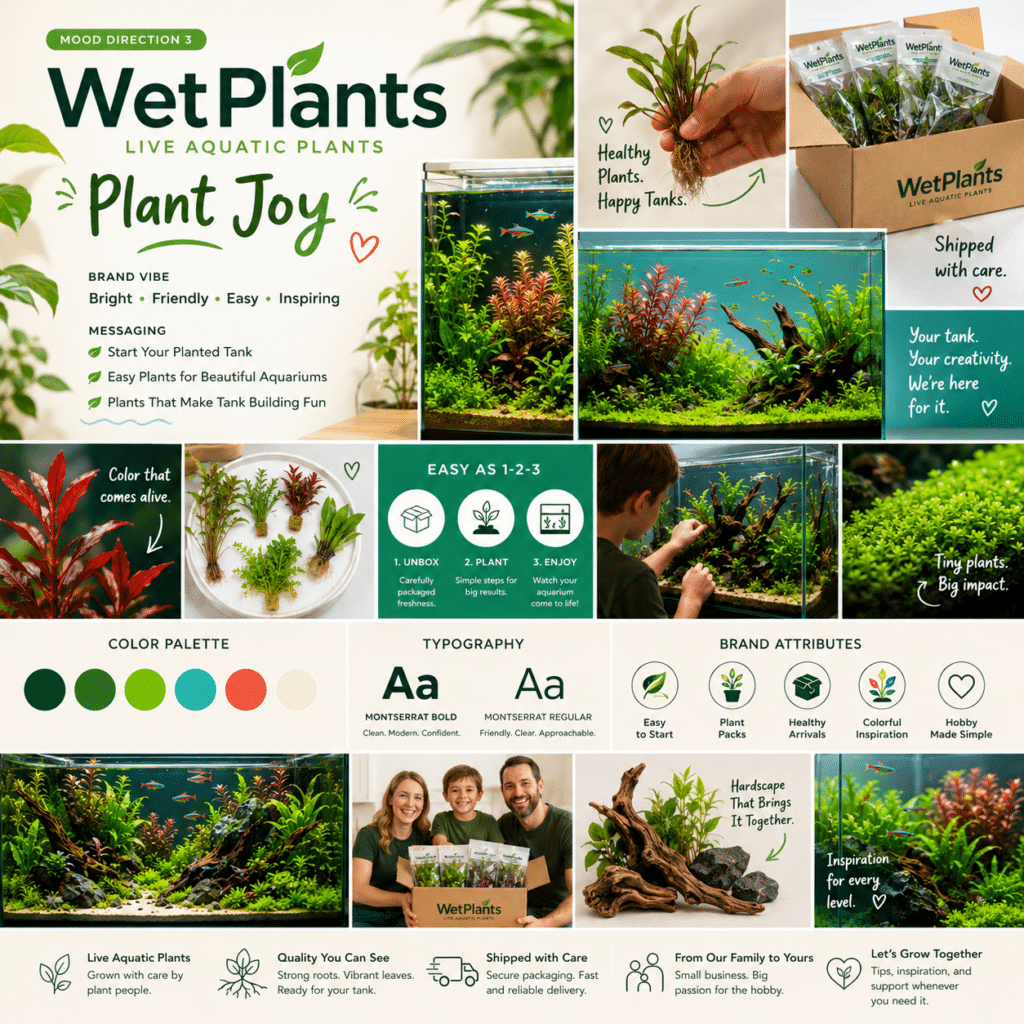
For the next set, I wanted something a little more family-friendly in tone, something a little more joyful, so I requested a new mood board, which resulted in the image below:
And then from there, I requested another set of PMax images, which generated the mood board below:
This was a pretty easy effort to generate a grouping of PMax images that share some visual concepts from a coordinated mood board. Obviously, you can take the mood boards in infinite directions and try all manner of moods, tones, and styles to see what comes out of it. I just find it valuable to see that consolidated mood board first before generating a set of PMax images to make sure we’re steering our set in the direction we want.