Happy Birthday, Now Buy Yourself a Present! The Potential of Birthday Emails
Key takeaways ✨
|
Readers may be surprised to learn I have two birthdays (just like the King of England!). One is my real birth date. The other is my email birthday—the one I provide (if asked) whenever I sign up with new email programs. I recently “celebrated” the latter and received over fifty happy birthday emails from brands around the world.
Some made me genuinely happy; others left me wondering why they even bothered. Together they’re a great case study in what makes a birthday email work—and why it deserves a starring role in your customer journey.
Table of contents
Who benefits from collecting birthday data?
A customer’s date of birth is powerful personal data, and both sides benefit when it’s used well.
For brands, birthday emails improve life-stage segmentation and personalization. They also help predict what customers will buy. Birthday messages also reliably outperform generic campaigns on opens and clicks.
For consumers, birthday rewards—discounts, free products, bonus customer loyalty points, sometimes access to age-restricted benefits—are genuinely something to look forward to. There’s also the simple pleasure of feeling known and being seen. Birthday marketing is personal, and it deepens the emotional connection with a brand.
But it’s also a case of “use it or lose it,” as Validity data shows. Whenever we sign up with a new brand, we always provide our DOB if asked. So far this year, 124 birthday emails should have been triggered for me—but only 43 arrived (35%). That’s shocking! Don’t collect data you won’t use.
Birthday tactics that are worthy of celebration—and ones that are not
Birthday email campaigns tend to fall into a few familiar buckets.
- You get … nothing!
More common among premium brands, whose high-net-worth clientele presumably aren’t expecting freebies—it’s the thought that counts. In a few cases, the “gift” was actually a suggestion to buy more products to celebrate.
- Put the “disco” into discount.
By far the most common tactic is a birthday discount. They usually have a minimum spend required, but often have no upper limit. Just make sure the discount is generous enough that it doesn’t feel like a token gesture.
- Just desserts.
Many restaurant brands offer a free birthday dessert—with the catch that you have to buy an entrée first. We compared average entrée and dessert prices to see what these “gifts” are really worth.
| Restaurant | Avg. Entrée | Avg. Dessert | Effective Discount |
|---|---|---|---|
| Seasons 52 | $28 | $4–$9 | 12–24% |
| Olive Garden | $18.50 | $12 | ~39% |
| Yard House | $21 | $10 | ~32% |
| Cheddar’s | $18 | $7.50 | ~29% |
| LongHorn Steakhouse | $26 | $11 | ~30% |
| Applebee’s | $17 | $6 | ~26% |
Viewed this way, the average discount works out to a healthy 30%—with Olive Garden (39%) the best place to celebrate.
- Get in sequence.
Most brands give customers a window (usually 30 days) to redeem their gift. The best ones turn it into a sequence: Calvin Klein sends an advance warning, an on-the-day message, and a reminder—maximizing the odds the gift actually gets used.
- Think dynamically.
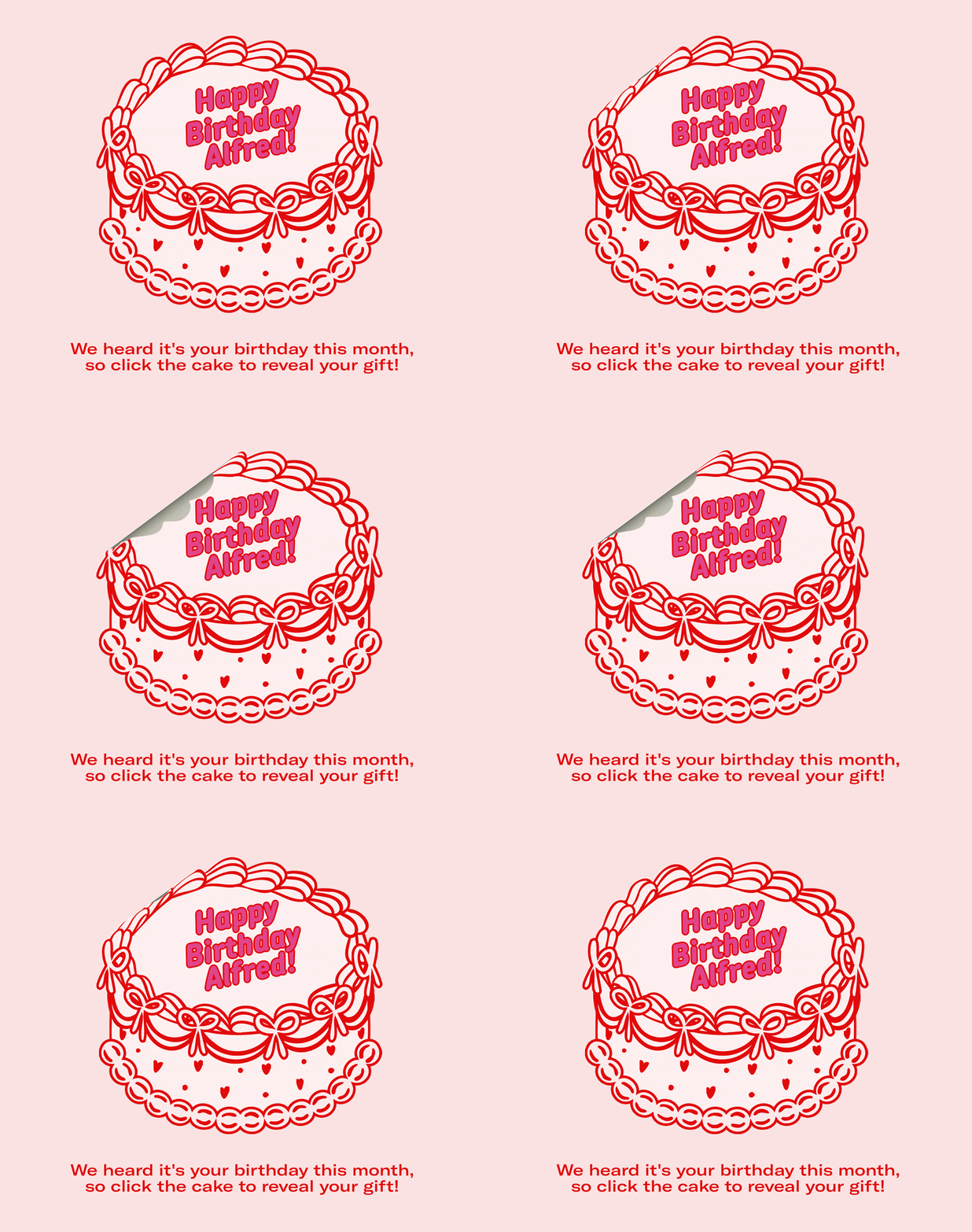
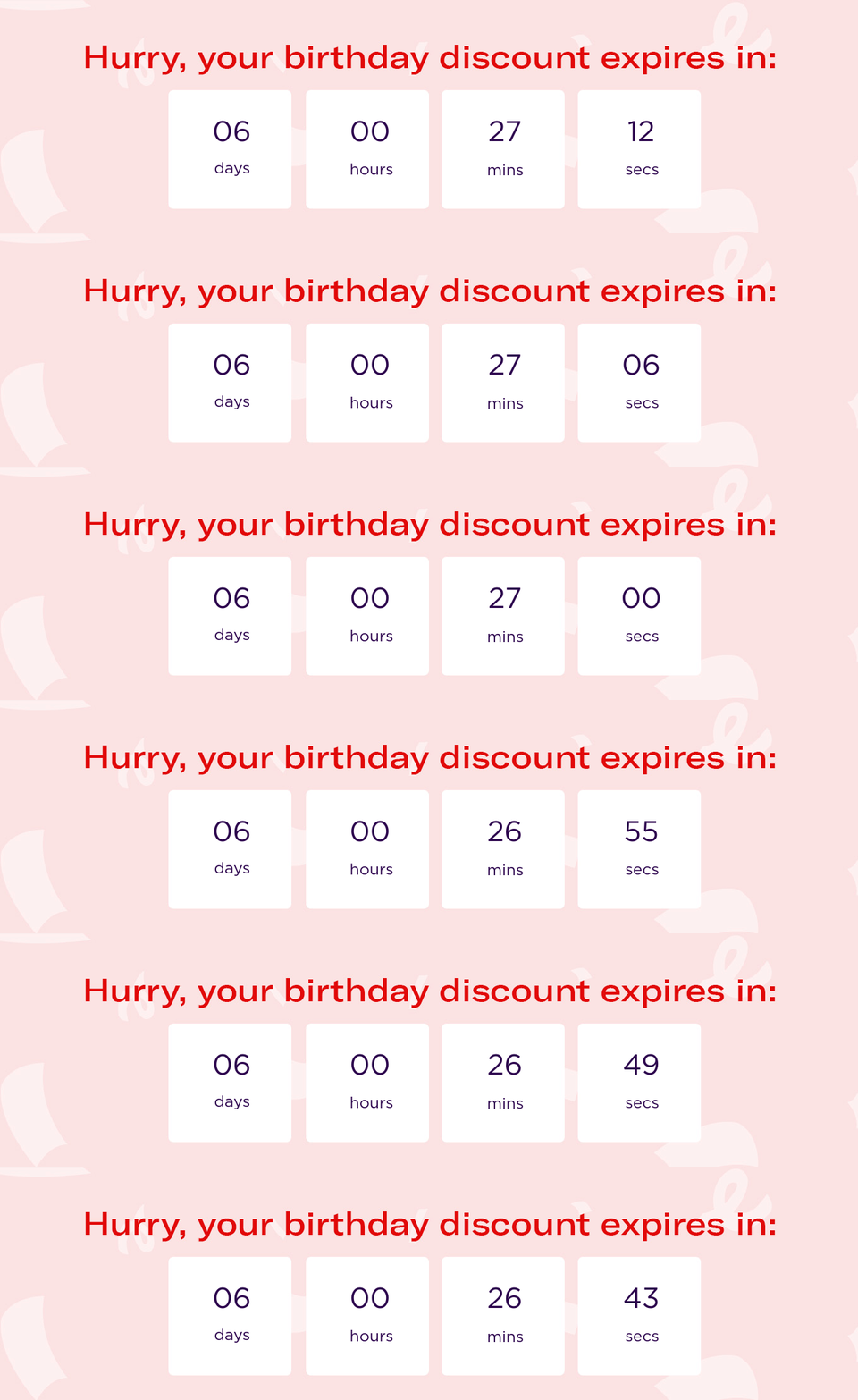
Surprisingly, few senders use animation or dynamic content, despite birthdays being made for flickering candles and “open your present” interactivity. Virgin Australia nails it: the on-the-day email features an animated cake that reveals the discount, and the follow-up uses a countdown timer to add urgency.
The best birthday presence
So, amid the flood of “here’s your birthday discount” emails, who made me feel truly valued? Burger King, hands down, with “Enjoy a free bday Whopper.” No minimum spend, no conditions—just a free burger on your special day!
Honorable mentions go to:
- Bill’s Restaurants. You have to book a table and buy a meal, but a free bottle of prosecco still feels like a real gift.
- Applebee’s.
- On-brand wordplay: “It’s your Bee-Day!”
- A clear offer: “Use code [xxx] to redeem a free dessert.”
- A reminder email: “Marqueta, don’t forget your FREE dessert!”
Evaluating the commercial impact of email discounts
Across the 50+ emails I received, the average discount (or discount equivalent) was 18%. That’s not unreasonable—a restaurant running at 4% net margin can only give away so much. But viewed as an investment in customer relationships, could brands do better?
The business case for investing in active customers is well established. Harvard Business Review found that acquiring a new customer costs five times more than retaining one. Bain & Company found that a 5% boost in retention can lift profits by up to 75%. Reactivating dormant customers falls somewhere in between: it’s cheaper than acquisition, but far pricier than just maintaining a strong relationship in the first place.
Experian’s Birthday Emails report found that birthday emails generate 481% more transactions and 342% more revenue per email than standard promotions—making birthdays one of the highest-performing touchpoints in the customer lifecycle. By comparison, Dotdigital research found win-back emails (even with an offer) redeem at just over 2%.
So maybe it’s time to upgrade the token birthday gesture. Brands routinely offer 25–40% discounts to win back disengaged customers, often with little success—so it makes economic sense to invest earlier, at the birthday, when engagement is higher, the emotional connection is stronger, and the cost is a fraction of the win-back campaign it could prevent. The case for prevention basically makes itself.
How to make subscriber birthday email effective
We’ve made the business case for birthday emails, but their personal nature means they have to be done right. Get them wrong—sent for the sake of it, adding no value, or built on bad data—and they’ll do more harm than good. Here are ten tips for getting birthday email marketing right.
- Put thought into your subject line. “Happy birthday” shows you remembered, but “Wishing You a Fantastic Birthday 🎈” conveys real sentiment.
- Same goes for the preheader—the example above was followed by “Get ready for a delightful surprise from Laneige 🎁,” amplifying the warmth and anticipation.
- Keep the tone positive—the goal is to make your customer happy and strengthen their relationship with your brand.
- Make the offer meaningful. It’s a chance to reward your best customers—and they’ll reward you back.
- Use everything you know about your customers to maximize personalization and relevance—and be hyper-vigilant about data accuracy.
- Use animation and dynamic content to raise the party vibe. A birthday is a special event—make the message a special experience.
- Send a birthday series: in advance to build excitement, on the day to share your wishes, and a reminder if there’s been no conversion.
- Suppress any other scheduled messages so the birthday email stands out in the inbox on the big day.
- Don’t mix the birthday offer with another (better) one in the same email—it makes the birthday feel like an afterthought.
- Watch out for message clipping—birthday offers often carry terms and conditions that get cut off if the email is truncated.
Get the birthday email right, and you create meaningful, positive interactions that strengthen your brand experience. Customers may not buy immediately, but they’ll be more likely to down the road—and become stronger advocates along the way.
Learn how Validity’s Intelligence Network can help you create, manage, and protect accurate segments from January 1st to December 31st every year.
AI-powered email intelligence
Built on Validity’s vast data network, Validity Engage removes risk and boosts email performance—so you can produce exceptional results in less time.