How and when to use it?
Conventional wisdom claims that beautiful email design improves engagement. So thousands of brands are sending newsletters that look like works of art, fighting for attention in the same crowded inboxes.
But standing out doesn’t always mean doing more. A plain-text email reads like a message from a real person, which is why it gets opened, read, and replied to. Done right, it can deliver better results than designed emails.
This article covers when text-based emails work, the mistakes that ruin them, and how to create one in Omnisend.
What are text-based emails?
Text-based emails are simple messages without complex graphics or layouts, which makes them feel more personal.
And it’s not only about text. You can still:
- Embed links
- Use stylistic elements like bold, italics, or underlining
- Include an image or two
Here are some of the key benefits of using text-based emails:
- Deliverability: HTML-heavy emails can trigger spam and promotional filters. Plain text has fewer elements that can get in the way of inbox placement.
- Mobile and accessibility optimization: Instant load times with no rendering issues, broken image icons, or layout failures across screen sizes and screen readers.
- Psychological aspect: Plain text feels like a personal message sent directly to one person.
The numbers back this up. In HubSpot’s A/B tests, the simpler email won every time: the plain-text version earned 42% more clicks than the same email with a GIF, and the version built on an image-heavy HTML template ended up with 51% fewer clicks than plain text.
What not to do with text-based emails
In 90% of articles, you’ll find best practices – but not in this one. Let’s examine what not to do, because that’s where this format usually falls apart.
Sending too frequently
If you send text-based emails too often, they lose their uniqueness.
Text-based emails bring a high ROI because they feel different from everything else in the inbox. However, when you use them too aggressively, they become just another regular campaign. Be cautious with your sending frequency.
Being too salesy
Text-based emails shouldn’t be pure promotional blasts. Without a personal touch, useful announcements, or company news, your email reads like a door-to-door salesperson knocking at the door. It simply isn’t effective.
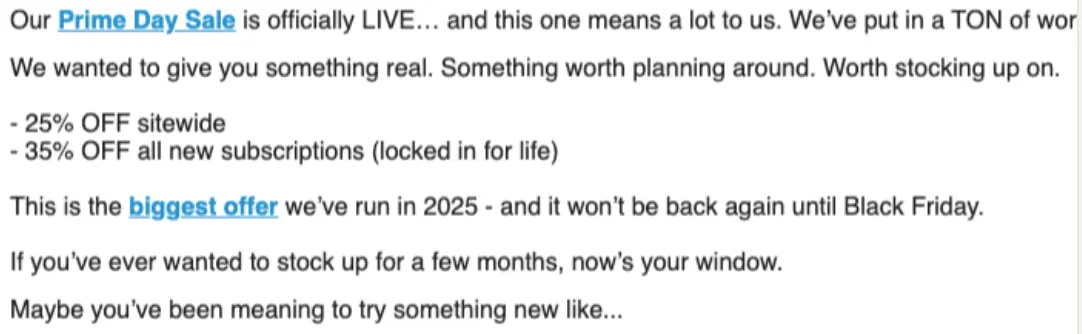
Using aggressive subject lines
Phrases like “100% free,” “act now,” or “risk-free” actively harm your communication. They ruin any chance of building a genuine relationship with your audience, look spammy, and turn readers off immediately.
Writing long essays
Sharing your entire brand story in a single email to build an emotional connection won’t work. Real people keep their communication straightforward — they don’t send personal emails with five paragraphs and 600 words.
How to use text-based emails?
Everything is pretty simple, and text-based emails can work exceptionally well.
There are two main options: email campaigns and automations.
Let’s start with automations.
- Welcome Flows: Use text-based emails around day two or three of the flow. For example, a message from the CEO or another key person shows personal attention and help build trust alongside your promotional offers and discounts.

- Abandoned cart or checkout: Use text-based emails in the later stages of the flow by simply asking customers what is stopping them from making a purchase. This can help you identify concerns or obstacles that need to be addressed.
- Asking for a Product Review: This approach brings two benefits. You show customers that you genuinely care about their experience and that their feedback matters to your company. At the same time, you can offer a special discount as a thank-you.
- Back in stock: If people have subscribed to back-in-stock notifications but you’re still experiencing delays in restocking the product, a product director or CEO could personally apologize and suggest alternative products worth checking out.
And here are some campaign ideas:
- Early access to sales or new product launches to VIP customers: Send a very short message with a clear CTA (call to action): let customers know they’re on the VIP list and give them a special offer. The sense of exclusivity is always welcome.
- Sharing a brand or some product story: This campaign should focus less on direct sales and more on telling your audience what makes your brand great and unique, so they form an emotional attachment.
- Customer thank-you email: A thank-you email is a great way to show appreciation and build customer loyalty. Sometimes you don’t need customers to buy anything right away — you just need to show them attention to turn them into repeat buyers.
How to create a plain text email in Omnisend?
Creating a text-based email in Omnisend takes a few minutes:
- Go to Campaigns → Create campaign → Email Campaign.
- Fill in your subject line, preheader, and sender details as usual.
- In the template selection step, filter by the Text only theme and pick the Text Only Campaign template.
- Write your message. The editor is intentionally minimal: you can add links, emojis, and personalization such as the contact’s first name.
- Click Preview & test to check how it looks, and send yourself a test email before going live.
The same template is available in automations — when you’re editing an email inside a workflow, choose the Plain Text template instead of a designed one.
Wrapping up
Text-based emails work because they feel like a person wrote them, and that feeling only remains if you use them sparingly.
Keep them short, give each one a real job to do — a question in your abandoned cart flow, a note from the founder, or a thank-you that doesn’t ask for anything — and send them from a real name.
Mixed in with your designed campaigns, they’re one of the best ways to remind your audience there are people behind the brand.