9 Best Trustpilot Alternatives & Competitors in 2026 (Tested)
You signed up for Trustpilot to get more reviews. Now you’re paying for it, managing another review platform, and still checking Google for what your customers are actually saying.
At some point, you start wondering: Do we really need Trustpilot?
The answer depends on what you need from a review platform. If you want to collect reviews on Trustpilot, it can do the job.
But once the cost, level of control, support, or review moderation starts getting in the way, it’s worth looking at what else is out there.
We tested and compared 9 Trustpilot alternatives in 2026 to see how they stack up on pricing, review collection, management, integrations, and scalability, and what type of business each one makes the most sense for.
Why Look Beyond Trustpilot
Trustpilot is a well-established review platform, and it works well if your goal is simply to collect reviews there.
The problem starts when you need more than that. You may want to manage reviews from Google and other platforms in one place, handle multiple locations or brands, or avoid committing to a pricing structure that no longer works for you.
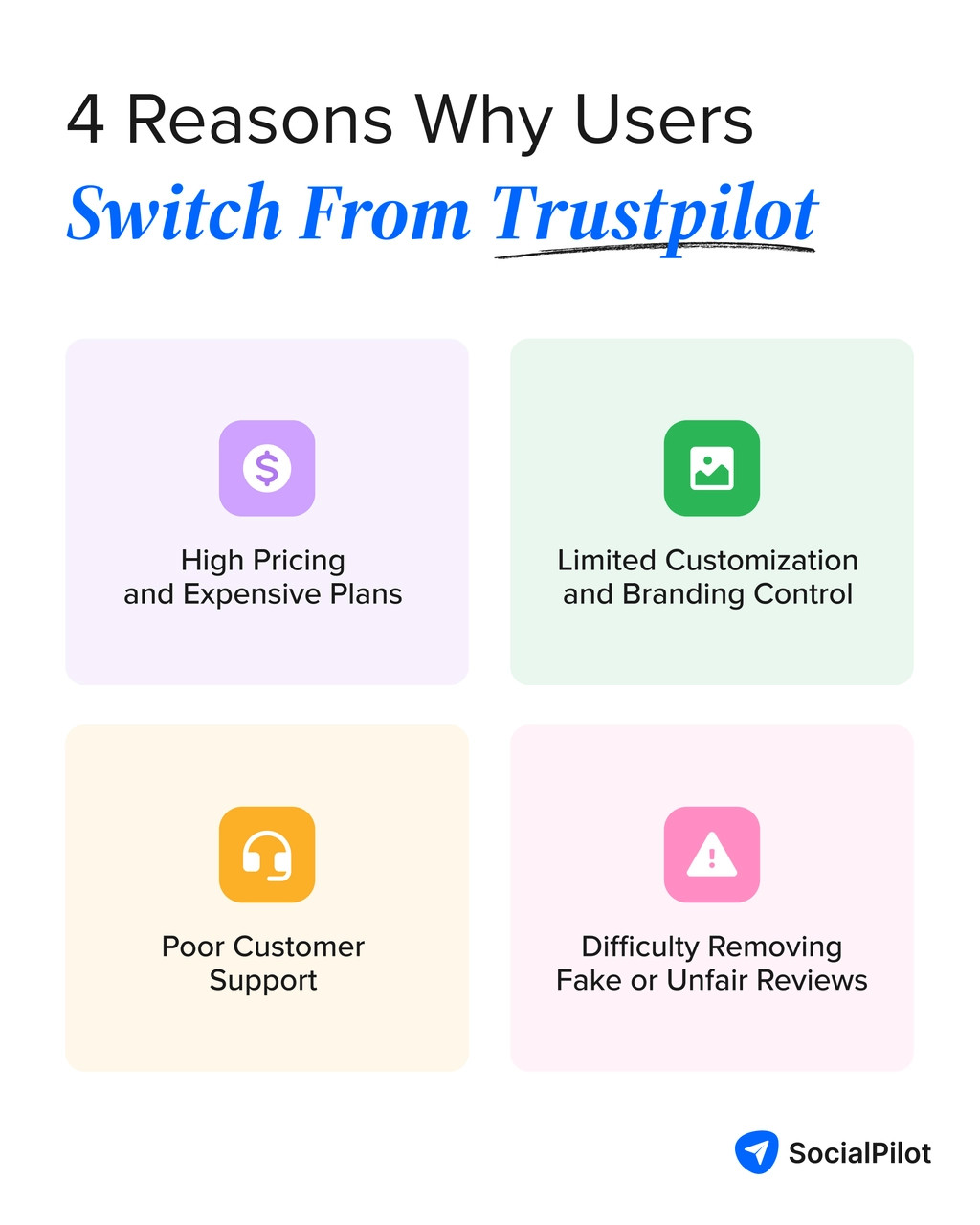
High Pricing and Expensive Plans
The number that stings isn’t the monthly rate, but the word “prepaid.“
Trustpilot’s business pricing page states “all contracts are a 12-month commitment, starting at the prices below,” and “our initial contract term is 12 months, prepaid.”
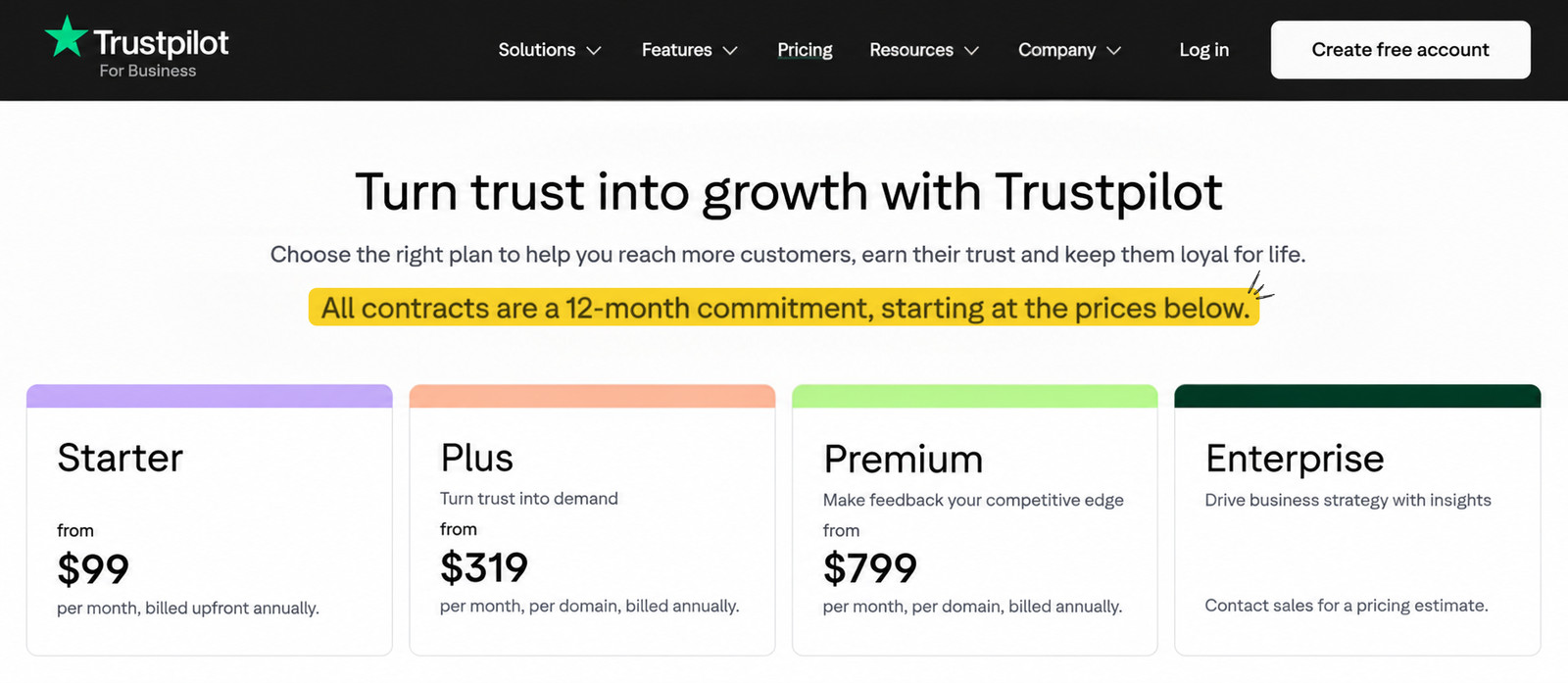
Moreover, even through the platform offers a free tier, every figure mentioned on the pricing page is a “from” price, charged per domain.
It becomes really hard to move to another provided. Its expensive and they want at least 12 months contract without even giving you a week trial.
Limited Customization and Branding Control
The customization problem runs deeper than widget colors. So who actually owns the reviews you collect? Not you, and most people only find out when they try to leave.
Trustpilot’s business guidelines answer the review ownership question in one sentence. “Reviews are owned by the reviewers, who can edit or delete them.”
Reviews.io, one of the alternatives to Trustpilot, takes a different approach. It claims that it transfers publishing rights for reviews collected through its platform to the business. That’s a positioning claim from a competitor, not an independent finding, but it highlights an important difference.
Poor Customer Support
When something goes wrong with your review profile, getting a quick, useful response matters. But some Trustpilot users report having to go back and forth with support before getting their issue resolved.
The one time I had to deal with their customer support team, they weren’t that helpful at first. It took something like 4 tries before we managed to get anywhere in resolving the issue I had.
Difficulty Removing Fake or Unfair Reviews
Getting an unfair review removed is hard. And for Trustpilot, that’s by design rather than a support failure.
Trustpilot’s guidelines say so about as plainly as possible. “Not liking a star rating or disagreeing with a negative review is not a valid reason for flagging a review, and we don’t remove reviews just because a business thinks they are unfair or critical.”
Verified User in Information Technology and Services
Trustpilot at this point is not solving problems but increasing it by allowing users to review us who never used the services, not sure whats their take on fake reviews as they do allow fake reviews up there.
None of this makes Trustpilot a poor platform, and it can still make another tool the better fit for your team.
So how did we test the alternatives? Here’s the whole testing and fact-checking process, laid out in full.
How We Tested These Trustpilot Alternatives
A list of alternatives is only useful if you can trust the methodology behind it. You’ve read enough roundups to know that “carefully evaluated by our expert team” means nothing. So here’s exactly what was and wasn’t done, and where a detail couldn’t be verified, we’ve said so.
Our Testing Protocol
We tested each platform against the job a Trustpilot leaver is hiring it to do.
- Pulled every price from the vendor’s own live pricing page on September 7, 2026, and nowhere else.
- Recorded the unit each price is charged in, since ten of the eleven tools named here don’t charge a flat monthly fee.
- Checked whether a free plan and a free trial exist, on the vendor’s own page or FAQ rather than a third-party summary.
- Established each tool’s review model, meaning whether it hosts reviews itself or manages reviews hosted elsewhere.
- Confirmed where replies actually publish, platform by platform, rather than reading a monitoring count as a reply count.
- Read each vendor’s comparison page against Trustpilot, separating what it proves about itself from what it asserts about a competitor.
How We Fact-Checked Every Comparison
- Re-verified every figure against the vendor’s live rate card in September 2026, discarding all numbers carried over from the previous version of this page.
- Recorded when a vendor publishes no pricing at all, instead of substituting a plausible estimate.
- Standardized billing units, distinguishing per month, per location, per domain, per order band, billed monthly and billed annually.
- Traced two unit-of-time errors to their source, where an annual total had been printed as a monthly rate.
- Cross-checked one vendor’s live prices at checkout, because its raw page source carries stale figures that JavaScript overwrites on load. Attributed every star rating to whoever publishes it.
What We Didn’t Test, and Why
- Hands-on testing: We tested features where access was available, but we didn’t run identical paid accounts on all nine platforms for a month-long trial.
- User ratings: G2 and Capterra ratings are reported as published by those platforms and may change over time.
- Ease of use and support: These assessments are based on available customer reviews and marketplace data, rather than claiming that our team tested every support interaction.
- Quote-only vendors at full depth. Yext and Birdeye publish no rate for any tier, so their total cost of ownership couldn’t be modelled.
- Enterprise tiers requiring contracts or custom onboarding and implementation. Vendor-stated claims are identified as such.
That’s the method, and the table below gives you a quick head-to-head on all nine before we look at each one closely.
Trustpilot Alternatives at a Glance
Not every alternative is built for the same job. Two host reviews on their own domain, the way Trustpilot does and the other seven manage the reviews you’re already collecting elsewhere. Here’s how they compare against each other:
Next we look at each alternative in detail: where it stands out, where it falls short and who it actually suits.
The 9 Best Trustpilot Alternatives, Reviewed in Depth
Each alternative is reviewed the same way: review model, platform support, pricing and the unit it’s charged in, contract terms, strengths, limitations and ideal use cases.
Free Starter plan, then $30 per month on Pro, or $25.50 per month billed annually.
Rating
4.5 on G2
Apps
Android, iOS and Web
Review Platforms Supported
Google Business Profile, Facebook, Yelp, Tripadvisor, Trustpilot, Zillow, YellowPages and Influenster.
SocialPilot’s review management platform sits at the opposite end of this market from Trustpilot. Trustpilot collects and hosts reviews on Trustpilot, full stop. On the other hand, SocialPilot Reviews monitors the reviews you’re already earning on multiple platforms, chases more of them, and lets you respond from a single screen.
Here’s the detail that matters most if you’re leaving Trustpilot: it pulls a Trustpilot profile in by URL, with no login.
Key Features
- Unified review feed: Centralized review management that consolidates eight review sources in one filterable inbox. It pulls up to 1,000 past reviews when you connect a platform.
- AI replies and auto-reply rules: Responses in 40-plus languages, triggered by star rating and publishing immediately, after a delay or through an approval workflow.
- Multi-channel campaigns: Requests by email, SMS through Twilio and WhatsApp through Meta Business, as multi-step workflows with templates and duplicate request prevention.
- Feedback forms and QR codes: 20-plus question types with conditional logic, plus dynamic QR codes you can re-point without reprinting anything.
- Widgets and reporting: Six embeddable widget types, plus Platform, Location and Custom reports with an average rating trend graph and white-label logos.
Pricing, Tier by Tier
SocialPilot Reviews’ pricing scales by brand and location rather than by feature tier, so a small agency doesn’t pay for features it won’t use.
| Plan | Monthly | Annual | What you get |
| Starter | Free | Free | 1 brand, 1 location, 100 email credits a month, email campaigns only |
| Pro | $30/mo | $25.50/mo | Unlimited brands, 3 locations then $10 per location per month, 5,000 email credits, email plus SMS plus WhatsApp, team and client management |
| Enterprise | Custom | Custom | White label, custom locations and credits |
Direct Reply, and Where It Actually Posts
Where do those review replies actually publish? Directly to Google and Facebook, and nowhere else on the list. Every other source, Trustpilot included, is draft and paste. The AI writes the response, but a human still opens the platform to post it.
Listings publishing works the same way, reaching Google Business Profile and Facebook Pages but not Yelp, Apple Maps, Bing or the directory networks Yext and Moz Local sell.
Cost Compared With Trustpilot, at Agency Scale
Trustpilot Starter is from $99 a month per domain, billed annually. It’s open only to new small business customers up to $5M in revenue. Pro here is $30 a month for unlimited brands and three locations.
The comparison isn’t like for like, and that’s the point. You trade an independent third-party badge for coverage of the platforms your customers already use. The effective rate is roughly a third of that entry price, with no prepaid year.
Who Should Actually Use This
The stronger fit is an agency or multi-location brand running 3 to 60 locations. Your pressure points there are response time, per-location cost and client reporting. And your reviews are landing on Google and Facebook rather than on one hosted profile.
The weaker fit is a business whose whole reason for being on Trustpilot is the independent badge on a checkout page, and that job isn’t on offer here.
A Realistic Scenario
Say a three-person agency carries 12 client locations. On Pro billed annually, that’s $25.50 for the first three locations plus nine more at $10 each. So $115.50 a month, or $1,386 a year, with no seat expansion charge for the third person.
Now compare one Trustpilot domain on Starter, where the published “from” rate of $99 a month billed annually comes to $1,188 for the year, prepaid. And you get a single domain and a single hosted profile.
The honest read: for roughly $200 more a year, you cover 12 locations across nine review sources instead of one domain on one platform. If the badge is what you were buying, that’s the wrong trade. But if coverage is what you needed, it isn’t close.
Pros
- Published pricing with a free tier that’s usable rather than decorative, and the lowest per-location cost here at agency scale
- Review generation and monitoring sit in one product, so the campaign that asks and the feed that catches aren’t two subscriptions
- Team and client management with role-based access, plus white-label reporting
Katie F.
I like consolidating our social and reviews down to one platform. Their support team was incredible about onboarding and accommodating specific feature requests – super quick to respond, pleasant and flexible. It’s also priced super fairly.
Cons
- Replies post directly on Google and Facebook only, so Trustpilot, Yelp, Tripadvisor, Zillow, YellowPages and Influenster are all draft and paste
- Listings publishing reaches Google Business Profile and Facebook Pages only, and new Facebook listings can be connected but not created
- It doesn’t connect to G2, Capterra or TrustRadius, which matters if your buyers live on software marketplaces
Company Snapshot: 15,000-plus businesses use SocialPilot to build credibility online. Review management sits in the same dashboard as listings, so a location added for one becomes a review source for the other.
What Sets It Apart: It reads your existing Trustpilot profile by URL. So leaving Trustpilot doesn’t mean going blind on the reviews you’ve already collected there.
No public pricing. Custom quote, priced per location, billed annually.
Rating
4.4 on G2 based on 1,124 reviews and 4.2 on Capterra based on 114 reviews
Apps
Web only
Review Platforms Supported
Google Business Profile, Facebook, Tripadvisor, Trustpilot and Yelp among others, alongside a directory network larger than anything else on this page.
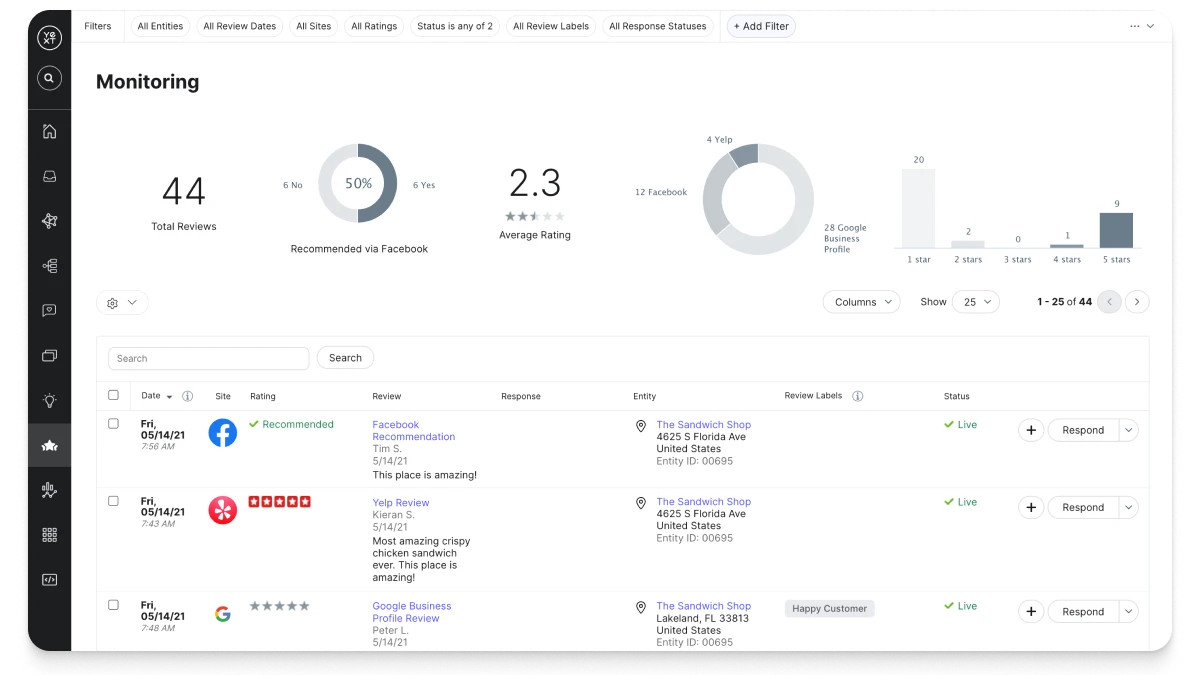
Yext answers a bigger question than the one that brought you here. Trustpilot’s job is one hosted profile, while Yext’s job is NAP consistency. That means the right name, address, hours and phone number for every location you run, and reviews are one module inside that.
If you’re leaving Trustpilot to save money, this is the wrong direction. But if you’re leaving because Trustpilot couldn’t see the rest of your online presence, it’s the most complete answer here.
Key Features
- Directory distribution at scale: The reason enterprises buy Yext, and its publisher network is larger than anything else here.
- Review monitoring across sources: Major review sites, social platforms and search engines in one view.
- AI-assisted responses: Built for replying at location scale rather than one review at a time.
- Review generation: Email and text outreach tied to your location records.
- First-party review publishing: Widgets, API access and Schema.org markup for your own site.
Pricing, and the Absence of It
So what does Yext cost? Nobody outside a sales call really knows, because Yext publishes no pricing page at all.
As per Yext’s FAQ page, “Yext pricing is custom… what you pay scales with how many locations you have, the solution you need, and how long you commit (billing is annual, and multi-year terms earn better rates).
High Support Scores, No Account Manager
Yext’s customer service is scored at 4.0 as per its Capterra profile. But it’s also the only tool in that set with no dedicated account manager. Those two facts aren’t in conflict, but together they describe the experience.
Support answers well when you ask, but nobody’s overseeing your multi-location implementation for you. And on a platform this large, you feel that gap in month one.
Who Should Actually Use This
The stronger fit is an enterprise with hundreds or thousands of locations, where listing accuracy across a wide directory network is a revenue issue. And a solutions engineer plus a signed contract is a normal procurement cycle for you.
If you run a single domain or a small agency, this is the hardest option here to test. Annual billing, quote-gated pricing and no standard trial see to that.
A Realistic Scenario
Say a 400-branch retail bank needs hours, addresses and attributes correct everywhere a customer might look. It also needs reviews for all 400 branches in the same system.
Trustpilot can’t do the first half of that job, and its per-domain pricing doesn’t model a branch network either. Yext does both, and you won’t know what it costs until the call.
The honest read: this is the only tool here that treats reviews as one field on a location record rather than as the product. That’s exactly right at 400 branches and exactly wrong at one.
Pros
- The widest directory footprint on this page, which is the product rather than a bullet point
- Pricing scales with locations, so hundreds of sites is a volume conversation rather than hundreds of subscriptions
- Support is rated 4.0, tied for highest in the scored set, and multi-year terms are stated to earn better rates
Verified User in Telecommunications
User friendly, a variety of options to manage different data and represent it through various publishers. The support is also top-notch.
Cons
- No public pricing of any kind, no free tier and no standard free trial, in Yext’s own words
- Billing is annual, so if prepaying twelve months is what’s driving you off Trustpilot, read the term sheet first
- The only tool in the scored set with no dedicated account manager, on the platform where one would help most
Verified User in Retail
The pricing feels high compared to alternatives, especially for small businesses. Some features are locked behind higher tiers, which can be frustrating if you only need one or two of them.
Company Snapshot: Yext is an enterprise-focused platform built around managing business information, listings, reviews, and other digital experiences across locations. Its review management sits within a much broader local presence and listings platform.
What Sets It Apart: Reviews sit inside a location data platform rather than beside one. A corrected address and a new review update the same record. And if you want a narrower head-to-head field, we also cover Yext’s top alternatives.
$399 per month on Core, billed monthly, before seats and per-location fees.
Rating
4.5 on G2 based on 2,109 reviews and 4.2 on Capterra based on 526 reviews.
Apps
Android, iOS and Web
Review Platforms Supported
Facebook, Google Business Profile, Yellow Pages, BBB and DealerRater among others.
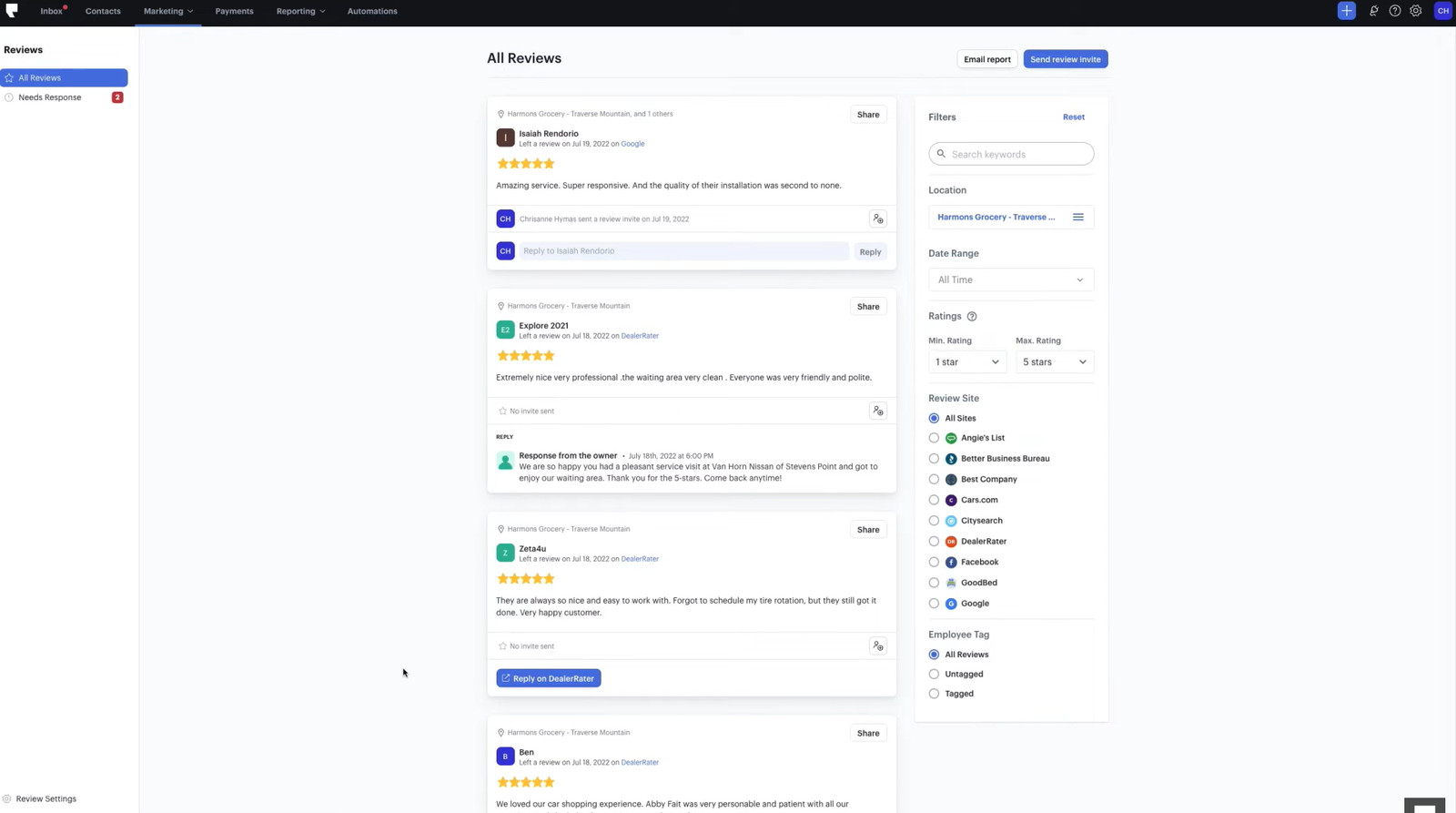
Podium is the answer when reviews were only half the problem. The other half is your messages, which arrive by text, web chat, phone and Facebook and land in four different places. Meanwhile the review request is the thing nobody remembers to send.
Against Trustpilot, the difference is direction of travel. Trustpilot invites a customer out to a hosted profile, while Podium asks for the review inside the conversation you were already having, by text.
Key Features
- Unified inbox: Texts, calls, web chat and review conversations in one thread per customer.
- Textable review invitations: The mechanic Podium built its name on, sent from that same thread.
- AI review replies and automation: Invitations and on-brand responses without a person in the loop.
- Review reporting and competitive intelligence: Your aggregate rating benchmarked against local competitors.
- Payments and phone system: Attached products where the extra fees live.
Pricing, Tier by Tier
| Item | Price | Unit |
| Core | $399 | per month, billed monthly (USD) |
| Pro | $599 | per month, billed monthly (USD) |
| Signature | Custom pricing | Quote only |
| Seats | $30 per user per month (1 to 4), $25 per user per month (5 or more) | Added to the plan |
| 10DLC messaging fee | $5 per month | Per US location |
| Network optimization fee | $500 | Per location, phone product only |
Why $399 Is a Floor Rather Than a Price
Podium’s pricing comes with extras, where seats are $30 or $25 per user per month and 10DLC messaging is $5 a month per US location. The phone system adds $500 per location if you take it. So on a multi-location bill, the subscription line is the smallest part of your total cost of ownership.
Cost Compared With Trustpilot, at Five Users
A five-user team on Core pays $399 plus five seats at $25, so that’s $524 a month before location fees. One Trustpilot domain on Starter is from $99 a month per domain, billed annually.
Podium is roughly five times the entry price, and it isn’t competing for that budget. It replaces a review tool, a shared SMS inbox and often a phone system at once. That’s the only arithmetic under which it looks reasonable.
Who Should Actually Use This
The stronger fit is a local business with a phone-and-text front desk, where the same person handles enquiries, bookings and reviews.
The weaker fit is anyone buying a pure review platform. Leave the messaging side unused, and $399 a month before seats is poor value against almost everything here.
A Realistic Scenario
Say a three-location dealership group runs five users on Core. That’s $399, plus $125 in seats, plus $15 in 10DLC fees across three US locations. So $539 a month, or $6,468 a year, billed monthly with no prepayment.
The same group on Trustpilot Starter pays $1,188 a year prepaid, at its published “from” rate for one domain. That buys a hosted profile and nothing that touches the phones.
The honest read: those five users might otherwise pay separately for a texting platform, a review tool and a VoIP line. In that case $539 is one bill instead of three. If they only need reviews, it’s a five-figure annual mistake.
Pros
- Publishes its rates, its seat costs and its per-location fees, which is rare here
- SMS is the core channel rather than an add-on, and text campaign metrics come with it
- Billed monthly with a dedicated account manager included, so no twelve-month prepayment
Neelakshi S.
Podium help organise reviews, texts and customer interactions without needing to jump between tools all day. The tool is very easy to use and smooth interface and the review request feature also work the better than I expected we started getting more customer feedback consistently after using it for a week.
Cons
- The most expensive published starting price on this page, at $399 a month for Core before seats and fees
- No free tier and no free trial, so you commit to a paid month to find out whether it fits
- Podium runs your reviews, texts and phone calls. One outage from the vendor and three stop working
Waqas F.
Although it is one of the those platforms which gives you centralized insights but it stands out as the one of the most expensive tools especially for small businesses.
Company Snapshot: Podium prices seats, messaging compliance and phone provisioning as separate published line items rather than combining them into the plan. So the quote you build yourself lands close to the invoice.
What Sets It Apart: The review request lives inside the text conversation you were already having. It isn’t a separate campaign someone has to remember to run.
No public pricing. Quote via their form, priced by location band.
Rating
4.7 on G2 based on 4,233 reviews and 4.7 on Capterra based on 705 reviews.
Apps
Android, iOS and Web
Review Platforms Supported
Google Business Profile, Facebook and, by Birdeye’s own claim, 200-plus review sites.
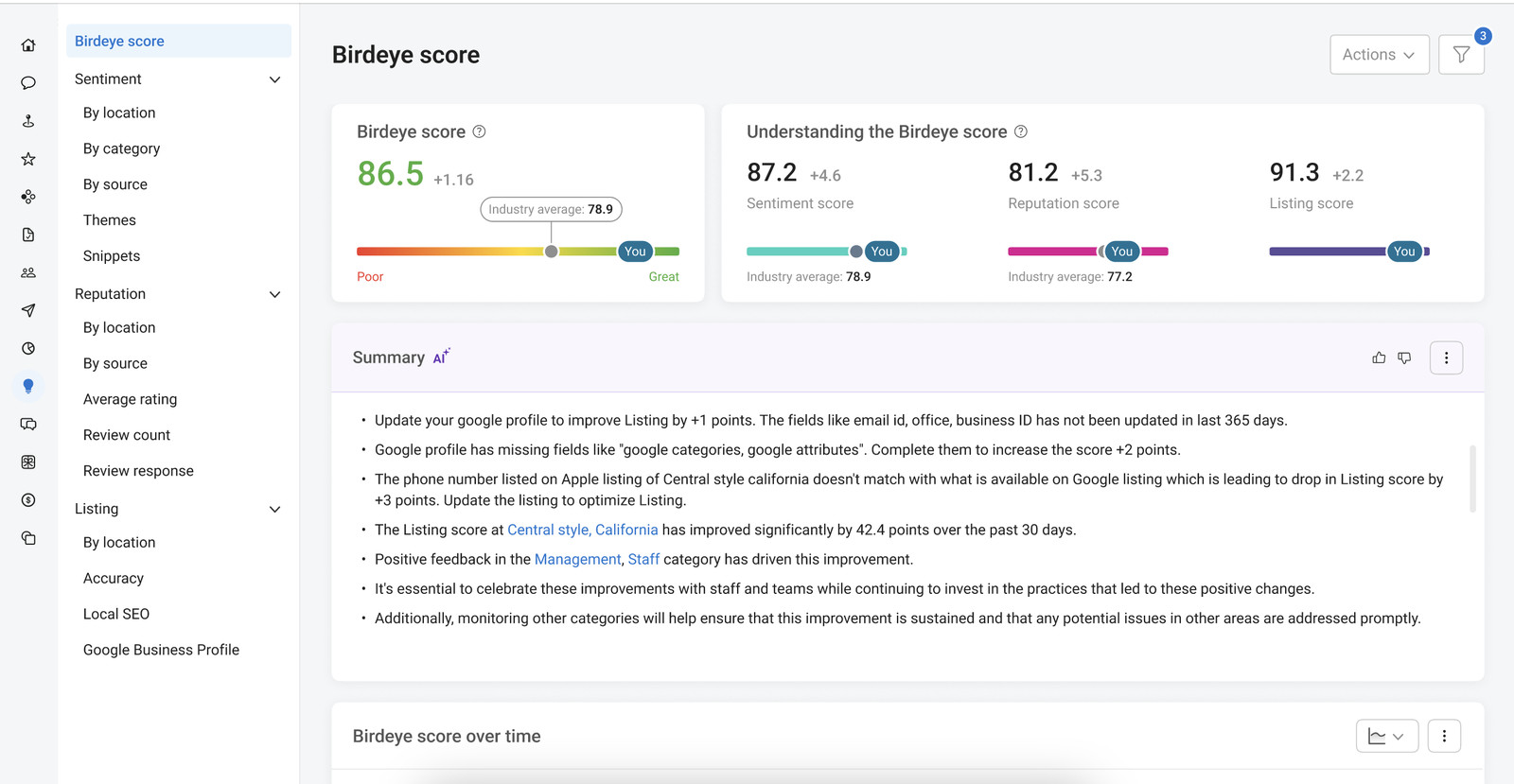
Trustpilot shows you Trustpilot, and that’s one tab. But if your reviews are scattered across a long tail of industry-specific sites nobody has time to open, coverage is what you’re shopping for. This is the exact problem that Birdeye solves.
Nothing else here claims to watch as many sources. That claim is Birdeye’s own, and the trade-off follows below.
Key Features
- Wide-net monitoring: Reviews from 200-plus sites in one dashboard, per Birdeye’s own claim.
- Review generation with CRM integration: Requests fire off a booking or a purchase rather than a manual campaign.
- BirdAI responses: Replies personalized, grammar-corrected and tone-adjusted at scale.
- Two-way review translation: Incoming reviews into English and your replies back into the customer’s language.
- Google Seller Ratings and competitor tracking: Review data feeding paid search performance, plus competitor ratings.
Pricing, and the Absence of It
Birdeye’s pricing page carries zero figures. It reads “Pricing built around outcomes, not seat counts,” and lists location bands of 1 to 3, 4 to 9, 10 to 39, 40 to 249, 250 to 999 and 1,000 or more. Then it hands you a button that requests a quote.
The bands confirm per-location licensing rather than per-seat, but no rate is published for any band, and no free tier or trial is advertised.
Monitoring 200 Sites Is Not Replying on 200 Sites
But can you reply on all 200 of them? No, and that’s an industry-wide limit rather than a Birdeye flaw. Reading a review and posting a reply are two different permissions. Platforms like Yelp and Tripadvisor don’t hand the second one to third-party tools.
Customers report exactly that limit, so ask the sales team where the reply publishes rather than where the review appears. A dashboard that reads 200 sites and posts to two is still useful. It’s just not what the headline number makes you think.
What You Cannot Compare Without a Number
Against Trustpilot’s published “from $99 a month per domain, billed annually,” Birdeye offers nothing to compare. You can price Trustpilot in ten seconds, but you can’t price Birdeye without a sales call and a location count.
And if opaque commercial terms are part of why you’re leaving Trustpilot, sit with that. The bands tell you the shape of the bill without telling you the size.
Who Should Actually Use This
The stronger fit is a multi-location brand or franchise with real review volume across dozens of sites. Missing a review costs you more than a slow procurement cycle does.
The weaker fit is a single-domain business with three review sources. You’d be buying reach you don’t need at a price you can’t check.
A Realistic Scenario
Say a 40-location healthcare group gets reviews on Google, Facebook and half a dozen vertical directories, and nobody’s watching the vertical sites.
One Trustpilot domain on Starter would still cost $1,188 a year prepaid at the published “from” rate, and leave the long tail unread. Birdeye is built for the long tail, and its band for 40 to 249 locations has no published rate.
The honest read: the strongest monitoring net here. It also has the least transparent commercial terms of any tool on this page that isn’t openly enterprise-only. So ask about reply permissions before you ask about price.
Pros
- The widest advertised review-site coverage here, which is the whole reason to look at it
- Two-way review translation that removes a real bottleneck for multi-country operations
- Highly praised by its customers for how clearly it flags the reviews that need a reply
Jonathan W.
I use Birdeye for social, listings and reviews, and one of my favorite parts is that it’s set up for multi-locations. It allows users in the field, across our 200 senior living communities, to post and create unique content using their location preferences.
Cons
- No published pricing, no advertised free tier and no advertised trial, so the only route to a number is the form
- Monitoring coverage and reply coverage aren’t the same, and customers report being unable to respond on some platforms from inside it
- Syncing issues come up repeatedly, particularly with Google Business Profile reviews, which is the one source you can’t afford to miss
Susan H.
Listings does not sync quickly and is spotty at best, plus not all the citations that most competitors offers. Very weak by comparison and not reliable.
Company Snapshot: Birdeye’s pricing page is a lead-capture form with location bands and no rates, which is a deliberate choice rather than an oversight.
What Sets It Apart: Breadth of review monitoring, plus translation in both directions. That makes it the only tool here shaped for reviews arriving in several languages across many sites.
From $99 per month, a monthly minimum spend rather than a flat fee, billed monthly.
Rating
4.5 on G2 based on 548 reviews and 4.4 on Capterra based on 163 reviews.
Apps
Web platform
Review Platforms Supported
Facebook, Google Business Profile and others through its connected review sources.
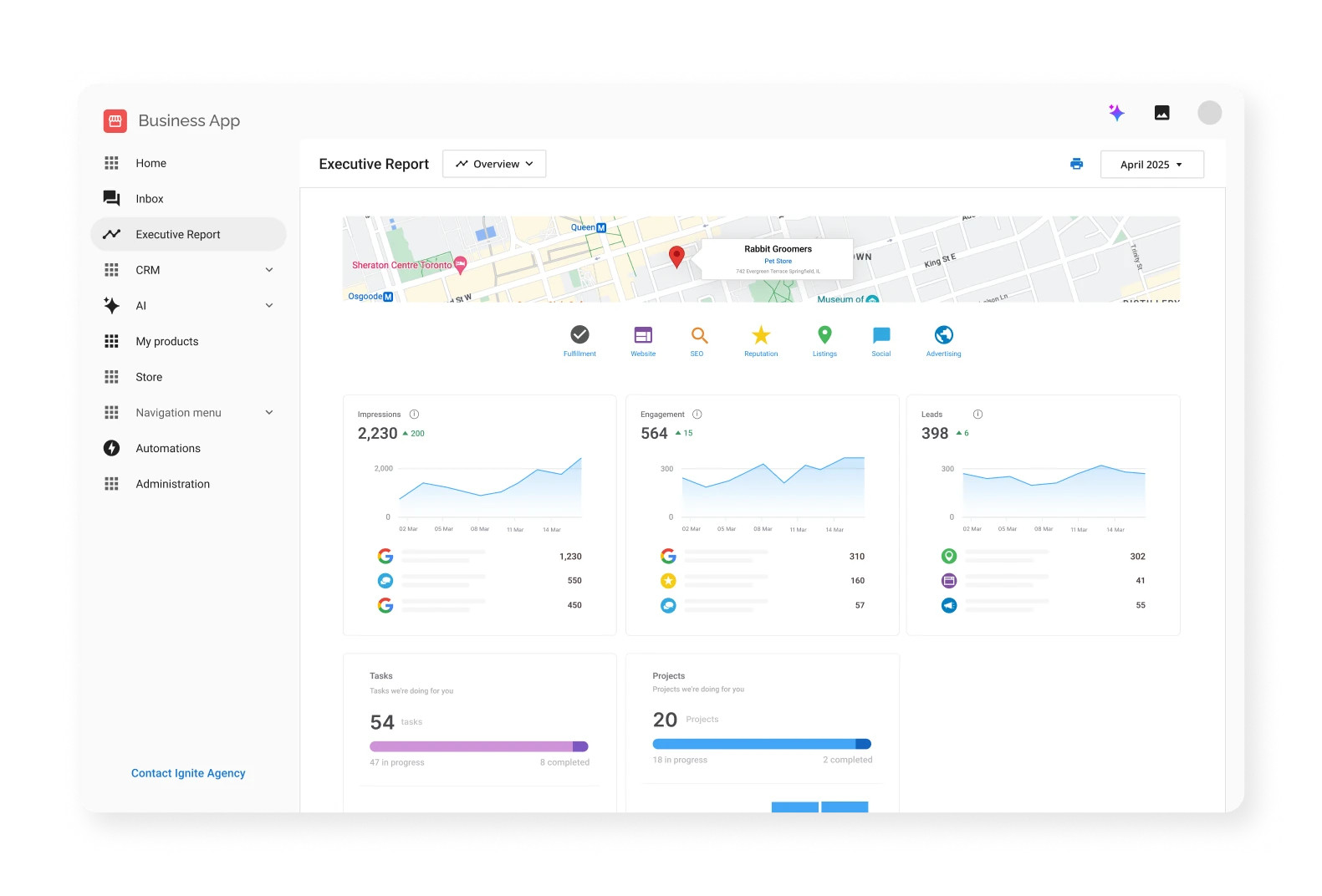
Vendasta is the only tool here designed to be resold under your own name. So if you’re leaving Trustpilot on behalf of clients rather than for yourself, that changes which column matters. Trustpilot sells you a hosted profile, while Vendasta sells you a platform you rebrand, resell and invoice through. Review management is one product in the catalogue.
Key Features
- White-label client portal: Your clients log into an agency client portal carrying your own brand, with unlimited client accounts from Starter.
- Review monitoring and response: Connected platforms from one place, with a history per client.
- AI review analysis and sentiment tracking: Sentiment analysis that surfaces recurring themes at topic level rather than one complaint at a time.
- Approval workflows: Replies routed for sign-off, which matters in regulated industries.
- A resellable services marketplace: CRM and project management under the same brand.
Pricing, Tier by Tier
| Plan | Price | Contract |
| Starter | $0 subscription with a $99 per month minimum of wholesale products and services | Billed monthly, no contract |
| Professional | $0 subscription with a $499 per month minimum | Billed monthly, one year |
| Premium | $0 subscription with a $999 per month minimum | Billed monthly, one year |
| Custom Enterprise | Contact for volume pricing | One year |
| Seats | $30, $35 or $65 per seat per month by tier | Added on top |
A Monthly Minimum Is Not a Subscription Fee
So what is that monthly minimum actually buying? Vendasta’s pricing page states the model plainly, in its own words. “Your plan is a monthly minimum. Qualifying Vendasta products count toward it… your platform subscription billed can be $0.” At signing, “$99 platform fee covers your first month.”
That cuts both ways. If you already resell $99 a month of services, the Starter fee disappears into spend you were making anyway. If you don’t, it’s a floor you pay regardless. Any comparison quoting Vendasta at a flat $79 is working from a stale rate card. Any quoting $999 as its entry price is quoting the Premium tier.
The Contract Question, Tier by Tier
If a prepaid year is what pushed you off Trustpilot, read the right-hand column carefully. Starter is contract-free and billed monthly, but Professional and Premium both carry a one-year term, and so does Custom Enterprise.
So the tier that solves the contract problem is also the one with the lowest minimum. And the two tiers an established agency would want both bring the commitment back.
Who Should Actually Use This
The stronger fit is an agency or reseller with client spend to put through a platform. Healthcare, finance and legal fit best, because a reply approval workflow is a requirement there.
The weaker fit is anyone buying for themselves, because the main advantage is invisible when there’s nobody to resell to.
A Realistic Scenario
Say a two-person agency manages reputation for eleven local clients and wants the dashboard to carry its own logo. On Starter that’s a $99 monthly minimum with no contract, plus seats, and services the agency already resells absorb the minimum.
Put eleven clients each on their own Trustpilot Starter domain instead. At the published “from” rate that’s $1,089 a month, billed annually and prepaid. And none of it carries the agency’s brand.
The honest read: the white-label layer is real, and the contract-free entry tier is a fair way in. But you’re buying a reseller platform that happens to include review management, so sign up once the client spend exists rather than before.
Pros
- A complete white-label layer rather than a logo swap, with unlimited client accounts on Starter
- Reply approval workflows which are useful for regulated industries
- A free tier plus a 14-day trial with no credit card, and no contract on Starter
Chris H.
It provides white-labeled reports, listings management, reputation monitoring, client dashboards, and automated prospect audits that make sales conversations easier and show clear results to clients.
Cons
- The pricing model is a monthly minimum spend rather than a flat subscription fee, which makes budget forecasting harder than a plan price suggests
- Professional and Premium both carry a one-year contract, the exact thing many readers are leaving Trustpilot to escape
- Seats cost extra on top of the minimum, at $30, $35 or $65 per seat per month depending on tier
Lacie T.
Some of the pricing could be better explained as to the total cost. There are some products that you need to have other products activated, and it mentions it on the page, but not the cost.
Company Snapshot: Vendasta’s own pricing page says a plan’s platform subscription can bill at $0 when qualifying product spend meets the minimum. That’s a very different commitment from a fixed monthly fee.
What Sets It Apart: It’s the only tool here whose customer-facing product is meant to carry someone else’s brand.
From $41 per month on Track at one location, billed monthly, or $369 for the year.
Rating
4.6 on G2 based on 230 reviews and 4.8 on Capterra based on 283 reviews.
Apps
Web platform
Review Platforms Supported
80-plus sites by BrightLocal’s own claim, including Google Business Profile, Facebook, Yelp, Tripadvisor and Yahoo.
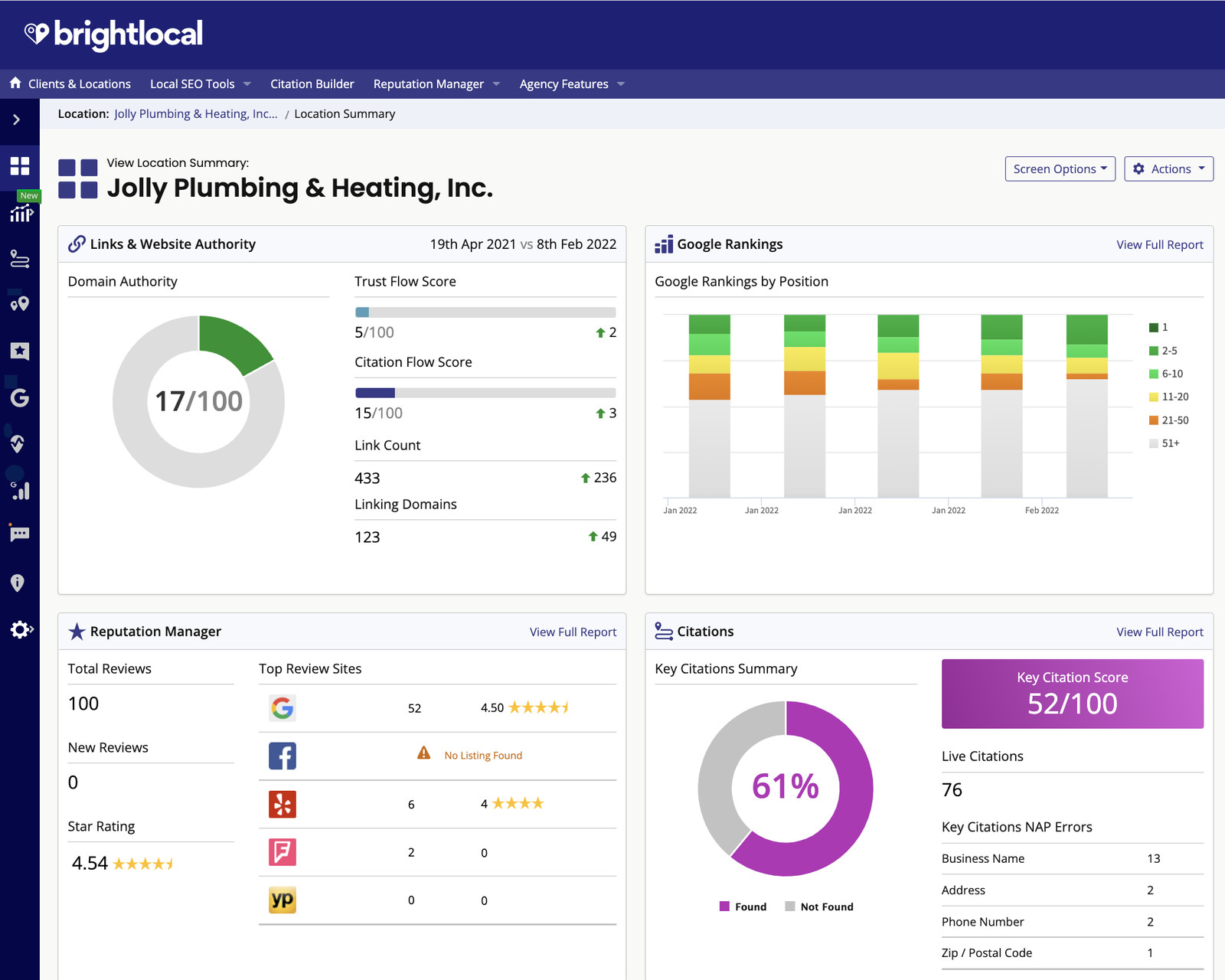
BrightLocal treats reviews as an input into local search rather than as the product. Maybe Trustpilot never fixed your problem because the real problem was local pack visibility, not reputation. If so, this is a different kind of tool, and the right one.
The two barely overlap, because Trustpilot builds an off-site reputation asset while BrightLocal measures whether people can find you at all. It counts your reviews as one reason they can.
Key Features
- Local rank tracking: A Local Search Grid and geolocation tracker showing where you rank street by street.
- Review monitoring across 80-plus sites: Real-time alerts on new reviews, by BrightLocal’s own claim.
- Automated review generation: Personalized requests by email or SMS.
- Citation Builder: From $2 per citation, pay-as-you-go, with no monthly plan required.
- Managed SEO Service: $1,299 per month if you’d rather someone else did the work.
Pricing, Tier by Tier
Priced by number of locations, at one location:
| Plan | Billed monthly | Billed annually |
| Track | $41 per month | $369 per year, which displays as $31 per month |
| Manage | $54 per month | $485 per year, which displays as $40 per month |
| Grow | $65 per month | $584 per year, which displays as $49 per month |
Price rises with locations. Two to five locations is $62, $76 or $87 per month by plan, and six to ten is $83, $109 or $131. Above a hundred locations it’s price on request.
Where the Annual Totals Trip People Up
BrightLocal serves its prices from a script rather than from the page source, which is why so many comparisons quote it wrongly. And the annual figures are the trap.
The $369, $485 and $584 you’ll see are annual totals. The “$31 a month” style figures beside them are those totals divided by twelve. Read one as a monthly charge and you overstate BrightLocal by roughly nine times.
Cost Compared With Trustpilot, at One Location
At one location, Track is $41 a month, billed monthly. Trustpilot Starter is a published “from $99 a month per domain, billed annually” on a twelve-month prepaid term.
So it’s cheaper, monthly and cancellable, and it’s also not doing Trustpilot’s job. You get rank tracking, citations and review monitoring, but not an independent review profile a shopper recognizes.
Who Should Actually Use This
The stronger fit is a local SEO agency, freelancer or small multi-location business whose retainer is built on rankings and reporting.
The weaker fit is anyone whose main job is generating review volume, because the campaign tooling is thinner than the rank tracking. Invitation throughput isn’t what this product is built for.
A Realistic Scenario
Say a freelancer manages local SEO for four restaurant clients, and the monthly report has to tie review volume to map-pack position. At two to five locations, Grow is $87 a month.
Four separate Trustpilot Starter domains would be $396 a month at the published “from” rate, billed annually and prepaid. And they’d still say nothing at all about local rankings.
The honest read: best value here if local search visibility is the goal and reviews are a means to it. Switching from Trustpilot to BrightLocal is a change of kind, so be clear which job you’re buying.
Pros
- Low learning curve for the amount of reporting it carries, and customers describe it as simple and effective
- Citation Builder needs no subscription, so you can buy citations from $2 each without a monthly plan
- A free trial on all three plans, plus a set of free local SEO tools
Sergio A.
Bright local is easy to use, due to GUI (graphical user interface). Its simple to view rankings, and everything associated with the software.
Cons
- This is an SEO tool that does reviews, not a review platform, so review generation is the thinner half
- Price scales steeply with location count, from $41 a month at one location to price on request above a hundred
- Reporting is capped at 50 locations per account even though an account holds around a hundred, which bites exactly when you grow into it
Verified User in Marketing and Advertising
Both their sales and support are sub-standard. We have been trying to get setup for about a week, were upload on services, and spent hours on a support meeting a few days ago.
Company Snapshot: BrightLocal is the only tool here with a pay-as-you-go product. Citation Builder starts at $2 per citation and needs no subscription of any kind.
What Sets It Apart: It links review volume to map-pack position in a report a client can read. That’s a different deliverable from a review inbox. And if you’re weighing it against its closest rivals, we have also curated a list of the top BrightLocal alternatives.
From $20 per location per month on Lite, billed monthly, or $199 per location for the year.
Rating
4.2 on G2 based on 475 reviews and 4.4 on Capterra based on 33 reviews.
Apps
Web platform
Review Platforms Supported
Facebook, Google Business Profile and others through its connected sources.
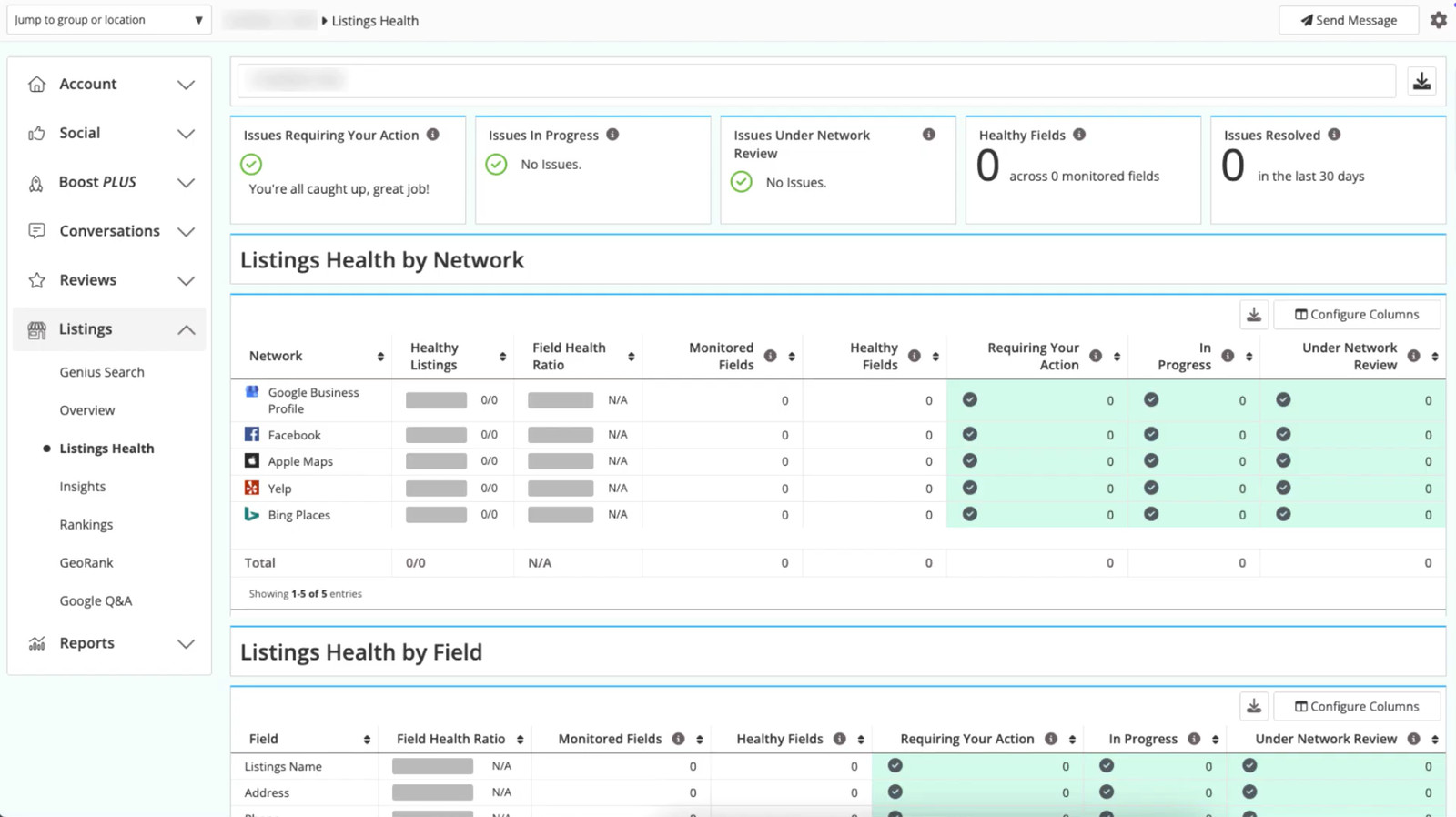
If your customers are searching for a branch address rather than reading reviews, listing distribution is the job. Review monitoring simply rides along with it. This is exactly what Moz Local is built for.
Trustpilot puts a rating on a hosted profile. Moz Local makes sure the name, address, phone and hours match on every directory entry, which is what NAP consistency means in practice. And it tells you when a review lands.
Key Features
- Listing distribution: Directories and data aggregators, the heritage product and still the reason to buy it.
- Review monitoring: Connected platforms with real-time alerts on new reviews.
- Sentiment analysis: Customer sentiment tracked over time rather than review by review.
- Centralized dashboard: Listings, reviews and per-location metrics in one screen.
- Listings AI and Reviews AI: Per-location add-ons, with Reviews AI unavailable on Lite.
Pricing, Tier by Tier
Every price below is per location, and that’s the whole story of this entry.
| Plan | Billed monthly | Billed annually |
| Lite | $20 per location per month | $16 per month, printed as “$199 billed yearly” |
| Preferred | $30 per location per month | $24 per month, printed as “$299 billed yearly” |
| Elite | $40 per location per month | $33 per month, printed as “$399 billed yearly” |
| Enterprise | Custom, “Talk to us!” | Quote only, aimed at 50 or more locations |
Add-ons are also per location, so Listings AI is $14 per month or $119 per year and comes included on Elite. Reviews AI is $10 per month or $69 per year, and it isn’t available on Lite.
Every Location Is Its Own Subscription
Moz Local’s FAQ states it plainly: “Each physical location you need to manage in Moz Local will require its own subscription.”
So ten locations on Lite is $200 a month, not $20. It’s the cheapest per-location entry point of any listings-first tool here. It’s also the number that grows fastest, because nothing gets bundled as you add sites.
The $199 That Was Never Monthly
Is that figure a monthly rate or an annual one? Annual, and the number that circulates as Moz Local’s monthly price is really its yearly total. Moz prints it on its own page as “$199 billed yearly,” and at that commitment the matching monthly rate is $16 per location.
Correct for that and Moz Local stops looking like one of the most expensive tools here. It becomes one of the cheapest, with your location count as the real cost driver.
Who Should Actually Use This
The stronger fit is a business running a handful of physical locations, where listing accuracy drives your foot traffic. Review monitoring is a useful second job.
The weaker fit is an online business with no physical footprint, or any team whose main need is generating review volume. This monitors reviews well and does little to help you collect them.
A Realistic Scenario
Say a three-location dental group needs its address and hours correct across directories, and it wants an alert when a review lands. On Lite that’s $60 a month billed monthly, or $597 for the year at the annual rate. One Trustpilot Starter domain is $1,188 a year prepaid at the published “from” rate, and it does nothing about the listings.
The honest read: good value at a handful of locations, an arithmetic problem at fifty. As a Trustpilot replacement it only works if your reviews are already on Google.
Pros
- Fast setup across multiple locations, which customers single out, since listing tools are usually painful to implement and onboard
- The single-dashboard view across many business accounts is the recurring compliment in reviews
- The annual option is a real discount, dropping Lite to $16 per location per month
Antonio Miguel R.
What I like the most is being able to unify different business accounts in one place and manage everything from a single site. This facilitates work and saves time.
Cons
- Every location needs its own subscription, so ten locations on Lite is $200 a month
- No free tier and no free trial, and the “Start my free trial” button on that page belongs to a Moz Pro cross-sell
- The AI features are per-location add-ons, and Reviews AI isn’t available on Lite at all
Verified User in Computer Networking
Invoicing: poorly done, not easy to read, not reconcilable. Does not make being a customer easy. Ticket resolution slow.
Company Snapshot: Moz Local’s own FAQ confirms the per-location subscription rule. It’s the single most important line on its pricing page, and the easiest one to miss.
What Sets It Apart: The lowest per-location entry price of any listings-first tool here. And the model is honest about charging you once per site.
From $200 per month on Essential in the US, or £149 per month plus VAT in the UK.
Rating
4.6 on G2 based on 155 reviews and 3.8 on Capterra based on 5 reviews.
Apps
Web platform
Review Platforms Supported
Feefo hosts your reviews on its own platform. It syndicates to Google Seller Ratings, Google Shopping Ratings and rich snippets, integrates through Zapier and review APIs, collects by WhatsApp, and states that it’s a Google Partner.
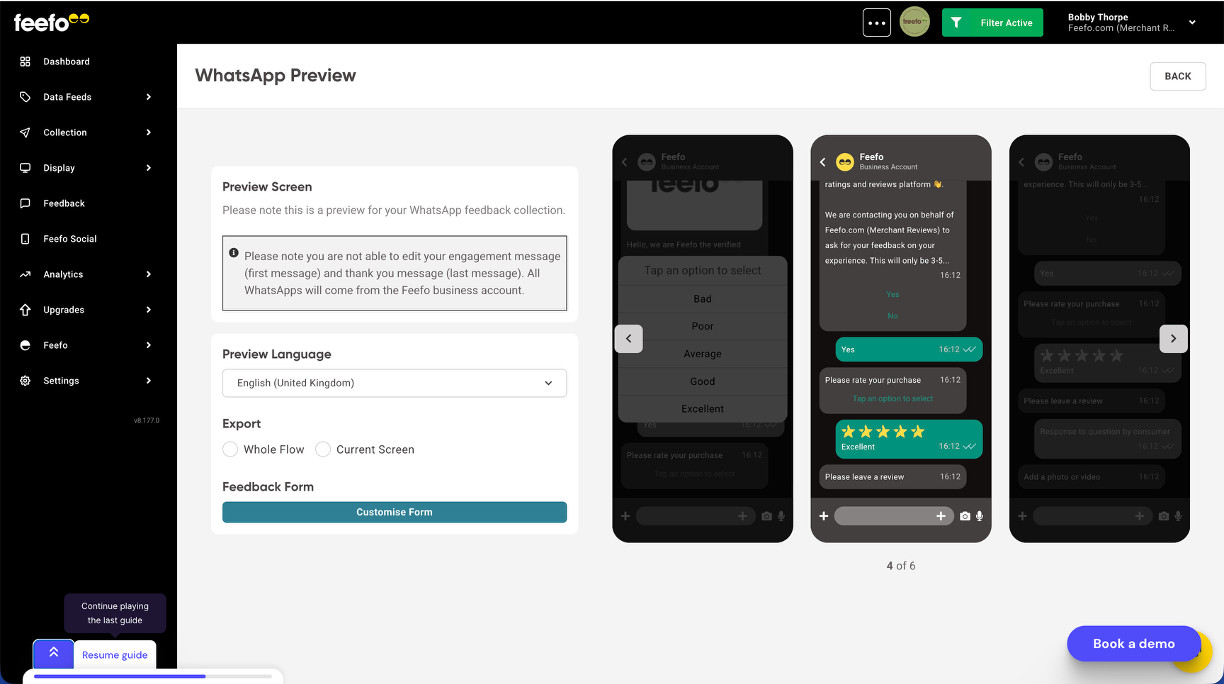
Feefo is one of only two tools here in the same category as Trustpilot itself. Of all the review sites like Trustpilot in this comparison, it runs the strictest collection model.
Only customers you invite can review you, because only they match a real transaction. So if your grievance is fake reviews rather than price, this closes the door they came through.
Key Features
- Invitation-only collection: Only invited customers can review you, so a competitor or a passer-by can’t.
- Purchaser verification: Every review tied to a transaction, a model that in Feefo’s words “ensures that only genuine customers can leave feedback.”
- Google Seller Ratings and Shopping Ratings syndication: Your stars inside paid search results.
- Trustpilot review import: The migration path, on Feefo’s condition that imported reviews are verified.
- Invitation allowances per plan: 200 on Essential and 500 on Enhanced, with Q&A, historic import, widget customization and syndication as add-ons.
Pricing, Tier by Tier
Priced by the volume of feedback requests you send, in both currencies. This data is sourced from Feefo US pricing and Feefo UK pricing.
| Plan | US monthly | US yearly | UK monthly | UK yearly | Invitations |
| Essential | $200 per month | $2,400 per year | £149 per month + VAT | £1,788 per year + VAT | 200 |
| Enhanced | $400 per month | $4,800 per year | £299 per month + VAT | £3,588 per year + VAT | 500 |
| Bespoke | Custom | Custom | Custom | Custom | Custom |
The Trade-Off Nobody Explains Properly
An invitation-only, purchaser-verified platform gives you real protection. Feefo’s comparison as a Trustpilot alternative describes the difference in its own words. “Trustpilot operates what is called an ‘open’ platform, which means that anyone with a Trustpilot account can leave a review on your business, whether they’ve had an experience with your business or not.”
The cost of that protection is review velocity. You can only invite people you can identify, so you’ll collect fewer reviews than an open collection model would produce. And a controlled invitation list counts for a little less with a doubtful shopper, for exactly that reason.
So which do you want, fewer reviews you can trust or more reviews you can’t control? That’s the whole choice, and no feature grid settles it for you.
Cost Compared With Trustpilot, Per Month
Essential is $200 a month in the US. Trustpilot Starter is a published “from $99 a month per domain, billed annually,” so the verified model costs roughly double the entry price of the open one.
Feefo’s comparison page also makes claims about Trustpilot’s fake-review volume, pricing and marketplace scores. Those are a competitor’s descriptions rather than fact, and none are repeated here.
Who Should Actually Use This
The stronger fit is an e-commerce or online services business that has already lost money to a fake or competitor review. A verified badge in a Google Shopping listing has to earn its price for you.
The weaker fit is anyone leaving Trustpilot over cost. At $200 a month with no free tier and no stated trial, this is the more expensive of the two hosted platforms here.
A Realistic Scenario
Say an online retailer sends around 180 order confirmations a month, and it has spent six months disputing two reviews it believes are fake. Essential at $200 a month covers 200 invitations, and every review that arrives is tied to an order through purchaser verification. The same retailer on Trustpilot Starter pays $1,188 a year prepaid at the published “from” rate. That’s an open platform where anyone with an account can post.
The honest read: this is a structural fix rather than a better complaints process. If fake reviews are why you’re leaving, pay the premium. But if price is why you’re leaving, it’s the wrong entry.
Pros
- The strongest structural defence against fake and drive-by reviews here, by design rather than by moderation policy
- Pricing published in both GBP and USD, ahead of Yext and Birdeye on transparency alone
- Google Seller Ratings syndication is worth real money if you run paid search, because the stars show in the ad
Tamsin D.
Feefo only takes reviews from verified customers which offers greater trust to those seeking to read reviews before purchasing.
Cons
- No free tier and no free trial stated on either pricing page, and no annual discount either
- Add-on pricing isn’t published, so WhatsApp collection, historic import, widget customization, Q&A and syndication all cost an unknown amount
- Verified-only collection means smaller review counts, which can look thin beside a rival with three thousand open reviews
Verified User in Automotive
The AI bot for writing responses to reviews was not adaptable enough to the content of the review. I found using third-party AI was better for this.
Company Snapshot: Feefo states that it’s a Google Partner, and it publishes rates in two currencies. That makes it the more transparent of the two hosted review platforms on this page.
What Sets It Apart: It’s the only tool here where the review model itself stops a disputed review from existing in the first place. Everywhere else, that job falls to a moderation policy and a support queue.
From $29 per month on Essentials, month-to-month, priced per domain by invite volume.
Rating
4.8 on G2 based on 654 reviews and 4.2 on Capterra based on 10 reviews.
Apps
Web platform
Review Platforms Supported
Reviews.io hosts your reviews on its own platform. It’s a Google Licensed Reviews Partner, its Reputation Manager collects across channels “including Trustpilot,” and Bazaarvoice syndication plus API access sit on the Plus tier.
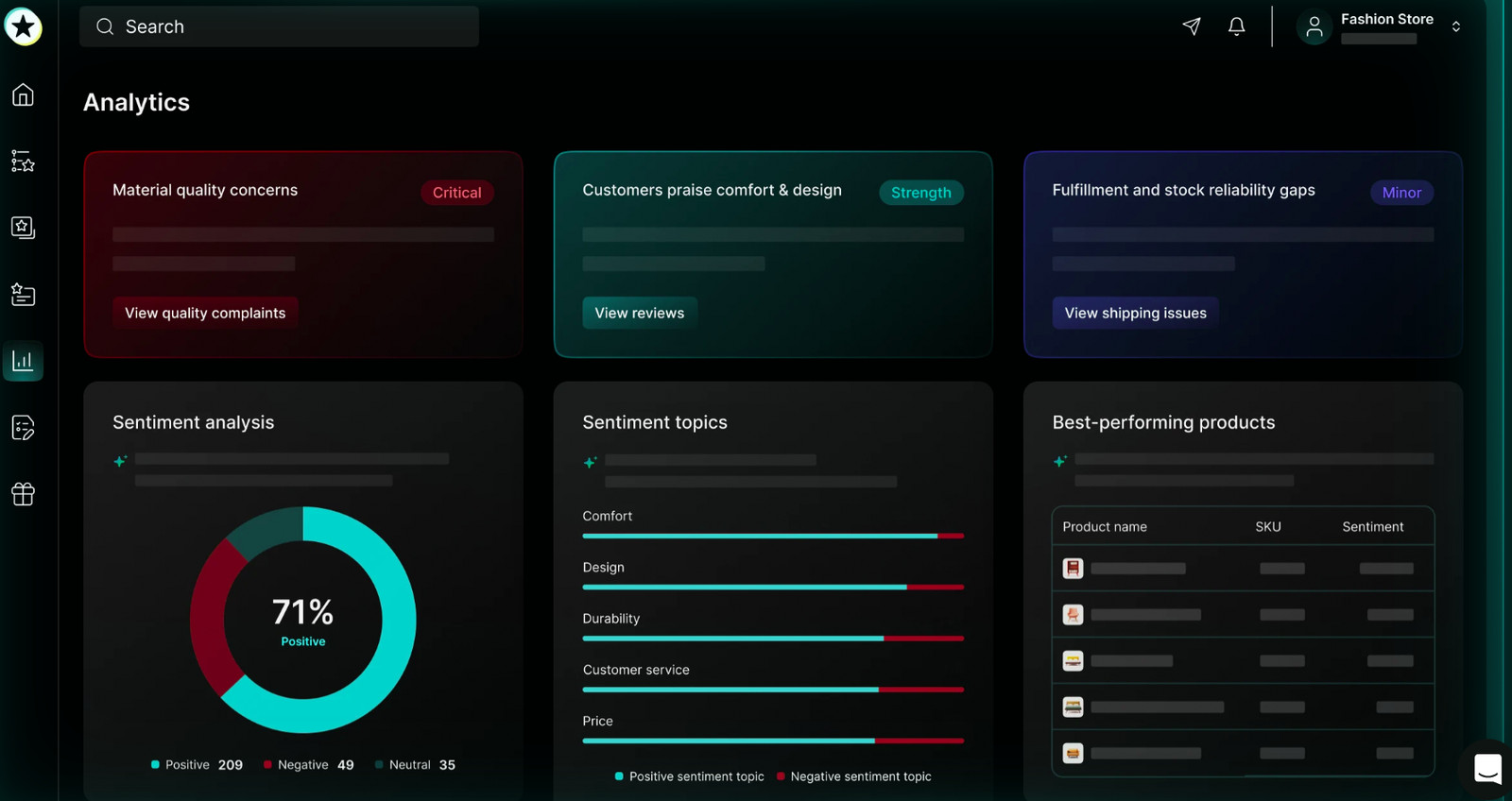
Reviews.io is the second of the two hosted platforms here, and it built its business on the situation you may be in. If you’re nine months into a term you can’t cancel, and that’s the only thing stopping you, start here.
Key Features
- Post-purchase invitations: Email or SMS, sent automatically, with a set allowance per plan.
- Company and product reviews together: One platform, with verification methods and moderation controls.
- Contract buyout options: Aimed at businesses locked into a Trustpilot term.
- Google Licensed Reviews partnership: Seller ratings fed into search.
- Bazaarvoice syndication and API access: On the Plus tier, alongside a free plan and a 14-day trial.
Pricing, Tier by Tier
Priced by invite volume, and charged per top-level domain.
| Plan | Billed monthly | Per month billed annually, 20% off | Invitations |
| Free | $0 | Not applicable | 25 per month |
| Essentials | $29 per month | $23 per month | 300 |
| Start-Up | $79 per month | $63 per month | 1,000 |
| Grow | $175 per month | $140 per month | 1,000 |
| Plus | $500 per month | $400 per month | 7,500 |
| Enterprise | Custom, book a demo | Quote only | Custom |
Prices scale with invite volume, so Grow at 5,000 invites is $275 a month. Its own page states that “Each top-level domain is treated as a separate subscription.”
Here’s a warning if you’re fact-checking this yourself. The raw page source carries stale figures of $99, $299 and $499 that JavaScript overwrites on load. The live values are $79, $175 and $500, cross-checked at checkout.
Why It Wins on Migration Specifically
Can it really get you out of a Trustpilot contract? Three of its claims are worth taking seriously, because each one is checkable against Trustpilot’s own published terms rather than pure marketing.
On contracts, its FAQ says “All plans are month-to-month with transparent invite-based pricing. You’re never locked in.” Set that beside Trustpilot’s own “Our initial contract term is 12 months, prepaid,” and the comparison stands up on its own.
On ownership, it claims that “Unlike Trustpilot, which owns your review data, REVIEWS.io gives you full ownership of your reviews and UGC.” That’s a competitor’s framing, so weigh it that way. And on getting out, the offer is blunt. “If you’re locked into a Trustpilot contract, our buyout options make it easy to start seeing results with REVIEWS.io right away.”
Its Review Model Is Not Feefo’s
This distinction matters, and most competing content gets it wrong. Feefo is invitation-only and purchaser-verified, full stop. Reviews.io is invitation-based but it still accepts open reviews, labelling them with an “Unverified Reviewer” badge. Its own language around that point is deliberately hedged.
| Platform | Who can leave a review | What you get |
| Trustpilot | Anyone with an account | Most volume, least control |
| Reviews.io | Invited customers, plus open reviewers labelled unverified | Middle ground, with the label doing the work |
| Feefo | Invited, verified purchasers only | Least volume, most protection |
Who Should Actually Use This
The stronger fit is a business that wants an independent hosted review profile without a prepaid year. Same goes for anyone mid-contract who needs a way out, and it’s also the strongest B2B answer here.
The weaker fit is a multi-domain operation, because per-domain licensing is the structure that made Trustpilot expensive in the first place. If that’s what you’re escaping, this doesn’t fix it.
A Realistic Scenario
Say a B2B software company sends around 250 review invitations a month from one domain. It’s nine months into a Trustpilot term it can’t cancel. Essentials at $29 a month covers 300 invitations, billed month-to-month, and the buyout offer is aimed at the remaining three months. The same company’s Trustpilot Starter domain is $1,188 for the year at the published “from” rate, prepaid.
The honest read: the closest thing here to a like-for-like swap, at roughly a quarter of the entry price and with no prepayment. Where it loses is reach, because Trustpilot’s consumer brand is better known and that counts on a checkout page.
Pros
- The cheapest paid entry point here at $29 a month, with a free plan at 25 invitations a month and a 14-day trial
- Month-to-month billing on every tier, plus contract buyout support, which answers the most common reason people leave Trustpilot
- A Google Licensed Reviews partnership and a 20 per cent discount if you do prepay annually
Cons
- Pricing is per domain, so a second brand or country site is a second subscription
- Invite volume drives cost steeply, with Grow at $175 a month for 1,000 invites and $275 a month at 5,000
- Open reviews are still accepted, so if fake or competitor reviews are your grievance the “unverified” label is a partial fix rather than a wall
Company Snapshot: The platform is built for e-commerce rather than general reputation management, with video review capture, on-site merchandising integrations and published developer documentation.
What Sets It Apart: It’s the only tool on this page that will help pay off the contract you’re trying to leave.
The nine platforms above cover the strongest alternatives for the situations we tested. A few others solve a narrower slice of the problem, and they’re the right answer for a specific buyer.
More Trustpilot Alternatives Worth a Look
Reputation.com and Yotpo each solve a narrower version of the problem. Depending on how your business is shaped, one of them may be the better answer.
Reputation.com
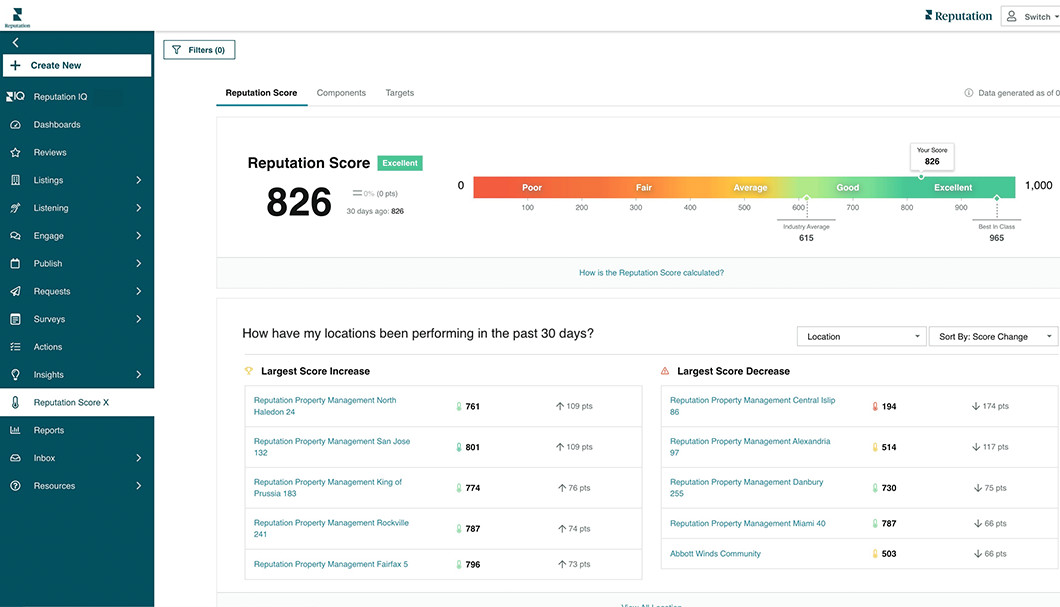
Reputation prices and packages per location, which makes it a multi-location and enterprise tool rather than a single-site review platform. Reviews are one module inside a wider local-presence suite covering listings, surveys, social and insights.
Key pricing:
- Rep Core: $80 per location per month
- Rep Core plus Pulse: $115 per location per month
- Rep Core plus Surveys: $150 per location per month
- Enterprise: Custom pricing, described as “custom plans designed to unlock growth for 125+ locations”
Here’s one caution on the billing. Its pricing page prints the unit only as “/ location / mo”. It says nothing about annual billing, contract term or auto-renewal, so don’t assume either way.
It also sells done-for-you managed services, and it names location-heavy verticals directly, including healthcare, automotive and financial services.
Worth considering if you: run more than a handful of locations and want reviews inside a wider local-presence platform rather than as a standalone product.
Yotpo
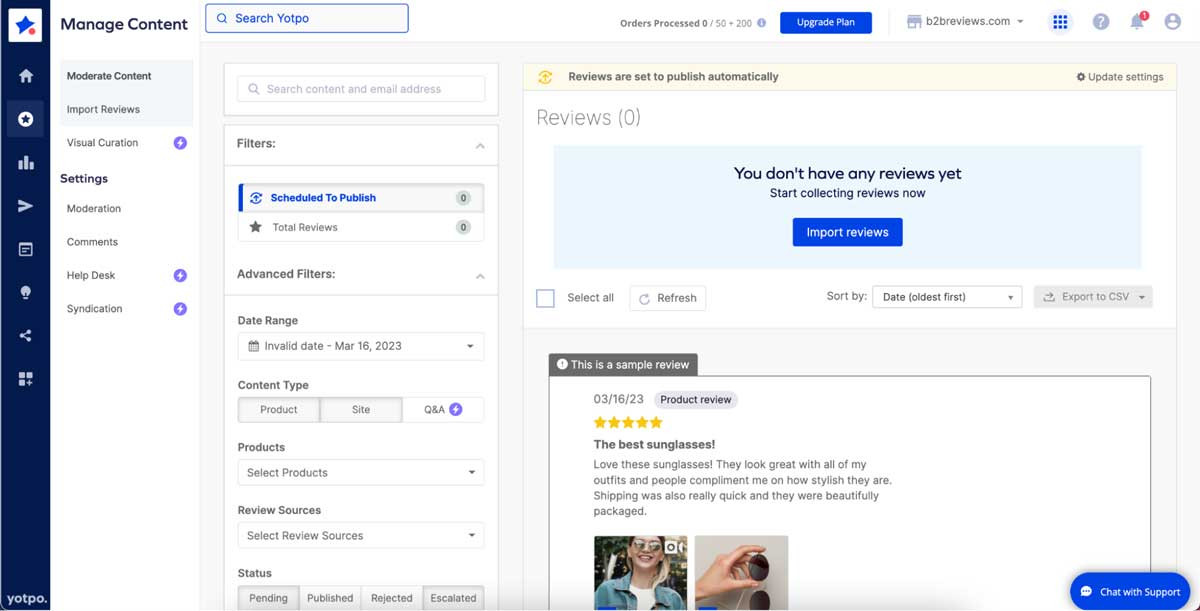
Yotpo is an e-commerce platform rather than a general reputation tool, and everything is priced against store order volume. That makes it a strong fit for an online store and a poor one for a B2B or multi-location service business.
Key pricing, all driven by monthly order volume:
- Starter: from $15 per month at 0 to 99 orders, $89 per month at 300 to 599 orders, $129 at 600 to 999
- Pro: from $119 per month at 0 to 299 orders, rising to $379 at 4,000 to 5,999
- Premium and Enterprise: quote only
- Free plan: confirmed on its FAQ, “up to 50 monthly orders”
Any Yotpo figure without its order band attached is meaningless, and its pricing page prints only “/ month” with no annual option stated.
Its one big move is the bundle, because reviews and UGC sit alongside Loyalty and Referrals, cheaper together. Retail syndication is gated to Premium and above.
Worth considering if you: run an online store and want reviews priced against orders, with loyalty in the same subscription.
These two widen the shortlist, but more options don’t make the choice easier.
The right choice comes down to what you need most from a Trustpilot alternative and which trade-offs you’ll accept. So which platform fits you? Let’s break it down by what you’re actually trying to solve.
Which Trustpilot Alternative Should You Choose?
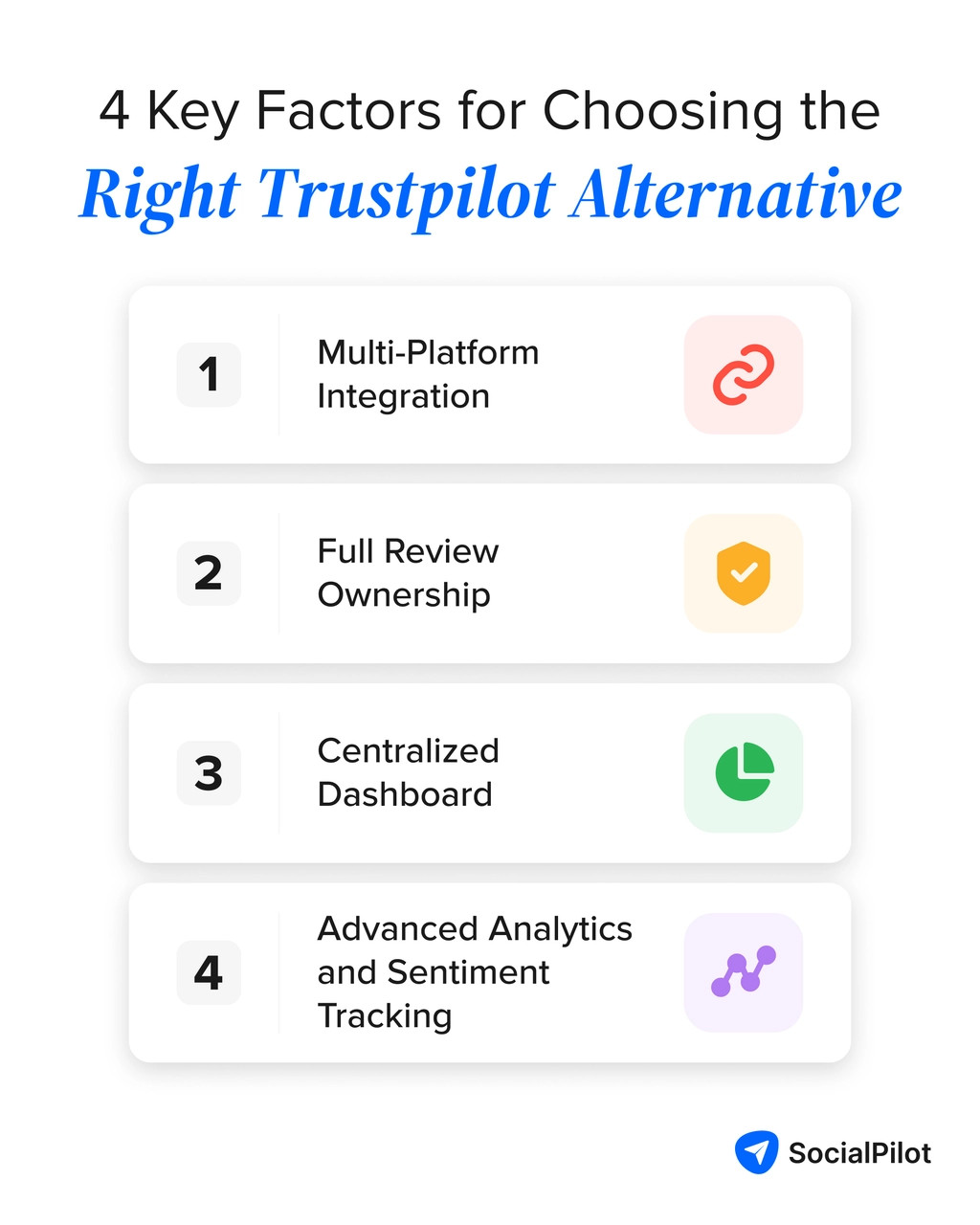
There’s no single Trustpilot alternative that works best for everyone. The right choice depends on what you need the platform to do, how many locations or domains you run, and which complaint drove you here.
Multi-Platform Integration
If your customers review you in four different places, this is the criterion that should matter the most.
| If you need | Pick |
| The mainstream sources most businesses actually get reviews on, Trustpilot included | SocialPilot Reviews, on eight sources |
| The widest advertised net across review sites | Birdeye, on its claimed 200-plus sites |
| Reviews plus listings across a large directory network | Yext |
| Reviews and local search rankings in one report | BrightLocal |
| An independent hosted review profile | Feefo or Reviews.io |
Full Review Ownership
If owning the reviews you collect is the point, only two tools on this page can offer it. They’re the two that host reviews themselves.
Trustpilot’s stated position is that “reviews are owned by the reviewers, who can edit or delete them.” Reviews.io counters that it transfers publishing rights to you. Feefo hosts and verifies, so the same logic applies.
Centralized Dashboard
If you check Google, Facebook and Trustpilot in separate tabs every morning, the fix isn’t a better review site. It’s one inbox that reads every one of them. You answer from a single screen. It publishes directly where the platform allows it, and drafts where it doesn’t.
Among all the tools listed here, SocialPilot Reviews is the one that pulls a Trustpilot profile by URL with no login. It drafts the replies for you to paste rather than posting them itself.
Advanced Analytics and Sentiment Tracking
If a star average isn’t enough, look at how deep each tool’s analysis goes, because the gap is wider than the feature name suggests.
| Depth of analysis | Tools |
| Rating trend over time, per location and per platform | SocialPilot Reviews, Vendasta, Moz Local |
| AI sentiment analysis surfacing themes | Vendasta, Birdeye, Reputation |
| Review data tied to local search rankings | BrightLocal |
| Text campaign metrics on SMS invitations | Every scored tool except Trustpilot |
Once you know what you need from your platform, the decision gets a lot simpler. The next step is figuring out what the switch actually looks like, and what you should have in place before leaving Trustpilot.
Making the Switch from Trustpilot
Trustpilot remains a strong option if you need an independent, widely recognized consumer review profile, and that goes double for e-commerce and online services. But it isn’t the right fit for every business, and its contract term and moderation policy are real trade-offs.
So how do you choose? The better choice depends on what you need most from the platform.
Some platforms host reviews the way Trustpilot does, while others manage the reviews you’re already collecting across Google, Facebook and the rest. Pricing units, contract term and review ownership matter more here than feature counts.
The goal isn’t to find the platform with the most features. It’s to find the one that answers the single reason you started looking.
For teams whose reason is coverage rather than the badge, SocialPilot Reviews is one option worth weighing. SocialPilot Reviews’ pricing is designed to give businesses flexibility, with plans available for different needs and monthly or annual billing options.
If your priority is verified reviews, enterprise-scale reputation management, local SEO, or all-in-one customer communication, the other platforms in this guide may be a better fit.
At the end of the day, the right alternative is the one that solves the problem that brought you here. Start with that problem, and the right platform becomes much easier to spot.
Frequently Asked Questions
What to use instead of Trustpilot?
Nine tools cover the realistic options: SocialPilot Reviews, Yext, Podium, Birdeye, Vendasta, BrightLocal, Moz Local, Feefo and Reviews.io. Feefo and Reviews.io host reviews themselves, in the same category as Trustpilot. The other seven manage reviews you’re already collecting on Google, Facebook and elsewhere. Pick based on which of those two jobs you need.
Does Trustpilot allow you to manage Google reviews?
No. Trustpilot doesn’t manage Google reviews, though it does work with Google to show Trustpilot reviews in search results and Google Ads, through the Google Store Ratings feature. But you can’t read or reply to Google Business Profile reviews inside Trustpilot. For that you need a review management tool that connects to Google directly.
What’s better, Google reviews or Trustpilot?
Google reviews, for most local businesses. They feed Search and Maps, so they drive your local SERP visibility and whether customers find you at all. Trustpilot builds credibility for online and e-commerce brands through a recognized third-party badge. If you can only do one properly, do Google first, then add an independent platform for social proof.
About the Author
