15 best influencer marketing tools by use case (2026)
Key takeaways
- Influencer marketing tools range from all-in-one platforms to specialized solutions for creator discovery, campaign management, analytics, relationship management, and affiliate tracking.
- The top influencer marketing tools for 2026 include Hootsuite for unified social and influencer workflows, Upfluence for end-to-end campaign management, CreatorIQ for relationship management, and Impact.com for affiliate partnerships.
- The right tool depends on your program’s complexity, your budget, and whether you need deep analytics, creator discovery, or full campaign orchestration.
- AI-powered features like sentiment analysis, creator matching, and performance forecasting are now standard expectations for enterprise influencer programs.
What is an influencer marketing tool?
An influencer marketing tool is a platform, app, or software that helps you manage and streamline different aspects of your influencer marketing strategy.
Depending on the tool, that can mean finding and vetting creators, running outreach, approving content, processing payments, and measuring performance. Some tools are all-in-one solutions that handle the entire workflow, while others focus on specific functions, like influencer discovery or campaign management.
A growing number of these platforms also plug into a broader social media management tool, so influencer content lives in the same workflow as the rest of your social calendar. If you need strategy guidance before you start shopping, check out our full guide to influencer marketing.
Why use influencer marketing tools?
Influencer marketing tools exist because spreadsheets stop working somewhere around your fifth creator. Once a program has more than a handful of partners — and U.S. spending alone surpassed $10 billion in 2025 — the manual version costs more in coordination than it returns in reach.
Here’s what the right tooling gives you:
- Scale without headcount: Automated outreach, briefs, contracts, and payments let a small team run dozens of creator partnerships at once.
- Better creator fit: Audience data, engagement rates, and brand affinity signals help you pick partners based on evidence rather than follower counts.
- Provable ROI: Tracking links, promo codes, and e-commerce integrations connect creator activity to revenue, not just impressions.
- Brand safety: Content approvals, audience quality checks, and fraud detection reduce the risk of partnering with the wrong account.
- Centralized workflows: One source of truth for creator contacts, contracts, and content keeps social, PR, and e-commerce teams aligned.
How to choose the right influencer marketing tool
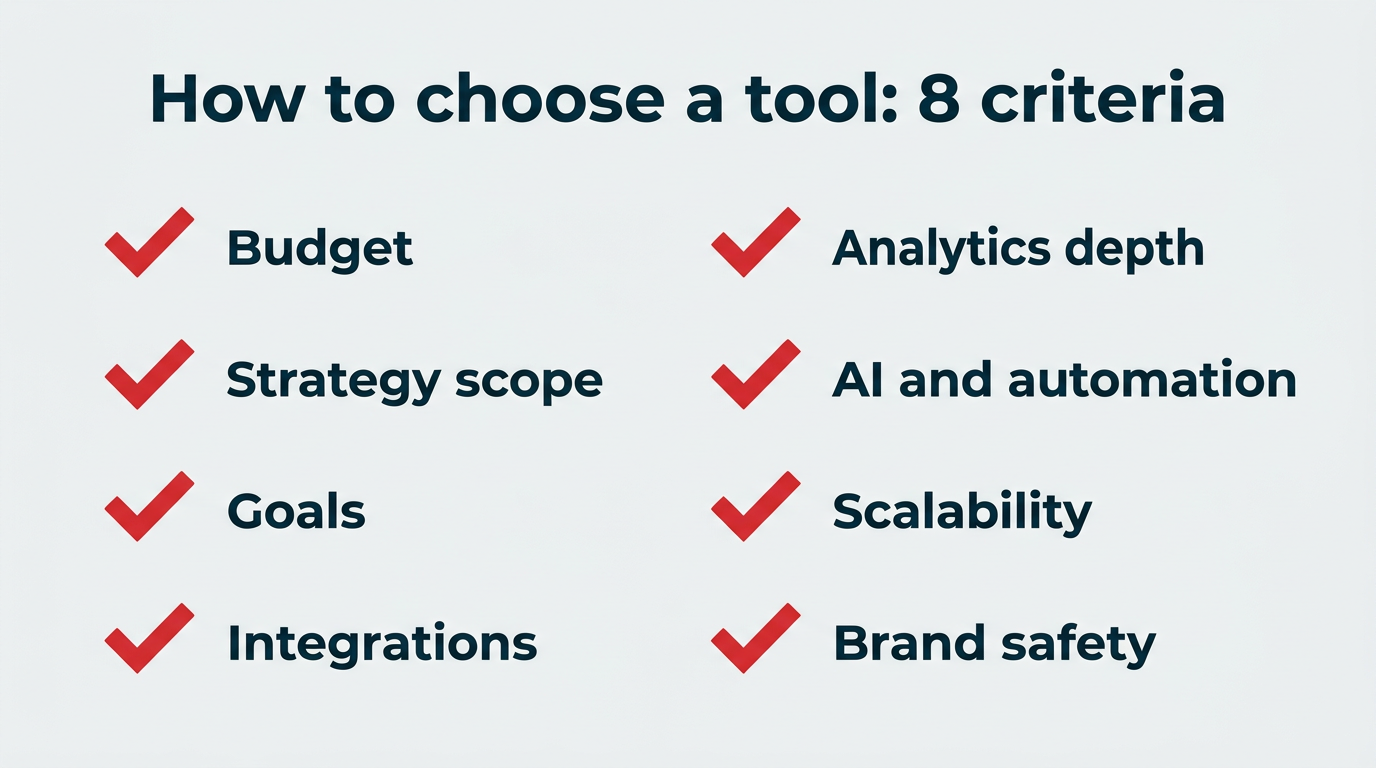
The best influencer marketing software depends on your goals, budget, and how complex your strategy is. Work through these criteria before you book a demo:
- Your budget: Cost can vary significantly between tools, from free options to enterprise-level platforms with custom pricing.
- Your strategy scope: Are you running a few one-off campaigns or managing an always-on influencer program? Not every tool can handle both.
- Your goals: Some tools are built for discovery, others for campaign management or analytics. Choose one that matches what you actually need to accomplish.
- Integrations: Look for connections to the systems you already use, including your social media management platform, e-commerce store, CRM, and email.
- Analytics and reporting depth: Check whether the tool reports on conversions and revenue, or stops at reach and engagement.
- AI and automation: Creator matching, sentiment analysis, and automated follow-ups save meaningful time as your roster grows.
- Scalability and collaboration: Permissions, approval workflows, and multi-user seats matter once more than one team touches the program.
- Compliance and brand safety: Disclosure tracking, audience quality checks, and content approvals help you stay on the right side of advertising rules.
Want inspiration before you commit? We’ve got plenty of real-world examples of influencer marketing campaigns.
Best influencer marketing tools at a glance
Here’s a quick comparison of the best influencer marketing tools, and what makes each one a good choice.
| Influencer marketing tool | Best for | Key strength | Starting price | Free trial |
|---|---|---|---|---|
| Hootsuite | Teams running influencer + social strategies | Integration with Upfluence + industry-leading social listening | $99/user/month | Yes |
| Lumen by Talkwalker | Data-driven teams | Sentiment analysis + trend prediction | Available on request | On request |
| Upfluence | E-commerce and affiliate campaigns | Integrates with Hootsuite; end-to-end campaign management | Available on request | No |
| Afluencer | Brands with smaller budgets | Creator marketplace with low barrier to entry | Free (paid from $49/month) | Free plan |
| Platform creator marketplaces | Single-channel campaigns | Real-time native metrics | Free | Free |
| Brandwatch Influence | Agencies | Full campaign management + analytics | Available on request | No |
| GRIN | Brands or agencies managing multiple creators | Campaign tracking + content management | Available on request | Free Chrome extension |
| Traackr | Teams measuring influencer performance | Spend tracking + competitive benchmarking | Available on request | No |
| HypeAuditor | Brands vetting audience quality | Fraud detection + audience analysis | Available on request | Limited free tools |
| CreatorIQ | Teams running complex influencer programs | Advanced creator CRM + relationship tracking | Available on request | No |
| Aspire.io | Relationship-focused teams | Customizable influencer CRM | Available on request | No |
| BuzzStream | Outreach-heavy teams | CRM + automated outreach workflows | $49/month | Yes |
| Impact.com | Brands combining influencer + affiliate marketing | Unified partner management platform | Available on request | No |
| Everflow | Performance-driven teams | Flexible commission + tracking models | Available on request | Trial available on request (demo/qualification required) |
| TrackNow | Affiliate-focused programs | Hybrid commission tracking | $116/month (Pro); $224/month (Enterprise) | Yes (14-day free trial) |
What are the best influencer tools for creator discovery?
The best influencer marketing tools for creator discovery are Hootsuite, Afluencer, Lumen by Talkwalker, and native creator marketplaces like TikTok One and Instagram’s Creator Marketplace.
These platforms function as both an influencer search engine and a powerful discovery tool, helping brands identify the right creators faster. Strong creator discovery comes down to filtering: audience overlap, engagement quality, and topical relevance.
Let’s take a closer look at our top picks:
1. Hootsuite
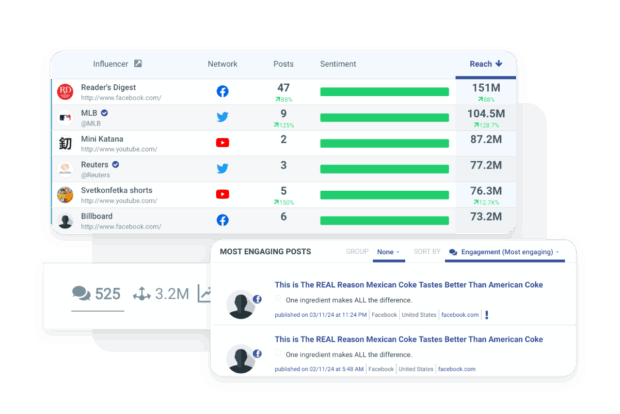
Hootsuite Social OS is a social operating system that helps marketers discover influencers and manage campaigns alongside their broader social strategy.
Lumen, the insights and listening app inside Hootsuite Social OS, analyzes conversations across social media, making it easier to identify relevant creators and top-performing content in your niche.
Hootsuite makes it easy to:
- Run influencer campaigns with Upfluence integration
- Publish and schedule influencer content alongside other social posts (no switching between tools)
- Spot trending hashtags, events, and content themes to guide content creation
- Identify top creators and social posts in your niche with Lumen
- Sort by engagement rate, reach, or social network
- Use the AI query builder to surface more relevant data about the creators in your space
- Create and track pre-approved content for employees and affiliates (through Hootsuite’s employee advocacy tools)
- Use the built-in Ow.ly link shortener to manage UTM parameters and track clicks
Price: Hootsuite plans start at $99/user/month for Standard, $249/user/month for Advanced, and custom pricing for Enterprise. Grab a free 30-day trial here.

2. Afluencer
Source: Afluencer
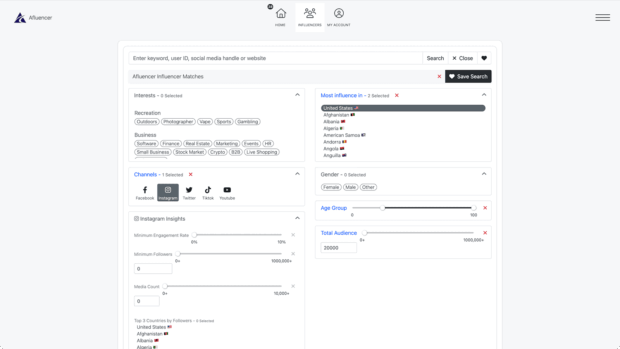
Afluencer is an influencer marketplace that connects brands with creators through a matchmaking-style platform.
With free plans available for both brands and creators, it offers a low barrier to entry for teams just getting started with influencer marketing. Brands can search the creator database or post collab opportunities and invite creators to apply.
Afluencer’s database includes verified creators with up-to-date metrics, helping you find partners that align with your target audience.
Afluencer allows you to:
- Search a database of thousands of verified creators
- Post collaboration opportunities
- Send influencer invites (the number of invites you can send depends on the plan you choose).
- Get personalized recommendations and increased visibility with premium plans
Price: Starting at $0/month. Premium brand pricing starts at $49/month.
3. Lumen by Talkwalker

Lumen by Talkwalker acts as an advanced discovery tool, combining social listening with sentiment analysis to help you find creators who are the best fit for your brand. It also surfaces user-generated content (UGC) about your brand, making it easy to spot potential collaborators and brand advocates.
Conversation clusters also help you identify social media accounts that offer compelling social proof.
Lumen by Talkwalker allows you to:
- Identify which social media platforms matter most for your brand, plus top content creators on each
- Discover creators whose audiences overlap with your target audience
- See visual maps of conversation clusters to uncover new, relevant influencers
- Track and optimize influencer-attributed revenue
- Get AI-condensed summaries of mentions and sentiment
- Identify valuable topics for influencer campaigns with virality maps that track audience enthusiasm
Price: Pricing available on request
4. Platform native creator marketplaces

Source: Meta
TikTok, Instagram, and YouTube all offer built-in creator marketplaces — TikTok One alone provides access to nearly 2 million creators — that help brands find influencers directly on each platform.
Each creator must meet minimum requirements for followers, posts, and views, so you can guarantee a certain level of quality and activity. And because these are native tools, metrics like follower counts and engagement update in real time.
If you’re running campaigns on one channel, these tools are an easy place to start.
TikTok One Creator Marketplace allows you to:
- Access personalized TikTok creator suggestions
- Collaborate with influencers for content creation and distribution
- Access influencer campaign reports through TikTok analytics
Instagram’s Creator Marketplace allows you to:
- Find and vet relevant creators
- Access a list of creators who have expressed interest in working with your brand
- Communicate directly with creators within Instagram
- Create and manage branded content campaigns
YouTube BrandConnect allows you to:
- Match with eligible YouTube creators for branded content deals
- Manage briefs, deliverables, and creator payments inside YouTube
- Measure branded video performance with YouTube’s own reporting
Price: Free
Psst: Want a roundup of the top Instagram influencers to watch in 2026? We’ve got you! You can find our list of Instagram’s top 20 influencers right here.
What are the best influencer tools for campaign management?
The best influencer tools for managing campaigns include Upfluence, Brandwatch Influence, and GRIN. These tools can manage influencer outreach, content approvals, performance tracking, and more.
Good campaign management software should cover the full lifecycle, from brief to payment. Let’s take a closer look at the top influencer tools for campaign management:
5. Upfluence

Source: Upfluence
Upfluence is an end-to-end influencer marketing platform that helps brands manage campaigns, track performance, and drive revenue.
It handles outreach, approvals, and reporting, while built-in sales tracking and commission tools make it easier to see what’s actually driving results. It also supports creator payments and gifting, helping teams manage the full campaign lifecycle in one place.
Better yet, Upfluence integrates directly with Hootsuite, bringing your influencer campaigns into the same workflow as your social media strategy. That means your team can plan, publish, and track influencer content alongside their other social activity. No tool switching, no messy workflows.
Upfluence allows you to:
- Connect with Hootsuite to run influencer campaigns from discovery to publishing
- Keep influencer and social teams aligned in a single workflow
- Find creators based on audience, engagement, and relevance
- Access tools for influencer outreach, content approval, and performance tracking
- Integrate with e-commerce platforms like Shopify
- Generate and track unique promo codes for influencer and affiliate campaigns
6. Brandwatch Influence
Source: Brandwatch
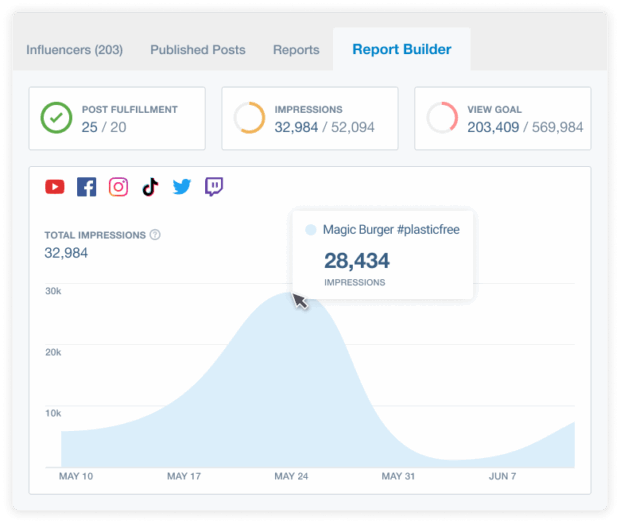
Brandwatch Influence is a complete influencer marketing solution, but it really shines for campaign management.
It centralizes creator communication, deliverable tracking, reporting, and analytics, making it easier to manage campaigns at scale. Built-in content approvals also help teams keep campaigns organized and on track.
Brandwatch Influence allows you to:
- Access an extensive influencer database
- Filter by interests, brand affinity, previous work, and credibility
- Manage influencer partnerships, communication, and campaigns
- Report on campaign performance and deliverables
- Provide influencers with white-labeled reporting for transparency
7. GRIN

Source: GRIN
GRIN is a multi-functional influencer marketing tool built for managing campaigns at scale. It brings contracts, content, and rights management into one place, with built-in ROI and conversion tracking.
GRIN allows you to:
- Identify and contact relevant creators, including those within your existing customer base
- Create briefs, send proposals, and manage all creator campaigns from a unified dashboard
- Build a creator content library accessible to all teams
- Analyze and report on campaigns, including ROI
Price: Available on request. There’s also a free Chrome extension for influencer analysis.
What are the best influencer marketing tools for analytics and ROI?
The best influencer analytics tools are Traackr and HypeAuditor. Both are built for teams that need to prove influencer ROI rather than report on impressions alone.
Measurement is where most influencer programs stall. Reach is easy to report; incremental revenue and audience quality are not. These two platforms specialize in closing that gap.
8. Traackr
Traackr is a data-driven influencer marketing platform built around performance measurement. It tracks spend against results, benchmarks your program against competitors, and standardizes metrics so different campaigns can be compared fairly.
Traackr allows you to:
- Track influencer spend, performance, and cost efficiency in one view
- Benchmark your program against competitors in your category
- Measure earned media value and engagement across networks
- Manage creator relationships and campaign workflows alongside reporting
- Build custom dashboards for stakeholder reporting
9. HypeAuditor
HypeAuditor focuses on audience quality. It analyzes creator followings for fake accounts, bot engagement, and suspicious growth patterns, then layers campaign analytics on top so you can see whether the audience you paid for is real.
HypeAuditor allows you to:
- Audit creator accounts for fake followers and inflated engagement
- Review audience demographics, interests, and authenticity scores
- Track campaign performance across Instagram, TikTok, YouTube, and X
- Monitor competitor influencer activity and share of voice
- Estimate fair pricing for creator partnerships
Price: Available on request, with limited free analysis tools
What are the best influencer relationship management tools?
The best influencer relationship management tools are CreatorIQ, Aspire.io, and BuzzStream. These influencer CRM and outreach tools help manage creator relationships, track communication, and maintain organized influencer data at scale.
Let’s explore our top picks:
10. CreatorIQ

Source: CreatorIQ
CreatorIQ is an influencer marketing platform that focuses on managing creator relationships and content at scale.
It includes a robust creator CRM designed to strengthen long-term partnerships and increase creator loyalty. Teams can identify at-risk relationships, personalize outreach, and manage creator interactions more effectively across campaigns.
CreatorIQ allows you to:
- Identify and vet relevant creators using AI-powered recommendations
- Weed out accounts with fake followers
- Centralize creator data to track and manage relationships
- Manage campaign workflows, reporting, and benchmarking
- Guide new creators through your onboarding process and customize outreach
11. Aspire.io

Source: Aspire.io
While Aspire.io supports full campaign management, it stands out for its focus on relationship management. Teams can track influencer communication, group campaigns by project or type, and use custom tags for more personalized relationship management.
Aspire.io allows you to:
- Manage all influencer contacts
- Sync communications through Outlook and Gmail
- Manage influencer gifting via Shopify
- Find new creators and manage contracts and deliverables
- Track and report on conversions and ROI
- Automate repetitive tasks like sending contracts
Price: Available on request
12. BuzzStream

Source: BuzzStream
BuzzStream is an outreach-oriented CRM. It’s designed for anyone aiming to get more inbound links and content coverage. If your company has a PR team, this tool might also benefit them.
On the influencer collaborations side, it’s effective for managing your influencer roster. It tracks contact history, notes, metrics, and recent posts.
BuzzStream allows you to:
- Build influencer profiles for all current and target creators
- Sort and filter contacts to find the right match for each of your campaign goals
- Access creator outreach email templates
- Track outreach open rates, click rates, and response rates
- Personalize your outreach messages based on the extensive details stored in the CRM
- Automate outreach follow-ups
Price: Starting at $49/month for the Starter plan
What are the best affiliate marketing tools for influencer programs?
The best affiliate marketing tools include Impact.com, Everflow, and TrackNow. These tools help marketers track performance, manage partner relationships, and optimize affiliate campaigns, which makes them a natural fit for creator programs paid on commission.
Let’s break down each tool below.
13. Impact.com

Source: Impact.com
Impact.com is a partnership platform that brings influencers and affiliates together.
That makes it a strong fit for teams running both influencer and affiliate programs, with flexible compensation models and built-in performance tracking. By combining these workflows, teams can scale partnerships without losing visibility.
Impact.com allows you to:
- Identify and onboard potential influencers and affiliates
- View creator metrics, including audience demographics
- Manage creator and affiliate campaigns
- Track performance across devices
- Identify fraudulent clicks, cookies, and app installs
- Create a branded partner interface
Price: Available on request
14. Everflow

Source: Everflow
Everflow is a partnership marketing platform built to track affiliate performance and manage creator relationships in one place. It’s designed for teams that want flexibility, with custom payment models based on both engagement and conversions.
Everflow allows you to:
- Track and manage all referral relationships from all channels
- Identify and connect with new affiliates and creators
- Analyze performance on an individual level to provide one-on-one feedback
- Track recurring revenue as well as CPA/CPC/CPM
Price: Available on request. A trial may be available, but typically requires booking a demo and qualifying first rather than signing up directly.
15. Tracknow

Source: TrackNow
TrackNow is an affiliate marketing platform that helps marketers run and measure partner programs more effectively.
It gives you clear visibility into performance, with automated coupon tracking, flexible promotion options for affiliates, and built-in fraud detection. It also connects with major e-commerce platforms, so you can tie activity to sales.
TrackNow allows you to:
- Structure commissions based on conversions, post performance, or a mixture of both
- Track reach, engagement, clicks, and conversions
- Create a custom-branded affiliate interface
Price: Starting at $116/month for the Pro plan (billed annually), rising to $224/month for the Enterprise plan
How is AI shaping influencer marketing tools in 2026?
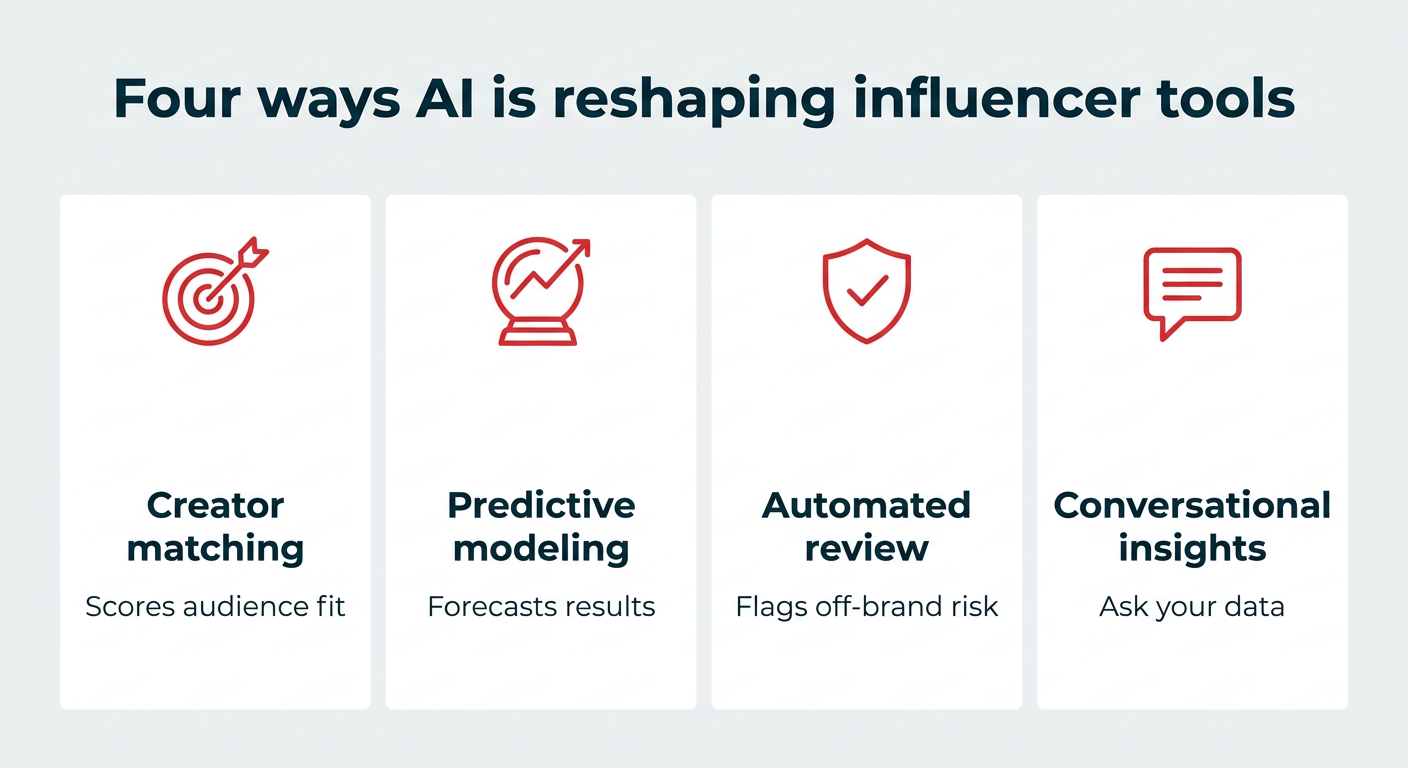
AI has shifted from a feature in influencer marketing tools to the layer most of them now run on. For marketing leaders, the practical effect is faster vetting and fewer manual steps between finding a creator and reporting on results.
Four changes stand out:
- AI-powered creator matching: Platforms now score creators against your brand using audience overlap, topic relevance, and past performance instead of follower counts alone.
- Predictive performance modeling: Some tools forecast likely reach, engagement, or conversions before a contract is signed, which helps with budget allocation.
- Automated content review: AI flags off-brand messaging, missing disclosures, and risky content in creator drafts before it publishes.
- Conversational insights: Natural-language querying lets teams ask questions of their campaign data and get an answer without building a report.
Hootsuite Social OS applies the same approach through Lumen, its integrated insights and listening app, which surfaces contextual intelligence on creators, conversations, and sentiment so teams can act on it inside their existing workflow.
FAQ: Influencer marketing tools
What are the best influencer marketing tools for enterprise brands?
The best influencer marketing tools for enterprise brands include platforms like Upfluence, CreatorIQ, and Hootsuite. Hootsuite Social OS stands out as an all-in-one option because it brings influencer campaigns, publishing, analytics, and social listening through Lumen into one connected system, which is key for teams managing large, cross-channel programs.
How do influencer marketing platforms help brands discover and manage creators?
Influencer marketing platforms help brands discover creators through searchable databases, AI-powered matching, and filters like audience demographics, engagement rate, and niche. They also help manage creators by centralizing outreach, content approvals, and performance tracking.
What features should companies look for in an influencer marketing tool?
The key features companies should look for in an influencer marketing tool are creator discovery, campaign management, and analytics. Strong platforms also offer audience insights, AI-assisted matching, compliance and disclosure controls, and integrations with your social, CRM, and e-commerce systems so campaigns can run efficiently at scale.
How do influencer marketing tools measure campaign performance and ROI?
Influencer marketing tools measure campaign performance by tracking metrics like reach, engagement, clicks, and conversions, along with more advanced ROI tracking. Many platforms apply attribution modeling across channels and connect to e-commerce to tie revenue directly to individual creators.
How do enterprises manage influencer campaigns at scale using software?
Enterprises manage influencer campaigns at scale by using software to automate workflows, centralize data, and track performance across hundreds of creators at once. Hootsuite Social OS supports this by combining influencer campaigns with broader social media management, so teams can plan, execute, and report from one place.
What is the difference between influencer marketing tools and social media management tools?
The difference between influencer marketing tools and social media management tools is scope: influencer marketing tools focus on creator discovery, relationship management, and campaign tracking, while social media management tools handle publishing, scheduling, engagement, and analytics across your owned channels. Many teams use both, and some platforms connect the two workflows.
What are the most common niches for influencer marketing?
The most common niches for influencer marketing include beauty and skincare, fitness and wellness, food and cooking, fashion, gaming, and technology. B2B categories like software and finance are growing too, usually through subject-matter experts rather than lifestyle creators.
How much do influencer marketing tools cost?
Influencer marketing tools cost anywhere from nothing to thousands per month. Free options include Afluencer’s starter plan and native platform marketplaces, mid-range tools like BuzzStream start around $49/month, and enterprise platforms typically use custom pricing based on seats, creators, and campaign volume.
Can influencer marketing tools detect fake followers?
Yes, influencer marketing tools can detect fake followers. Platforms like HypeAuditor and CreatorIQ include audience quality analysis and fraud detection that flag bot engagement, suspicious growth patterns, and inflated metrics before you sign a partnership.
How is AI used in influencer marketing tools?
AI is used in influencer marketing tools for creator matching, audience analysis, sentiment detection, performance forecasting, and automated content review. It also powers conversational querying, so teams can ask questions of their campaign data instead of building reports manually.
Save time managing your social media marketing strategy with Hootsuite. Publish and schedule posts, find relevant conversions, measure results, and more â all from one dashboard. Try it free today.