Google recently announced that Local Service Ads (LSAs) management would be migrating to Google Ads. Previously, a majority of the account optimizations and verification process were handled in a separate interface. I say majority, because things like billing and user access were still handled within the Google Ads interface. However, with this change, everything will now be managed under one roof.
At this point, there are still a lot more questions than answers as to what management is going to look like post-migration; however, Google has assured us that LSAs will still operate using the Pay-Per-Lead model, placements will remain the same at the top of the SERP (Search Engine Results Page), and the campaigns will remain keywordless and instead based on the available verticals. Local Service Ads themselves will be transitioning to a new variation of a Performance Max campaign that will utilize a Pay-Per-Lead model.
What Stays the Same?
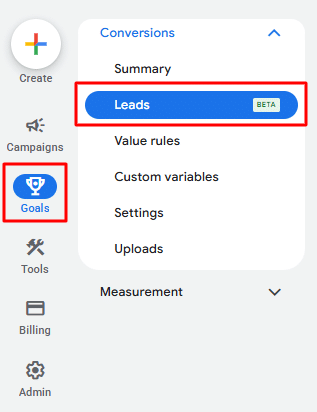
Advertisers will also still be able to manage, download, and interact with their LSA leads. This table will now be found under the “Goals” tab (Goals > Conversions > Leads). Here you’ll also be able to read and reply to message leads if that feature is available and enabled for your vertical.
LSA Migration Timeline
This migration is planned to be rolled out in three phases:

Phase 1 – August 2026:
The first portion of the migration will include select home and storefront service advertisers in the United States for the following verticals: Plumbing, HVAC, Electrical, Appliance Repair, House Cleaning, Lawn Care, Roofing, Pest Control, and Moving.
Phase 2 – Late 2026:
Next, the migration will expand to broader advertiser groups, including service-area businesses without physical storefronts and accounts with custom bidding or booking configurations.
Phase 3 – 2027:
Lastly, the migration expands to non-U.S. accounts and any remaining business categories not included in the 2026 migration.
What to Expect Before and During Migration
Prior to the migration, account admins will receive an email notification both 14 days out and seven days out, as well as a banner within the existing LSA interface. You’ll also receive a final email notification once the migration is complete.
As for the migration itself, Google will automatically transfer your entire campaign setup to Google Ads for you. Service areas, verticals, job types, budgets, schedule, and photos will remain intact with no action required on the advertiser’s end.
Google says be prepared to allow up to two weeks for the migration process to fully complete and performance to ramp back up to their previous levels.
Download Historical Reports Before You Migrate
After the migration is complete, advertisers will no longer be able to access the old LSA dashboard. Previous performance reports will no longer be accessible, so it’s important to download and save those reports prior to your account migrating over.
Changes to Verification and Business Information
While Google has assured us that the majority of what makes LSAs is staying the same, there are a few changes coming to the setup and verification process.
Previously, advertisers were required to reverify their insurance and licenses (depending on your vertical and location) on an annual basis. Apparently, that will no longer be required. You will still have to complete the initial verification requirements when creating your LSA campaign, but you won’t have to reverify anymore when your originally submitted license and insurance documents expire.
Your business details like your business name, physical address, and standard hours will sync automatically with your Google Business Profile, although Google notes that you will still have the option to adjust targeting elements like service areas and ad schedules within Google Ads.
To me, these two changes point to Google easing up on the barrier to entry for LSAs by trying to incentivize more advertisers to adopt this new strategy with an easier setup process and a more simplistic management approach in the same dashboard as their Google Ads.
Additional Changes Coming to Local Service Ads
Outside of those changes, there’s an additional laundry list of ancillary changes tied up with this migration:
- Budgets: Budgets are shifting away from the “Average Weekly Budget” currently in place on the LSA interface to the daily budget model (30.4) that most Google Ads campaigns utilize.
- Better Business Bureau (BBB) callouts are being deprecated: Previously, you were able to list your BBB rating as one of your “Business Bios.” It required assistance from LSA support to show these on your profile, but they will no longer be available.
- Real-time phone number editing: Another change that required you to call the LSA support line to change. Now advertisers will be able to update this at the click of a button.
- Manual CPL deprecation: Previously, you could literally set the price for your leads by using a manual bidding strategy. With LSAs utilizing a Pay-Per-Lead model, advertisers could set the price of what they were willing to pay for a lead. There was also an option to set a Target Cost per Lead (tCPL), though I’m not sure if that will be deprecated as well. I imagine that will stay in place, considering that it is a bid strategy utilized in your normal Google Ads Performance Max campaign already. If the tCPL option is also deprecated, that would leave Max Conversions as the only available bid strategy, which would be concerning considering the level of competition some of these verticals face.
- Vertical-level Target CPA: You used to be able to set different tCPLs for different verticals if you were advertising on multiple verticals. Now you will have a unified campaign-level Target CPA.
Our Take on the LSA Migration
Personally, I see this as a welcome change. The LSA interface was quite buggy and prone to frequent crashes. And while it’s purely speculation, in theory, this migration should allow advertisers more opportunity to efficiently and effectively drive traffic to the right verticals without having to jump through as many hoops.
But that’s enough wild speculation for now; we’ll be sure to monitor this situation as it unfolds and be doubly sure to update this article as more information becomes available.