Key takeaways
- Start with strategy. Social media best practices in 2026 begin with clear goals, audience research, and choosing the right platforms before you create any content.
- AI is central, but human oversight wins. The best-performing teams pair AI speed with human quality checks.
- Measuring results is no longer optional. Your analytics should connect social activity to real business outcomes and prove social media ROI.
- The details separate good from great. Social listening, accessibility, and fast customer responses set the strongest social presences apart.
Social media best practices are the proven strategies and workflows that help brands build audience trust, create content that performs, and measure real business impact across social platforms.
The catch is that they never stay still. As platforms, algorithms, and audience expectations shift, so do the tactics that work best. What earned reach in 2024 may fall flat in 2026, which is why the strongest teams revisit their approach regularly.
Here’s a quick look at the categories of best practices we cover in this guide, and why each one matters.
|
Category |
Example practices |
Why it matters |
|---|---|---|
|
Strategy |
Set clear goals, research your audience, pick the right platforms |
Grounds everything you do in real business objectives |
|
Content |
Schedule in advance, create native content, test creative, design for accessibility |
Quality and fit beat volume in 2026 feeds |
|
Engagement |
Brand guidelines, approval workflows, community building |
Turns broadcasting into two-way conversation |
|
Customer service |
Treat social as a support channel, respond fast, use AI for speed |
Timely responses build trust and drive sales |
|
Analytics |
Track key metrics, connect data to business outcomes |
Proves social media ROI and earns budget |
|
B2B |
Align with business goals, gated resources, LinkedIn focus |
Supports longer buying cycles and lead generation |
Social media strategy best practices
Strategy comes before tactics for a reason. When your goals, audience, and platform choices are clear, every content decision that follows gets easier and more effective.
1. Set clear social media goals
Clear goals are the foundation of any effective social media strategy. They tell you what success looks like and keep your team focused on activity that actually moves the business forward.
Most top-ranking guides lead with goal-setting, and for good reason. Without goals, it’s easy to chase vanity metrics like follower counts instead of the outcomes that matter, like leads and revenue.
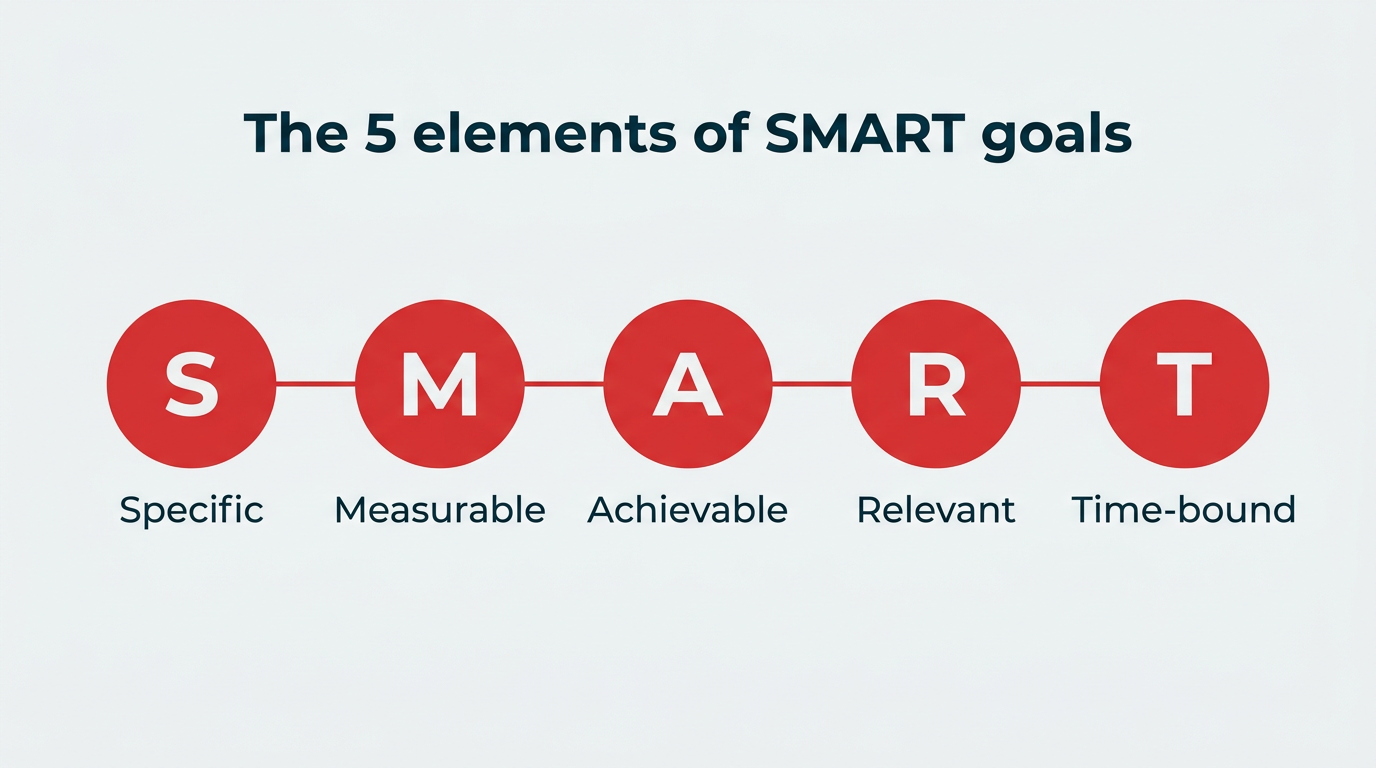
Aim for SMART goals: specific, measurable, achievable, relevant, and time-bound. Then tie each one to a broader business objective and a clear social media ROI measure.
Common social media goals include:
- Brand awareness
- Lead generation
- Customer retention
- Community building
- Thought leadership
To-do list:
- Write 2-3 SMART goals tied to specific business objectives.
- Decide which metrics will show whether each goal is on track.
- Separate vanity metrics from business-impact metrics before you report on them.
2. Do audience research
Your target audience is the foundation of everything you do on social media.
Knowing who they are, what they want, and how they spend their time on social platforms has never been more important. Audience insights tools can surface demographics, interests, and behavioral patterns to fill in the gaps.
In fact, algorithms no longer reward brands for accumulating followers. They reward them for consistently signaling relevance with the right people.
Every social marketing team should be able to answer the following questions:
- Who are your customers?
- Where do they hang out online (and in real life)?
- What do they care about?
- What do they think of you? Is it what you want them to think?
- What types of content are they most likely to enjoy and engage with?
- What are their buying habits, especially online?
So, where can you find these answers? Start with the data you already have.
Your CRM, Google Analytics, and social media insights are great places to begin. If you want to go deeper, we’ve got a whole blog post dedicated to audience and target market research.
To-do list:
- Analyze your CRM to build a profile of your existing customers.
- Add UTM parameters to all social links to bring more useful data into Google Analytics.
- Use social analytics to identify demographics of your existing social audience.
- Build audience personas.
3. Build a presence on the right networks
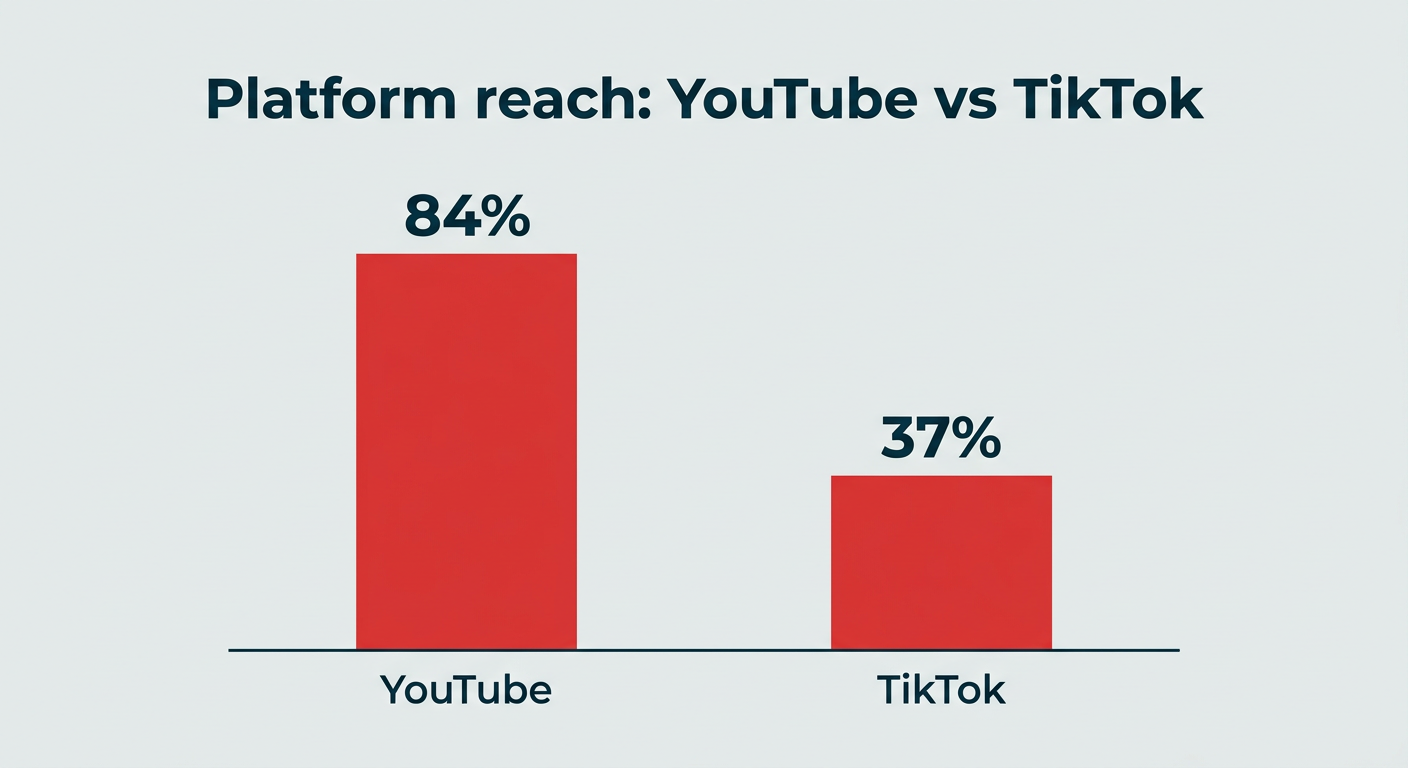
The right social media platforms are the ones your audience actually uses, and usage varies widely, with 84% of U.S. adults on YouTube but only 37% on TikTok. If a platform isn’t a good match for your audience or your brand, it’s okay to skip it.
Being everywhere can actually lead to brand fatigue, since people use different platforms for different reasons. They don’t want to connect with brands (or at least the same brands) in every single place.
The 2026 landscape adds a few wrinkles worth noting. Short-form video continues to dominate reach across platforms, Threads has matured into a steadier home for conversation, and shifting regulatory conditions in some markets may affect how you plan around certain apps. Keep those factors in view, but let audience fit drive the final call.
Before committing to a platform, consider:
- Does my team have the bandwidth to create relevant content for this platform?
- Does the purpose of this platform fit our brand?
- What is the current social media ROI on this platform?
TL;DR: You’ll get better results by focusing on fewer platforms (and doing them well) than scrambling to try to be everywhere at once.
To-do list:
- Perform a social media audit to get the full picture of your current social media commitments and results.
- Secure usernames for any platforms where you don’t have one. A username generator can help you find available handles. You don’t ever have to use them, but having them means no one else can take them.
- Perform an ROI calculation for each platform. Use our free social media ROI calculator tool or the detailed ROI reports available in Hootsuite Advanced Analytics.
- Decide which platforms deserve organic, paid, or both based on where your audience spends time.
4. Embrace social listening
Social listening provides free, real-time market research. It involves scanning social media channels for mentions of your name, products, specific keywords, or anything else you want to scout for.
It also follows naturally from audience research and platform selection, since what you hear here directly shapes the content you create next.
Advanced social listening tools like Lumen can even recognize logos in images, evaluate brand sentiment, and more. This gives you the real scoop on what people think of your company, or the product features they really want.
You can also use social listening to monitor your competition and spot trending topics and conversations happening in your industry.
According to the Hootsuite Social Media Trends Report 2026, social teams that use social listening effectively build more credibility and earn larger budgets by delivering insights that drive real business impact and prove ROI.

#1 Easy Social Listening
Brand mentions, trending topics, and sentiment at your fingertips. Enhance your social strategy with the insights that matter.
Social media content best practices
In 2026, content quality and fit matter more than volume. A handful of posts built for each platform will outperform a flood of copy-pasted updates every time.
5. Schedule your content in advance
Planning your social media content in advance allows time to create high-quality content and logically put together campaigns developed with collaboration and feedback from your team.
While several social media platforms offer native scheduling features, Perch, the content, planning, and publishing app in Hootsuite Social OS, gives you a unified tool for cross-platform collaboration, campaign mapping, and scheduling.
Check the content calendar view to see your upcoming organic, paid, and scheduled content at a glance.
6. Create content that fits each platform
Repurposing content is an effective social media strategy that helps teams get more mileage from existing content. But sharing the same post everywhere isn’t a strategy.
You can (and should) repurpose content, but it should feel native to each platform. In other words, don’t auto-publish a Facebook post into an Instagram story.
For example, instead of posting the same blog link across all your channels, you can:
- Turn key points into a thread on X or Threads
- Create a short YouTube video based on the article
- Record an Instagram Reel that highlights takeaways and links back to the full post
Part of making content feel native is respecting each platform’s image and video size specifications. Even when the message stays the same, customizing the media specs and previewing your caption length keeps your profiles polished and professional.
You can do this before scheduling your posts, or conveniently right inside Hootsuite as you’re scheduling.
To-do list:
- Repurpose one strong piece of content into at least two platform-native formats.
- Check out our social media image size cheat sheet to make sure your content creation guidelines are up to date.
7. Test and iterate on creative
Testing helps social media teams spot which content formats, messages, and tactics drive results.
Some social posts drive strong engagement. Others don’t. A consistent A/B testing strategy makes the difference by letting you change one variable at a time and see what actually moves the needle.
That applies to strategy and creative alike. On the strategy side, test posting times and formats. On the creative side, images, videos, GIFs, and carousels can all impact engagement and click-through rates.
There are endless options to test, but the key thing is to test only one thing at a time. Otherwise, it’s hard to know exactly which new element “won” at the end. And since social media changes quickly, testing can’t be a one-time exercise.
To-do list:
- Survey your audience to ask them what they want.
- Experiment with posting times to maximize reach.
- Try testing a GIF instead of a static image, then test the winner against video and a carousel.
8. Use design tools that integrate with your social tools
There are tons of social media apps to help out with design tasks. If you don’t have a design team, you can easily create graphics with Canva or Adobe Express.
Better yet: Hootsuite integrates with both of those to unlock max scheduling productivity. When you integrate your design tools and your social tools, you are better able to play with and preview content, then revise it for each platform.
To-do list:
- Try designing a social post without leaving Hootsuite by using the integrated Canva design tool.
9. Make your content accessible
Accessible content is content everyone can use, including people with visual, hearing, or cognitive disabilities. It’s the right thing to do, and it also expands your reach. Captions, for example, increase video engagement because so many people watch with the sound off.
Building accessibility into your workflow is easier than retrofitting it later. A short checklist covers most of what you need.
- Alt text: Describe every image so screen readers can convey it.
- Captions and subtitles: Add them to all video content.
- Color contrast: Make sure text stands out clearly against backgrounds.
- Plain language: Write clearly and skip unnecessary jargon.
- Inclusive imagery: Represent a range of people in your visuals.
To-do list:
- Add alt text and captions to your next batch of scheduled posts.
- Run your brand colors through a contrast checker to confirm they’re readable.
10. Encourage and manage user-generated content
User-generated content is content your customers and fans create about your brand, and it’s one of the most trusted forms of social proof. People believe other people more than they believe polished brand messaging.
Encouraging UGC builds community and gives you a steady stream of authentic content, but it does need a light touch of management to keep things on-brand and above board.
To-do list:
- Branded hashtags: Give people an easy way to tag and find related posts.
- Contests and campaigns: Invite fans to share photos or stories for a chance to be featured.
- Customer spotlights: Reshare great content to reward and encourage more.
- Permission workflows: Always get rights before reposting someone else’s content.
- Create or refresh a branded hashtag and promote it in your bio and posts.
- Set up a simple process for requesting permission before you reshare UGC.
Social media engagement and community best practices
Engagement is a two-way conversation, not a broadcast. The practices below help you set the ground rules so your team can engage consistently, safely, and at scale.
11. Develop clear brand guidelines
Clear brand guidelines lay the groundwork for a consistent, recognizable, and safe social media presence, even if you play with your style and brand voice across platforms. They govern how your team engages, not just what they post.
There are two types of guidelines to consider here: your brand style guide and your social media policy.
A brand style guide keeps your look and voice consistent across visuals, captions, punctuation choices, and overall tone.
Having social media design templates makes it easier to move quickly without reinventing the wheel, while still maintaining a cohesive look.
Brand guidelines answer questions like:
- Is it “favorite” or “favourite”?
- Which hashtags do we actually use?
- What colors are on-brand?
Your social media policy, on the other hand, gives employees clear guidance on what is and isn’t appropriate to share when representing your company, even on their personal accounts.
This eliminates confusion, encourages employees to share positive content, and establishes clear consequences for violating terms. In regulated industries, that clarity matters even more, since a single non-compliant post can carry legal consequences. For those teams, Vigil adds governed workflows to keep publishing compliant.
To-do list:
12. Implement a clear content-approval process
A clear content-approval process helps social media teams reduce risk before posts go live.
This is especially important in regulated industries, where an unapproved post isn’t just risky but can breach legal or regulatory requirements. It’s just as valuable for everyday publishing, where clear approval workflows help prevent mistakes before they turn into a PR crisis.
Collaborative tools like Hootsuite make this easier by building approvals and permissions directly into the publishing process. For regulated teams, Vigil adds an extra layer of compliance and governance so nothing slips through.
To-do list:
Social media customer service best practices
Your audience increasingly expects support where they already spend time. Treating social as a genuine service channel, not just a marketing one, builds loyalty and drives sales.
13. Treat social media as a customer service channel
Social media isn’t just about social networking. It’s also an important customer service channel.
You may have a 1-800 customer service number and email, but consumers increasingly expect to reach brands through chat and messaging on social platforms.
Want to go above and beyond? Combine customer service with social listening. This lets you spot conversations around your brand, even if customers haven’t tagged you directly.
To-do list:
- Set up a dedicated customer service handle to improve the CS experience.
- Create a link in bio page that includes your customer service email address. Hootbio is a great resource to set this up so it’s effective and looks great
14. Respond promptly to DMs and comments
Responding quickly to direct messages and comments is a core part of good social customer service and a driver of social media engagement.
The problem? Social media users don’t always tag brands directly. Instead, they ask questions, share feedback, and request support in comments and DMs, and those conversations are easy to miss.
So how can you make sure to see them and respond?
Make sense of the chaos with Nest, the customer care app in Hootsuite Social OS. It pulls in all messages and comments across your connected social platforms. You can see full threads for direct messages, comments, and @mentions, and assign conversations to specific reps to organize and speed up your responses.
You can also set up filters to automatically route queries to the right person on your team, and use reply templates to simplify and streamline your social customer service responses.
Brands get more love with timely outbound comments, according to the Hootsuite Social Media Trends Report 2026.
To-do list:
- Determine who on your team is responsible for each kind of customer service query (billing, support, etc.).
- Set up a process to assign messages as they come in. Even better if you can use tools like Nest to automate this process.
15. Use AI to improve response times
Most of your customers seeking support want to know the same things:
- “Where’s my order?”
- “I need to make a warranty claim.”
- “Do you ship to ____?”
Thankfully, a chatbot can handle simple, repetitive questions and significantly reduce your customer service team’s workload, freeing agents to focus on more complex inquiries.
As AI evolves, chatbots can move beyond simple FAQ-style responses to provide fast, personalized service 24/7. Nest includes a generative AI chatbot for front-line support, so routine questions get answered instantly while your team focuses on the complex ones.
Still, chatbots can’t do everything. Ensure customers still have a way to reach your human team for more complex inquiries, too.
To-do list:
- Set up an AI-powered chatbot to resolve many of your social customer service queries.
Find more best practices for social media customer service in our detailed post on the best tips and tools for social media customer service.
You can’t improve what you don’t measure. Every top-ranking guide covers analytics for a reason: tracking performance is how you prove value and get better over time.
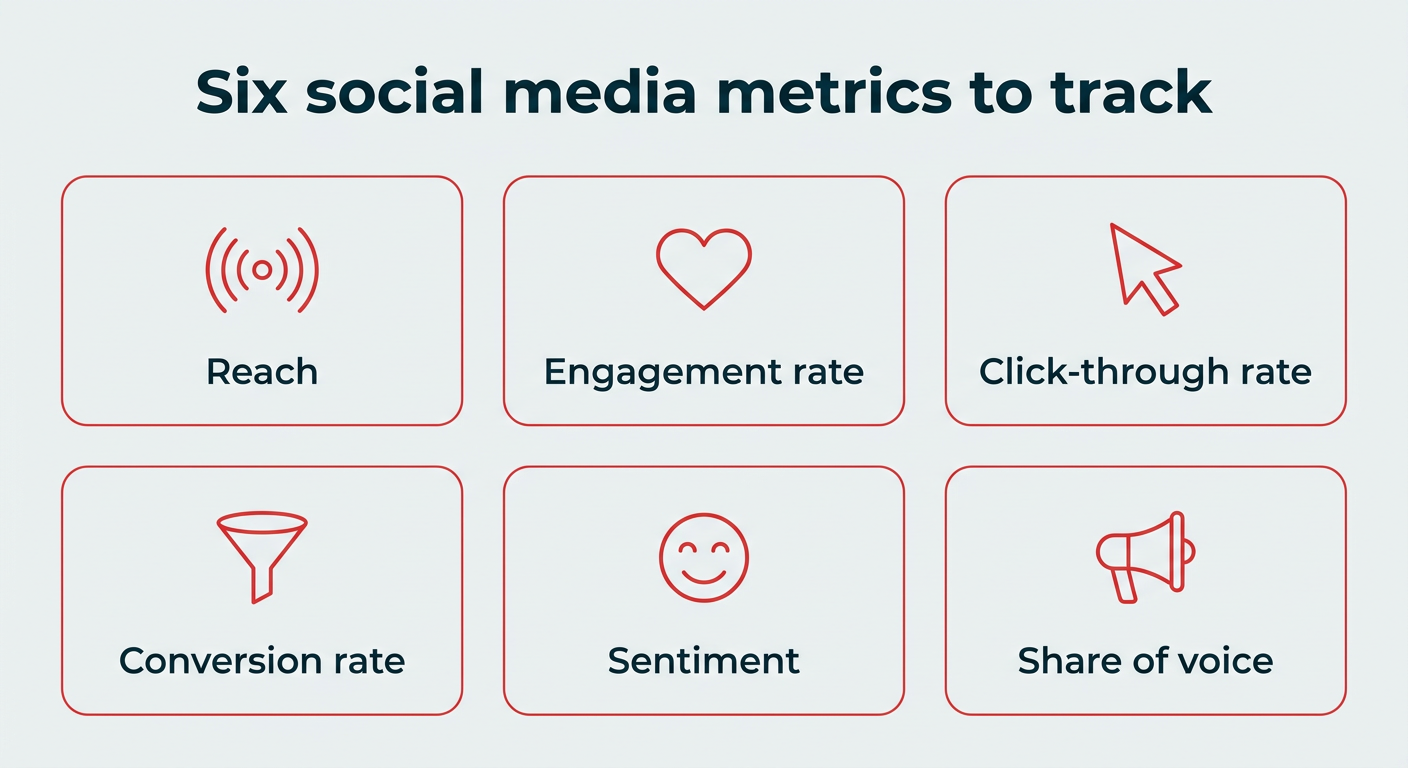
The goal isn’t just to collect numbers. It’s to connect social activity to the outcomes leadership cares about, then report on it clearly. Focus your social media analytics on metrics that map to your goals.
To-do list:
- Reach: How many people saw your content.
- Engagement rate: How actively people interact with it.
- Click-through rate: How often people take the next step.
- Conversion rate: How many complete a desired action.
- Sentiment: How people feel about your brand.
- Share of voice: How you stack up against competitors.
16. Connect social metrics to business outcomes
Connecting social metrics to business outcomes is what turns a report into a case for more budget. Move beyond vanity metrics and tie your numbers to revenue, retention, and lead generation.
Lumen delivers AI-powered insights and real-time sentiment analysis so you can see not just what’s happening, but why. Custom reporting and integrations with tools like Salesforce and Adobe help you close the loop between social activity and pipeline, proving social media ROI in terms your leadership already tracks.
To-do list:
Even experienced teams slip into avoidable traps. Watch for these common social media mistakes, and the quick fixes that keep you on track.
To-do list:
- Posting without a strategy: Random posts rarely add up to results. Fix it by tying content back to clear goals.
- Ignoring comments and DMs: Silence damages trust. Set up a routing process so nothing goes unanswered.
- Being overly promotional: Constant selling turns people off. Balance promotion with genuinely useful content.
- Trying to be on every platform: Spreading thin weakens everything. Focus on the channels your audience actually uses.
- Not measuring results: Without data you’re guessing. Track the metrics that connect to business outcomes.
B2B social works differently. Buying cycles are longer and decisions involve more people, so your best practices should support relationships and credibility over time.
17. Align your social media strategy with business objectives
Social marketers tend to rely on engagement metrics to track social media ROI. But for B2B marketers, social media goals need to align with longer-term business objectives.
The top goals for B2B companies in 2026 are:
- Customer experience and retention
- Performance marketing driven by AI-driven automation
- Brand building and long-term differentiation
While these goals may not translate into immediate leads, they directly support B2B lead generation over time. Social media plays a critical role in shaping first impressions, building credibility, and keeping your brand top of mind early in the buying journey.
To-do list:
- Take a look at your social media goals to make sure they are linked to the early stages of the buying cycle.
- Add internal objectives like using social media to increase product and/or competitor knowledge.
18. Develop business-friendly content resources
B2B social media is all about relationship building and lead generation. Gated content like research reports can help you capture leads and grow your email list.
That list also gives you more options for paid social. You can use it to build custom and lookalike audiences that extend your reach even further.
Just don’t put everything behind a form. Share interesting, informative data to keep your followers interested, even if they’re not yet ready to buy. You’ll be front-of-mind when the time comes.
To-do list:
- Brainstorm content ideas for business-friendly resources like reports, survey results, and other actionable data.
- Tease the highlights of these resources in a social post, with a link to download the whole thing with an email address.
19. Keep an eye on the LinkedIn algorithm
LinkedIn remains the only B2B-focused social platform, making it an essential channel for B2B brands. You don’t need to ignore every other algorithm, but if you’re only going to deeply understand one, make it this one.
Recent LinkedIn algorithm updates prioritize niche expertise and meaningful interactions. That’s a great reason to bring your product experts and subject-matter specialists into your content mix.
Educational posts written from lived experience perform better than generic brand messaging, a principle that any effective LinkedIn strategy should reflect.
Don’t forget to stay involved in the conversation, too. That’s another key signal that gained importance in the latest round of algorithm updates. To amplify reach further, Parliament makes it easy to turn trusted internal voices into an employee advocacy program on LinkedIn.
To-do list:
- Review our post on the LinkedIn algorithm to get a summary of the latest algorithm changes and tips for working with them.
- Focus on strictly professional content, since the algorithm downvotes personal updates that don’t include expert knowledge
Find more B2B best practices in our post on B2B social media marketing tactics.
FAQ: Social media best practices
What are social media best practices for businesses today?
Social media best practices for businesses today involve posting content relevant to their specific audience, maintaining a clear brand voice, staying up to date on social media algorithms, engaging with comments, and choosing platforms that match where their audience actually spends time. In 2026, they also mean using AI to work faster while keeping human oversight in place. Social media works best when it supports real business goals, not just vanity metrics.
What are social media best practices for enterprise brands?
Social media best practices for enterprise brands include strong brand guidelines, clear approval processes, and consistent messaging across teams and regions. Large organizations should also add AI governance, using tools like Vigil to keep AI-generated content compliant, and empower executives and subject-matter experts to share insights that build credibility and trust.
How often should brands post on social media for best results?
The best posting frequency depends on the platform, but brands should focus on consistency over volume. Recent research from Hootsuite shows that different platforms reward different posting habits.
What social media best practices improve engagement and reach?
The social media practices that improve engagement and reach include sharing relevant and original content, asking thoughtful questions, responding to comments, making content accessible with captions and alt text, and encouraging user-generated content. Platforms are also starting to reward meaningful conversation over follower growth.
What are common social media mistakes brands should avoid?
Common social media mistakes include posting without a strategy, focusing only on engagement metrics, ignoring comments, and sounding overly promotional. Brands also run into trouble when they try to be everywhere instead of focusing on the platforms that matter most.
What is the 5 5 5 rule on social media?
The 5 5 5 rule is a social media engagement framework where you spend 5 minutes liking posts, 5 minutes commenting on posts, and 5 minutes responding to DMs or comments on your own content. It’s a simple way to build consistent daily engagement without letting it eat your whole day.
What are the 7 C’s of social media?
The 7 C’s of social media are community, content, curation, creation, connection, conversation, and conversion, and they represent the core pillars of a well-rounded social strategy. Together they cover everything from building an audience to turning that audience into customers.
How should brands use AI for social media in 2026?
Brands should use AI to accelerate content creation, improve response times, and surface insights from social data, while maintaining human oversight to ensure quality and brand safety. The best-performing teams treat AI as a way to move faster, not a replacement for judgment.
How do you measure social media ROI?
Social media ROI is measured by comparing the value generated from social activities (leads, conversions, customer retention, brand lift) against the cost of producing and distributing that content. Connecting these metrics to business outcomes through custom reporting is what makes ROI credible to leadership.
What are social media accessibility best practices?
Social media accessibility best practices include adding alt text to images, captioning all videos, using sufficient color contrast, and writing in plain language so content is usable by people with disabilities. Accessibility is both the right thing to do and a way to expand your reach.
Save time managing your social media marketing strategy with Hootsuite. Publish and schedule posts, find relevant conversions, measure results, and more â all from one dashboard. Try it free today.