Meta breaks ground on first data center in Canada
Meta announced that it’s broken ground on a new $10 billion data center project being constructed in Alberta, Canada. The move comes amid rising concerns about an artificial intelligence bubble, and questions over whether it’s even possible for AI projects to turn a profit.
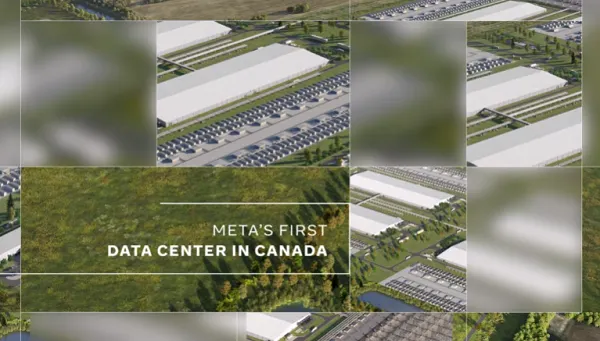
As explained by Meta: “We’re breaking ground on a new 1GW data center in Sturgeon County, Alberta — our first data center in Canada and 33rd in our global fleet. This data center will be optimized for our AI workloads, helping bring to life the technologies that billions around the world use to connect, find communities, grow businesses, and experience the power of our wearables.”
Meta’s latest data center investment is another step in its expanded AI infrastructure plan, to which it’s already committed more than $600 billion in the U.S. alone.
Meta’s Canadian project will bring thousands of construction jobs to the country, including 300 ongoing roles.. The company has also committed to locally beneficial funding and support programs, as well as sustainable electricity and water usage practices.
Many of Meta’s data centers have been developed or significantly expanded over the last two years amid the company’s broader AI push.
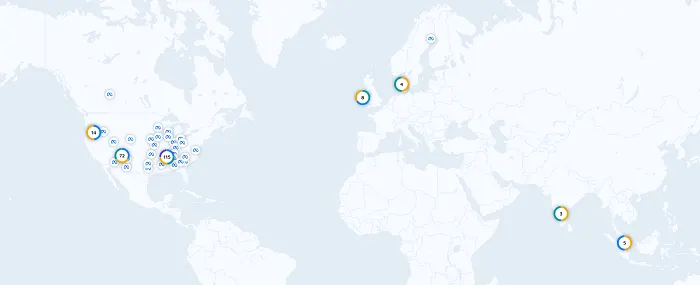
Meta has developed so much capacity, in fact, that reports recently suggested it may have gone overboard, and may have to formulate a cloud infrastructure business to monetize its excess capacity.
This could also indicate that Meta has overestimated the potential market for its AI tools. That said, the company is working on more advanced monetization programs for its systems, which could help to recoup some of these rising infrastructure costs.
In Meta’s Q1 2026 performance update, the company said it expects to invest an additional $125 billion to $145 billion on development in 2026, primarily on AI infrastructure. That’s up from its previous estimate of between $115 billion and $135 billion.
Processing power is key in order to win the AI race, and Meta has gone all-in on creating the best AI models money can buy, using its vast resources to blow the competition out of the water.
Yet, despite this, reports have indicated that many China-based AI labs are developing similarly impressive models, using far fewer resources.
CNBC recently reported that Chinese-built AI models, including DeepSeek and Z.ai, are gaining traction at U.S. companies due to lower costs and similar performance benefits. That has increased pressure on U.S. companies to reduce how much they charge, while also improving performance, which will be a difficult balance to maintain.
Meta clearly has the most capacity at this stage, based on its growing data center network. But whether that turns out to be an advantage, or an albatross, remains to be seen.