Examples and Strategy [2026 ]
Key takeaways
Post-purchase SMS spans transactional updates and promotional messages.
Transactional texts can go to any customer who provides their phone number, but marketing texts require opt-in.
The directness of SMS makes it more suited than email for time-sensitive updates.
A multichannel approach makes sense in most ecommerce situations. Your SMS can arrive before or after an email with appropriate delays.
Automated SMS, including post-purchase messages, outperformed campaigns in terms of revenue in 2025. They achieved $0.74 per send, compared with $0.15 per send for campaigns.
Omnisend customers automate 41% of their email conversions. Are you getting the most from your sales?
automate my sales
Your customers expect timely transactional updates after purchasing, and follow-ups support your revenue and retention. Adding post-purchase SMS to your customer experience gives you a direct channel to achieve both.
A healthy strategy doesn’t overreach. SMS is such a personal channel that your texts need to be contextual and personalized to your customer, not generic sends.
This article shows you how to make the most of post-purchase SMS: what it is, when to send, what to write, and how to build sequences that improve your customer journey.
Join Omnisend to create post-purchase SMS automations that trigger based on customer activity and behavior
Quick sign up | No credit card required
What is a post-purchase SMS?
A post-purchase SMS is a text message sent to customers after they complete a transaction. These messages deliver order confirmations, shipping updates, and other relevant information about their purchase to their phone.
Automated messages provide instant updates and build trust with proactive communication, creating opportunities for feedback and repeat purchases.
Your customer enters a post-purchase workflow based on order activity, such as them placing an order or your store marking the order as fulfilled.
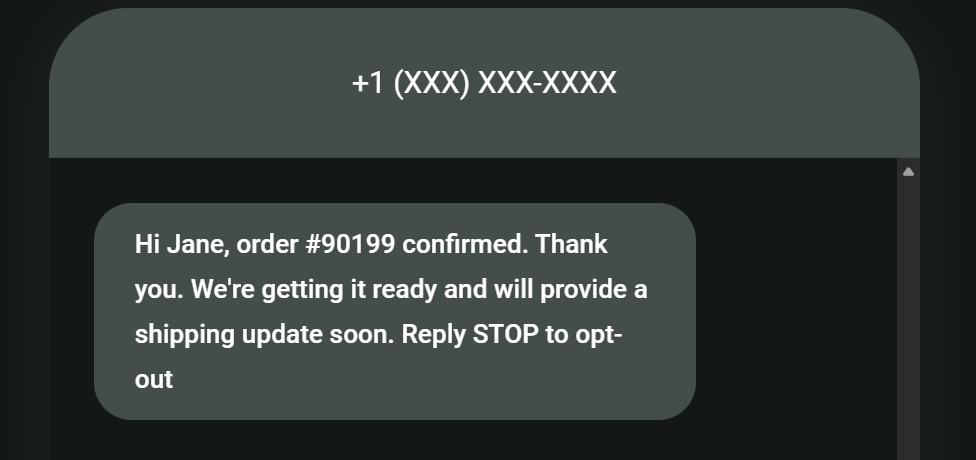
The example below shows an order confirmation SMS:
Benefits of post-purchase SMS communication
Post-purchase texts are automated and triggered by an order, rather than sent as part of a campaign. Automated SMS earns far more per send than campaigns do: $0.74 per send in 2025, compared to $0.15, with a 3.81% click-to-conversion rate versus 0.97%.
Here’s where you stand to benefit from adding them to your communications:
- Your customers get timely transactional updates delivered to one device, rather than competing with post-purchase emails across apps.
- Fewer support requests. Provide customers with direct links to their accounts and order tracking pages, as well as tutorials and guides.
- Greater customer retention. Post-purchase SMS provides additional touchpoints to reach those you are about to lose, can’t lose, and those at risk and with high potential.
- Generate extra revenue from existing customers. Ecommerce marketing agencies that use SMS generate 202% more revenue on average than those that don’t.
- Complements your email marketing efforts. Send texts that ask customers to check their email and follow up with an SMS after your email. INGLOT Canada saw a 2,130% increase in revenue per message pairing SMS with email versus email alone.
The post-purchase SMS sequence
Your post-purchase SMS isn’t one message but multiple texts, which we can split into sequences for transactional, post-delivery engagement, and retention. The table below details these stages and when they’re appropriate:
| Stage | Timing | Messages | Consent |
|---|---|---|---|
| 1. Transactional | Order placed to delivery | Order confirmation, shipping updates, delivery notice | No marketing opt-in needed |
| 2. Engagement | Days after arrival | Thank-you, review request, product onboarding | Marketing opt-in needed |
| 3. Retention | Weeks to months later | Replenishment reminder, loyalty invite, winback offer | Marketing opt-in needed |
Post-purchase SMS examples
The eight post-purchase SMS examples below cover the most common scenarios where text messages make sense for your ecommerce store:
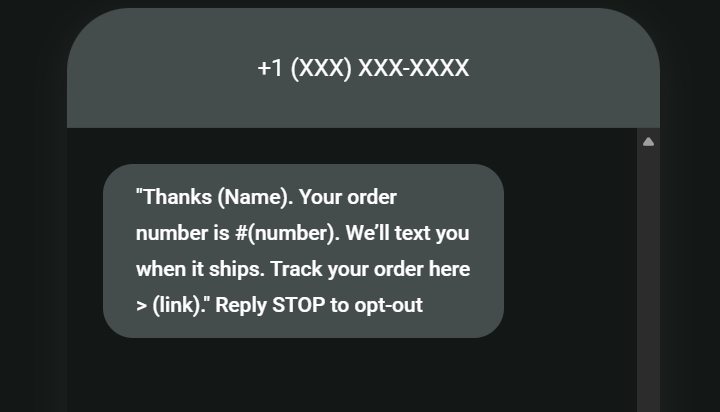
1. Order confirmation
“Thanks (Name). Your (brand) order number is #(number). We’ll text you when it ships. Track your order here > (link).”
Key elements
- Timing: Immediate following payment
- Key elements: Order number and a tracking link
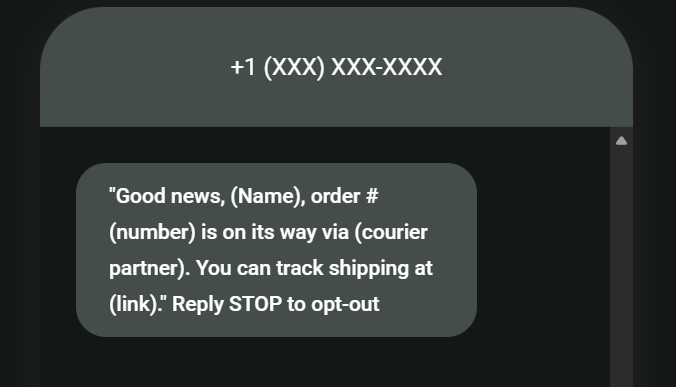
2. Shipping update
“Good news, (Name), order #(number) is on its way via (courier partner). You can track shipping at (link).”
Key elements
- Timing: An immediate send after fulfillment
- Key elements: Courier details and a tracking link
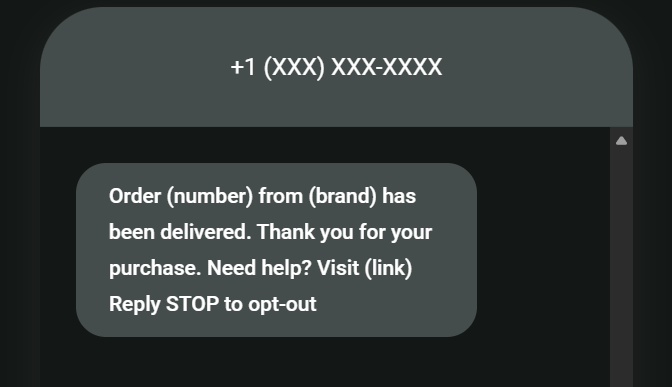
3. Delivery notice
“Order (number) from (brand) has been delivered. Thank you for your purchase. Need help? Visit (link)”
Key elements
- Timing: Within a few minutes of delivery
- Key elements: Order number, brand name, a link for support
4. Thank-you message
“Thank you for your recent order of (product). We’ll send you an exclusive discount for your next order soon. Stay tuned.”
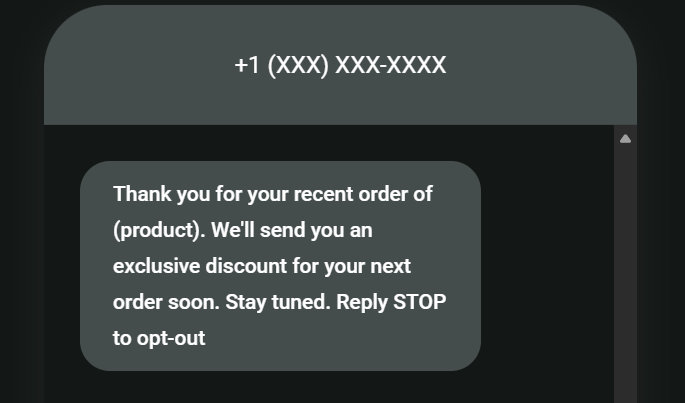
Key elements
- Timing: Two to three days after delivery
- Key elements: A personal thank-you note, an expectation for the next text
5. Feedback request
“Hi (name), how would you rate your recent (brand) experience? Review us at (link), and we’ll send you 20% off.”
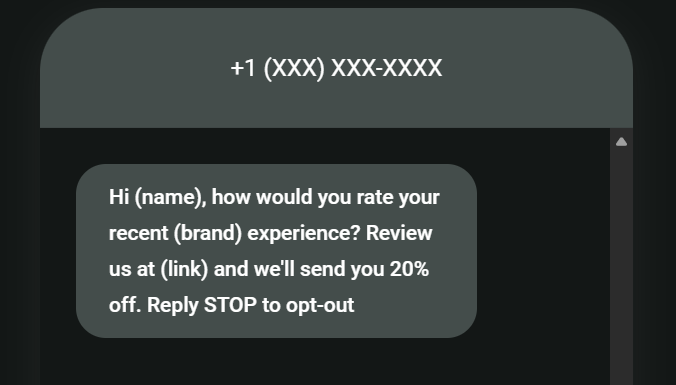
Key elements
- Timing: One to two weeks after delivery
- Key elements: Mentions the customer by name, provides a link to leave a review
6. Loyalty invite
“Dear (name), you’re invited to be a (brand) VIP. Collect 10% off now and points to spend. Register free > (link).”
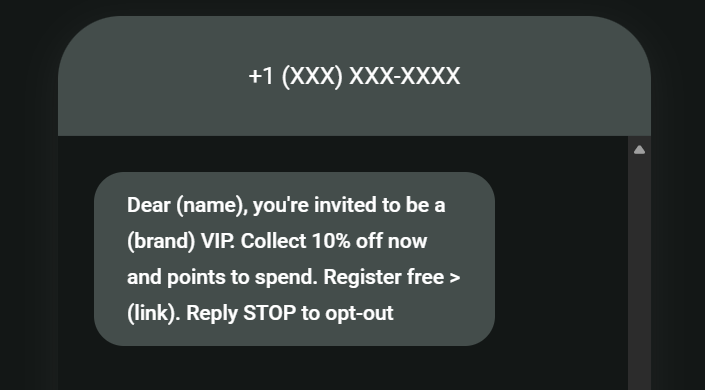
Key elements
- Timing: Sent to customers who reach a threshold
- Key elements: Program invite, VIP messaging, registration link
7. Replenishment reminder
“Hi (name), your (product) is due for a refresh on (date). We’ll take payment automatically. To change your subscription, visit (link).”
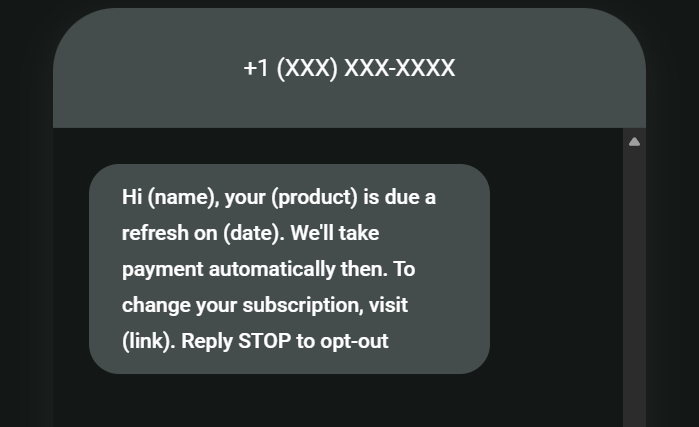
Key elements
- Timing: Based on purchase date
- Key elements: Product referenced, renewal date, payment timeline
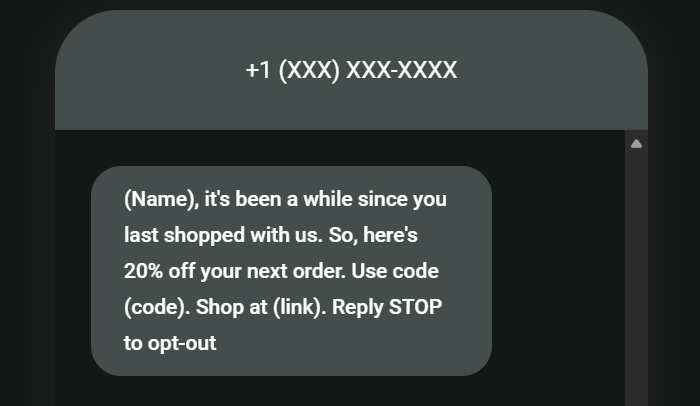
8. Winback
“(Name), it’s been a while since you last shopped with us. So, here’s 20% off your next order. Use code (code). Shop at (link).”
Key elements
- Timing: 30, 60, or 90 days after purchase
- Key elements: Discount incentive, code, link to shop
5 tips for writing and planning post-purchase SMS messages
Our SMS marketing experts keep these best practices in mind when creating post-purchase texts:
1. Write to character limits
You get 160 characters in GSM format, or 70 characters in Unicode. Doesn’t sound like a lot, but you can keep to it if you factor in opt-out language, such as Omnisend’s “Reply STOP to opt-out,” and use branded short links.
Texts that exceed character limits are segmented into multiple messages, which incur additional SMS credits and reduce your content’s impact.
2. Personalize your message
Using your customer’s first name is the best way. A simple “Hi Sarah,” or “Your order’s confirmed, Joe” will do. You can also create personalized content for different customer segments, and assign those segments to separate post-purchase SMS flows.
3. Intro the CTA and use one link
Add actionable text just before the link, such as “tap the link >,” and only provide one URL to maximize click-throughs.
4. Mention your brand
A brand mention is important if you’re sending to any U.S./CA customers because texts in this region show your number, not your name.
5. Time your texts for engagement windows
Transactional texts go out based on customer actions, so aside from those, set delays on your follow-ups and promotional post-purchase SMS to land around 8 am–9 am. That’s the best conversion window based on Omnisend’s data.
How to automate post-purchase SMS messages
Automating your post-purchase SMS messages is intuitive and requires a minimal learning curve with Omnisend. Here’s how to get started:
Setting up automation workflows
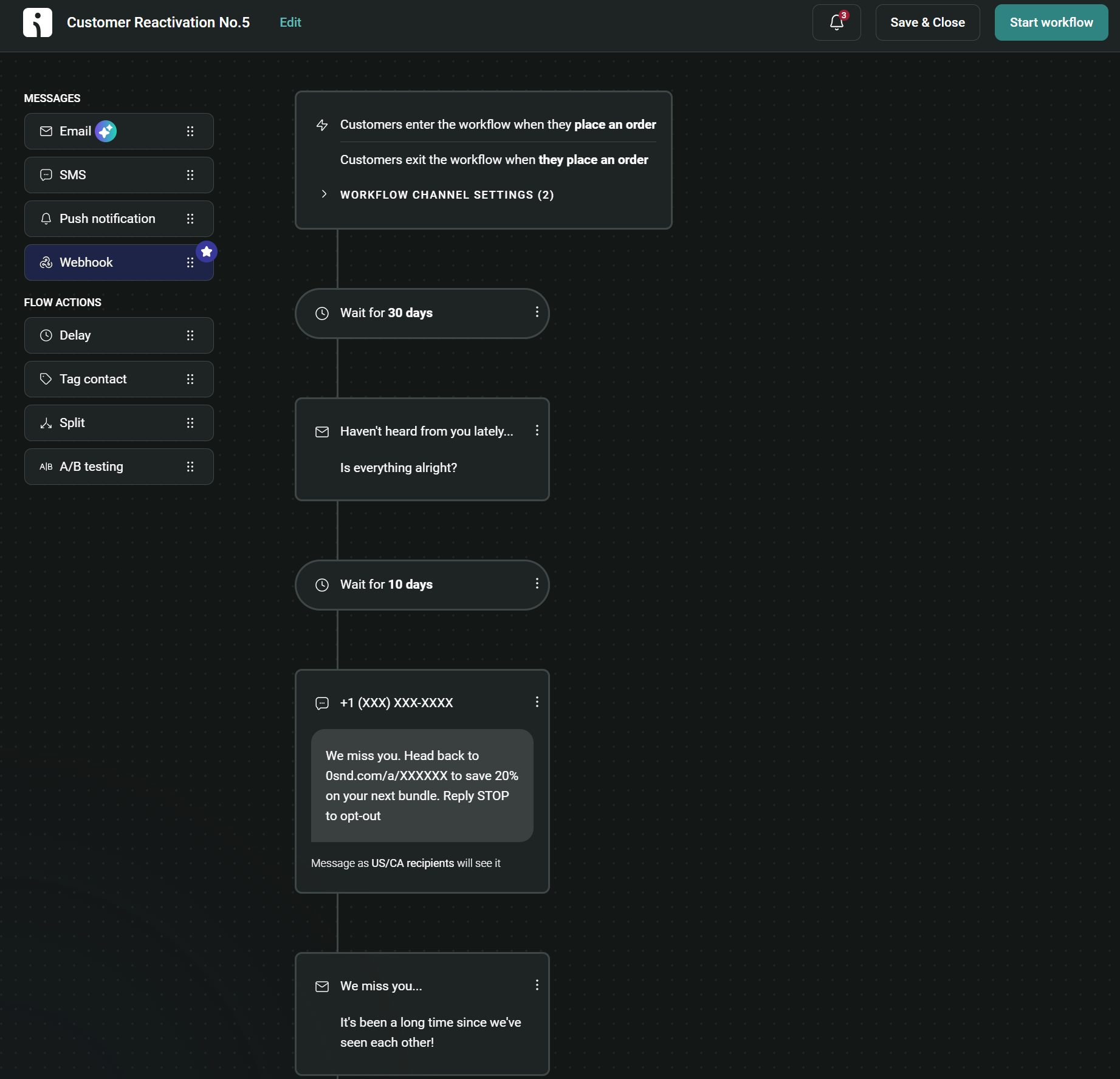
Omnisend is among the best SMS platforms for post-purchase upsells and lets you create automated sequences for other key post-purchase touchpoints, including order confirmations, shipping updates, and delivery notifications.
To create your Workflow:
- Head to Automation in the sidebar
- Click + Create workflow
- Choose your Workflow – Omnisend lets you filter by channel, goal, and type, including transactional and post-purchase:
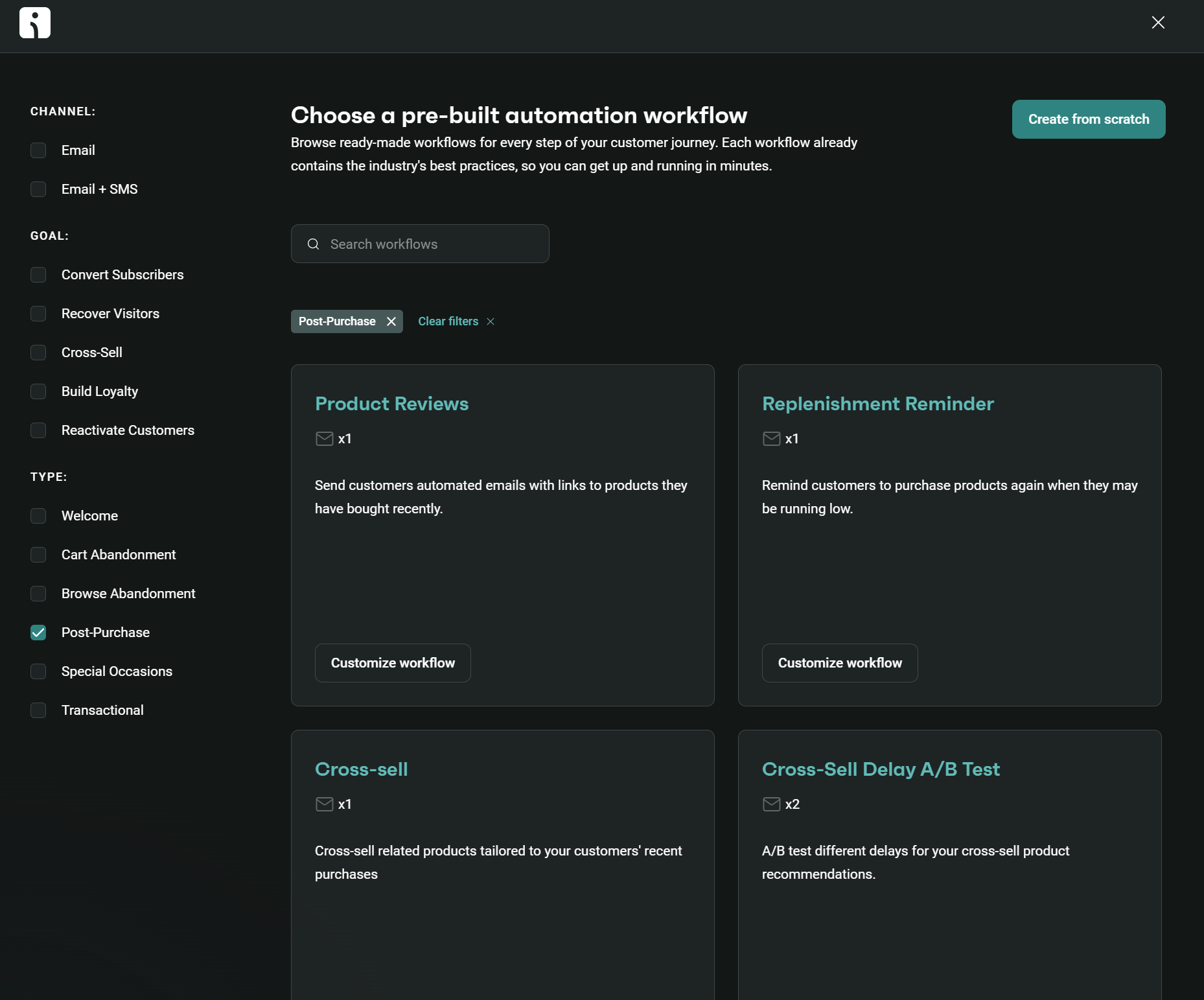
You can also combine email and SMS in a single workflow and send customized SMS based on purchase history. Omnisend customers generated $79 for every $1 in 2025 across email, SMS, and web push notifications.
Customizing message timing
Omnisend lets you set custom delays for your SMS. Options include minutes, hours, days, weeks, and months, immediately, or a time of the day. You can also send on selected days of the week. To set message timing in Omnisend:
- Go to the Automation tab > Select Workflow
- Add a Delay flow action to the builder
- Select the Delay and change the settings to suit:
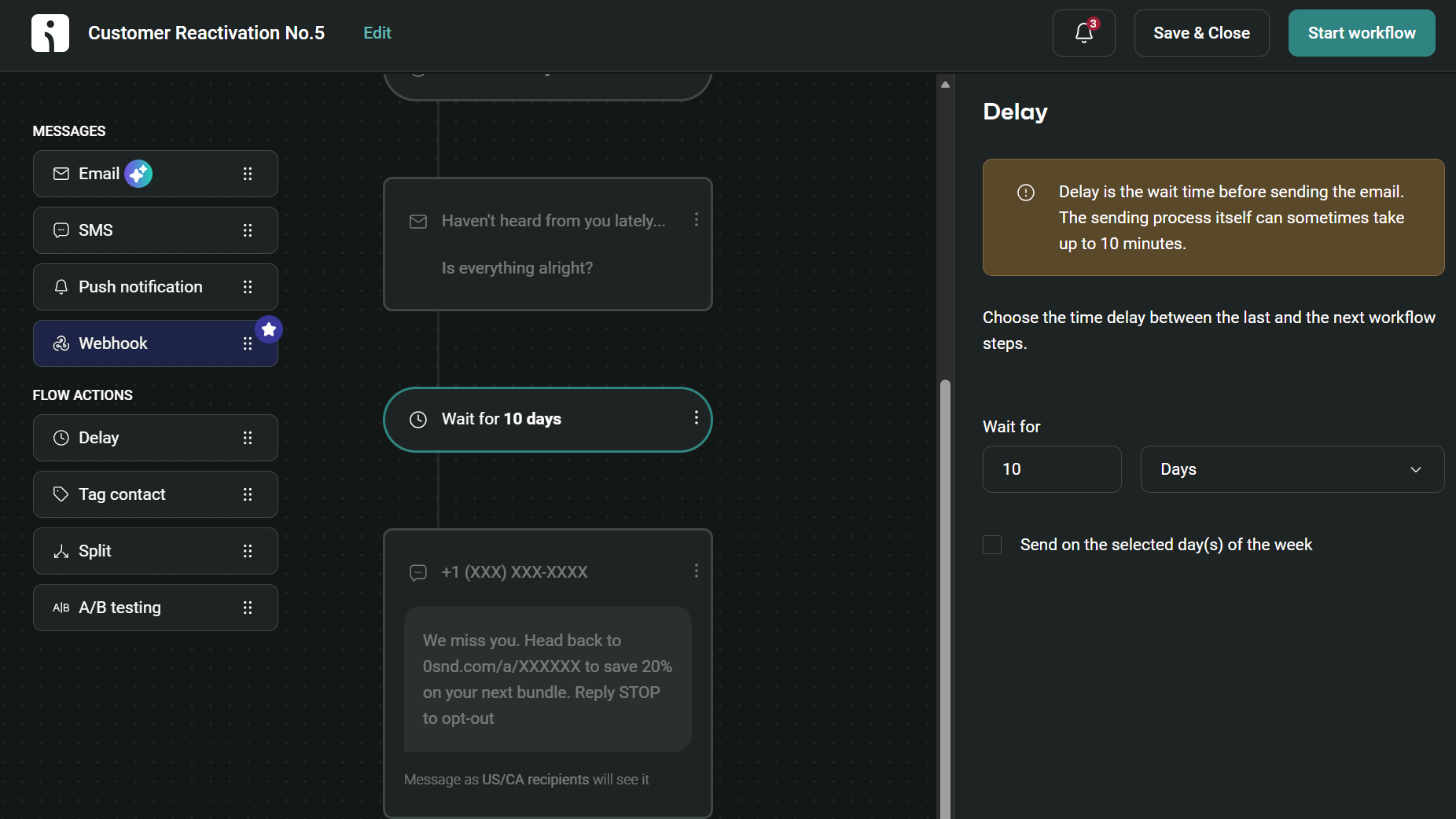
Omnisend lets you automate customer follow-ups via SMS after a purchase. You can then reach them at high-intent moments by changing the delay.
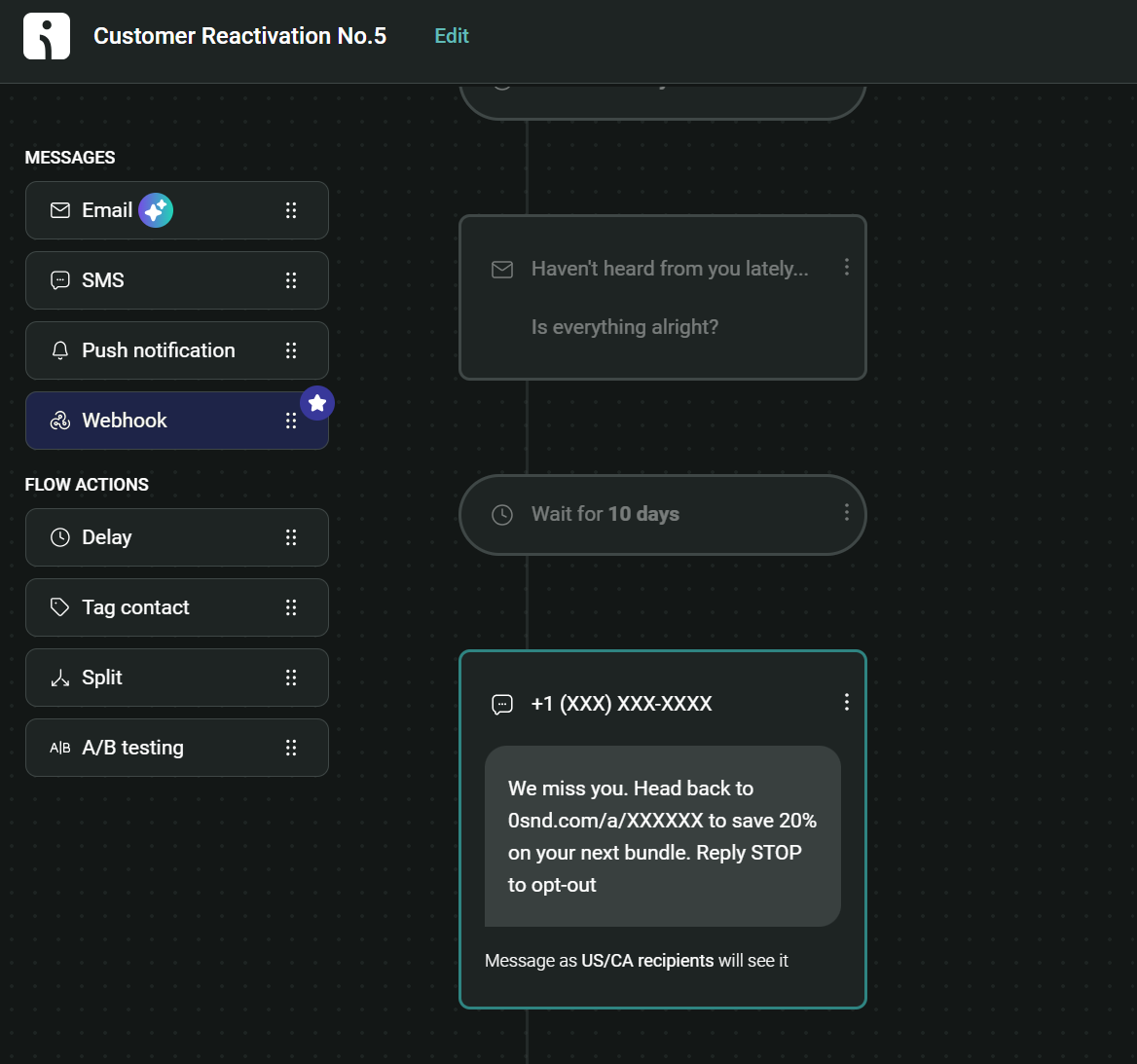
Add region-appropriate opt-out options
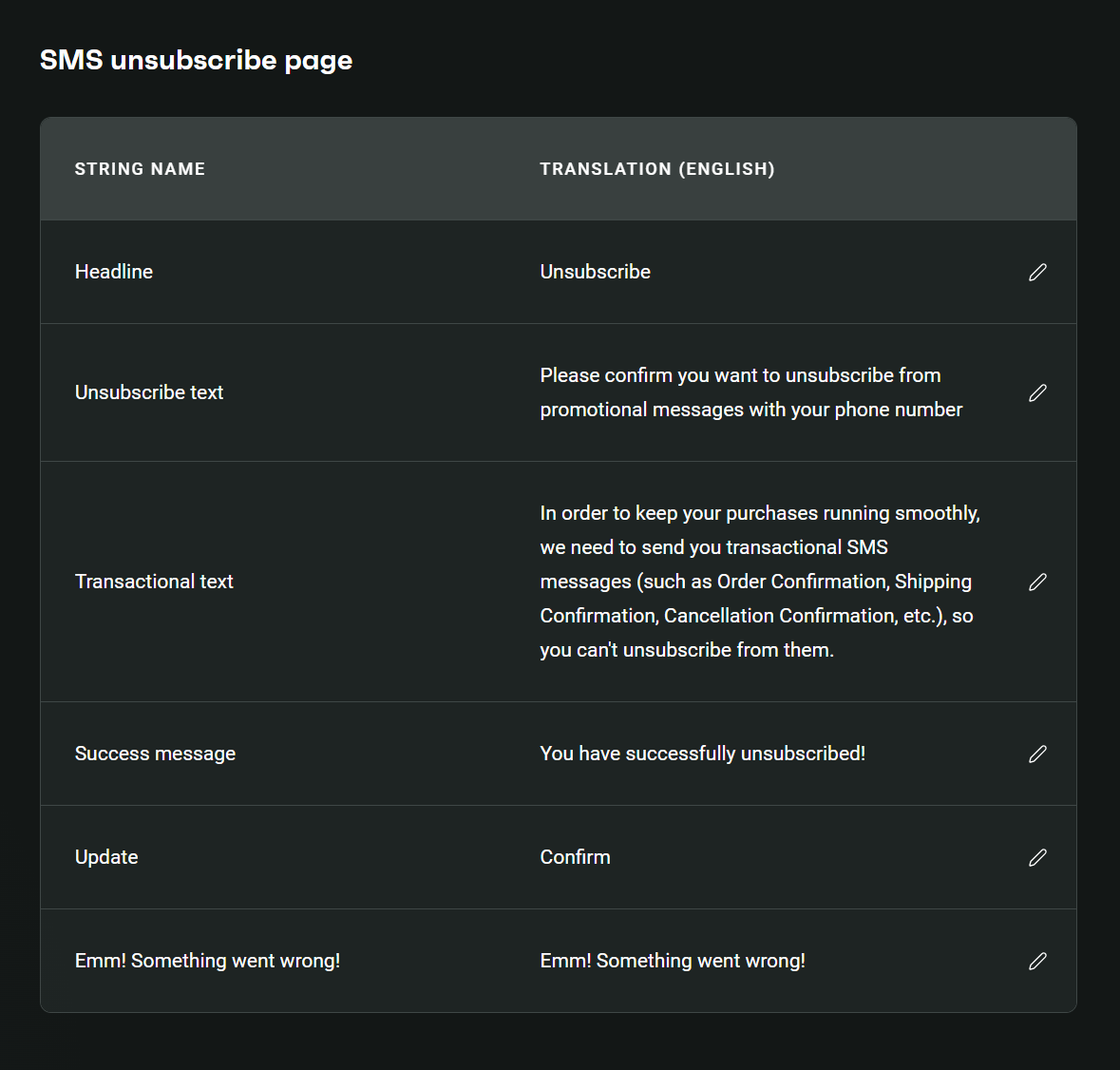
Omnisend adds “Reply STOP to opt-out” to your texts by default for TCPA compliance, but if you’re sending to people outside the U.S., then add an unsubscribe link as well. GDPR and similar laws require an easy opt-out in every marketing message:
Head to Store Settings > Language & translations, and there’s a configuration section for “Unsubscribe page text for both Email and SMS channels”.
Personalizing your messages
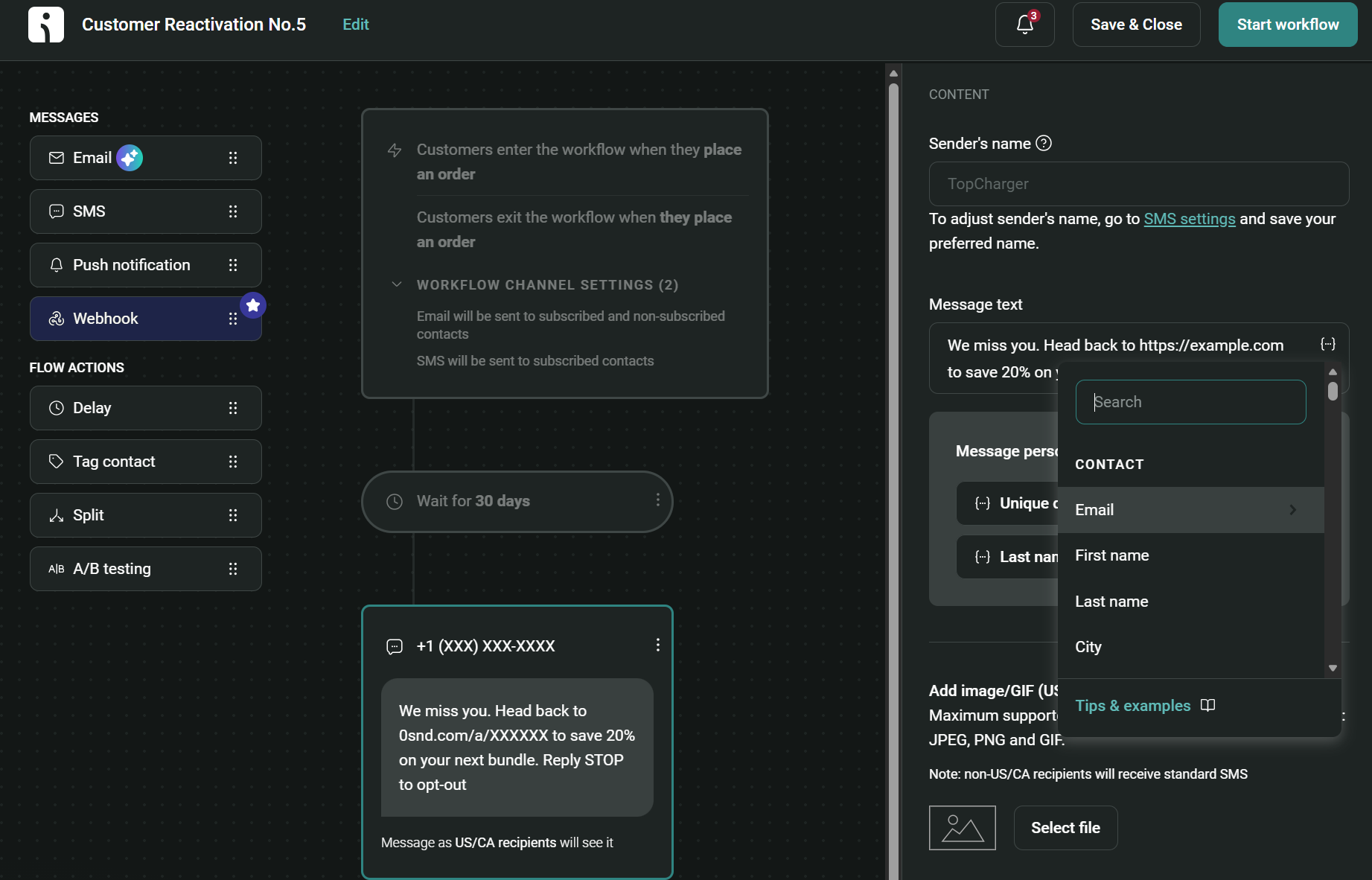
Omnisend personalizes post-purchase messages by pulling data from each customer’s profile into the message as it’s sent. You add a personalization tag where you want the data to appear, and Omnisend then fills it in for each recipient.
Adding personalization tags requires only three steps:
- In your automation flow, select your SMS message to edit the text
- Click the {…} icon in the top right of the editor
- Search for a tag, such as first name
Tracking performance
Omnisend provides two ways to track post-purchase SMS performance. Live flows display sent, clicked, and sales metrics for your message within the flow builder.
A more detailed analysis is available under the Reports dashboard. The Reports dashboard has an Automation tab with these metrics:
- Revenue
- Placed orders
- Revenue per placed order
- Revenue per message sent
- Messages sent
- Open rate
- Click rate
- Placed order rate
- Failed delivery rate, marked as spam rate, unsubscribe rate
You can also see individual workflow performance, allowing you to break down the metrics that matter most for your transactional flows and other post-purchase sequences.
These metrics will help you optimize timing, content, and segmentation to build better SMS campaigns.
Choosing a tool for post-purchase SMS
Decide on the scope of your post-purchase SMS requirements first. Not all tools cover transactional texts, for instance, and some have limited behavioral triggers, which can limit your ability to reach customers at high-intent moments.
Next, determine the regions you need to send SMS to, such as only the U.S., the U.S. plus Canada, or Europe and Asia.
Then it comes down to multichannel needs. It makes the most sense to consolidate your email, SMS, and web push notification marketing in one tool. It’s also crucial that it integrates with your ecommerce store and other apps.
Omnisend ticks all these boxes. It covers all post-purchase SMS types, offers enterprise-level flows, global SMS, multichannel mastery, and 200+ integrations.
Join Omnisend to make post-purchase SMS one of your most successful marketing channels
Quick sign up | No credit card required
FAQs
How many post-purchase texts should I send?
Your customer should receive at least one order confirmation SMS. Shipping and delivery messages are worth it when email is a channel they don’t use frequently. As for promotional texts and follow-ups, it depends on the message type. A replenishment reminder should go out when it’s due, say once monthly, whereas follow-up texts could go out a few days after delivery.
Is post-purchase SMS legal?
Post-purchase SMS is entirely legal for marketing purposes, provided you send texts only to customers who opt-in to receive SMS marketing messages. The easiest way to get consent is to add an unticked checkbox to your forms and at checkout.
What is the difference between transactional and marketing post-purchase SMS?
Transactional post-purchase SMS includes non-promotional messages that are related to a transaction. A marketing post-purchase SMS has promotional intent. A transactional SMS can also become a marketing one if it sells. For instance, if your order confirmation SMS links to your latest sales page, that’s now a marketing message and can only go out to opt-ins.
Should post-purchase messages go by SMS or email?
Both, message dependent. Post-purchase SMS works best for instant notifications and time-sensitive messages; email is better than SMS for detail and depth, such as providing personalized product recommendations with images and brand stories with carousels.
When should I start sending post-purchase SMS?
Start building your list as soon as you can so you can send post-purchase SMS upsells, feedback requests, and win-backs to customers. Adding SMS alongside email makes sense when your ecommerce store is growing and providing high-quality customer experiences.