9 Post-Purchase Email Examples to Inspire Your Own
You worked hard for that sale. The ad spend, the landing page, the abandoned cart nudge that finally landed. And then what? For most stores, the answer is a plain order confirmation and radio silence.
That’s a missed opportunity.
The moment right after checkout is when your customer trusts you most. They just handed over their money and their attention is all yours. So the emails you send next, whether it’s a simple thank you for your purchase email or a full sequence, decide whether they become a one-time buyer or a regular.
Today, I’ll walk you through 9 post-purchase email examples from brands that get this right, break down exactly why each one works, and show you how to steal the tactic for your own store.
What Are Post-Purchase Emails?
Post-purchase emails are the messages you send a customer after they buy from your store. They usually run as an automated sequence, and they carry updates or important details about the order.
But they can do so much more than share information. You can use a post-purchase email to upsell, cross-sell, gather feedback, or build the kind of loyalty that keeps customers coming back.
Broadly, they fall into two buckets. Transactional emails like order confirmations, shipping updates, and delivery notices. And engagement emails like the thank you for your purchase email, product education, review requests, and refill reminders.
Why does the split matter? Because both types get opened. In fact, post-purchase emails earn some of the highest open and click-through rates of any email you’ll send. So let’s take advantage of those sweet metrics.
The Post-Purchase Email Sequence (and When to Send Each One)
Before we get to the examples, it helps to see how they fit together. A single confirmation email is fine. A sequence is what actually drives repeat revenue.
Here’s a timeline that works for most ecommerce stores:
-
Day 0 sends the order confirmation and a warm thank-you.
-
Day 1 to 2 covers the shipping and delivery update.
-
Day 3 to 7 shares product education or setup help so the customer gets value fast.
-
Day 7 to 14 layers in tips, social proof, or a gentle cross-sell.
-
Day 14 to 21 asks for a review while the experience is still fresh.
-
Day 21 and beyond triggers a refill reminder or a repeat-purchase offer based on the product.
You don’t have to send all of them. Pick the ones that fit your product and space them out so you’re helpful, not annoying. With Drip’s Post First Purchase workflow, you set this timing once and it runs on autopilot, adjusting delays based on how each customer behaves.
1. Show Off Your Unique Personality (Librio)
The order confirmation email is a staple, and it doubles as your first thank you for your purchase email. It’s like putting guac on your burrito. It just needs to happen.
Customers need reassurance after they part with their money. They want proof it didn’t vanish into the ether, and that a real company is packing their order right now.
So yes, include the basics: the items, cost, shipping address, a tracking link, and an order number. But the email doesn’t have to be as dry as a handful of crackers. Librio, a personalized children’s book brand, proves it.
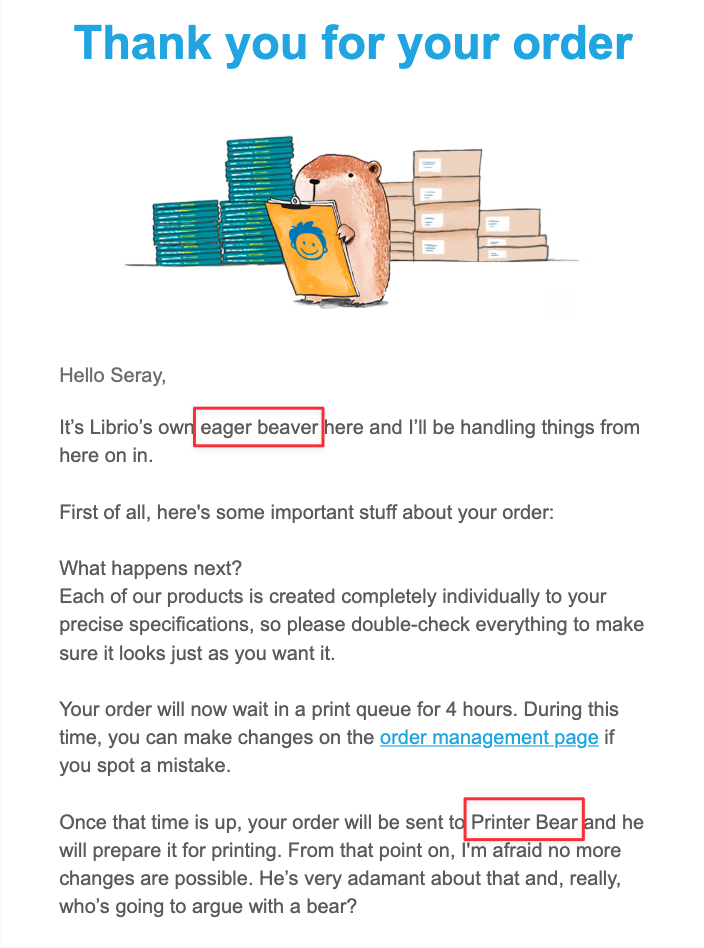 The whole email is written in character. An “eager beaver” handles your order, “Printer Bear” prepares it for printing, and the copy jokes that “who’s going to argue with a bear?” It’s fun, so it’s memorable.
Like Librio, let your personality carry the confirmation email. Match your brand’s voice, and you’ll stay front of mind long after the box arrives.
2. Set Clear Delivery Expectations (Twistshake)
Nothing triggers a support ticket faster than a customer wondering where their order is. So get ahead of it.
Twistshake, a baby products brand, does this brilliantly.
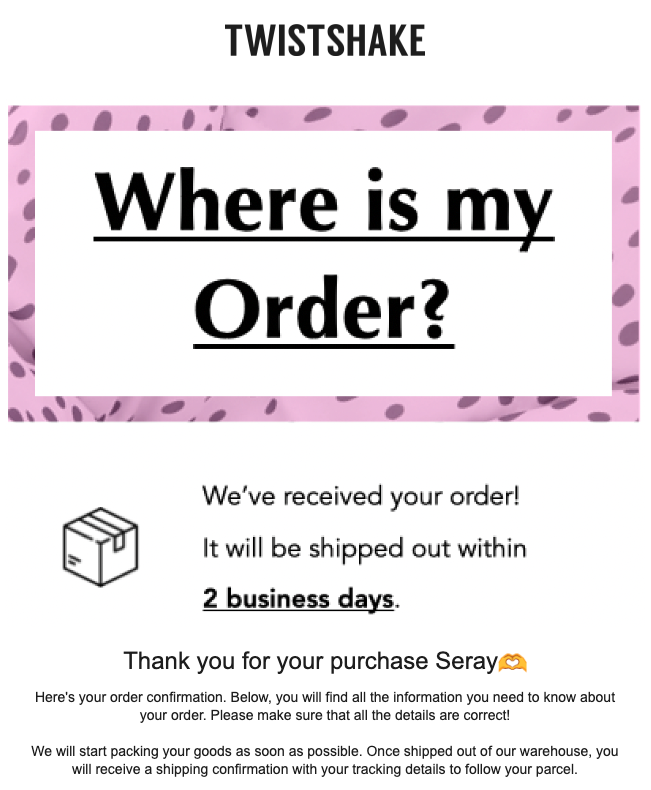 Their confirmation email states the order will ship “within 2 business days,” and their shipping email lays out the full journey: 3 to 4 days for the next tracking update, then another 4 to 5 days to arrive.
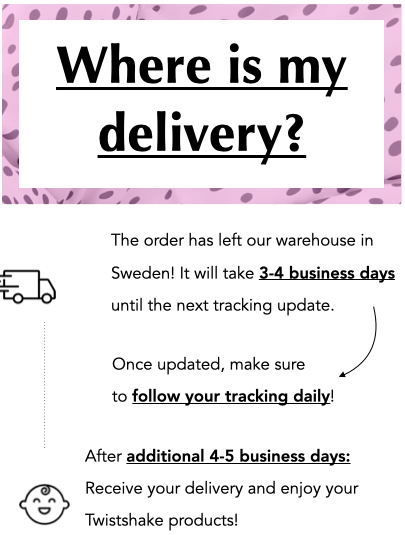 That kind of clarity does two things. It calms the anxious “where is my order” feeling, and it quietly builds trust, because you did exactly what you said you would.
Spell out your timelines the same way. Tell customers when the order ships, when tracking goes live, and when to expect delivery. Fewer worried emails for you, a smoother wait for them.
3. Reinforce Your Values and Build Community (Librio)
You have the customer’s attention right after they buy. That’s the moment to remind them why they chose you.
While the order is being made, Librio sends a “while you wait” email about the good the purchase did. They donate 1% of revenue to social and environmental causes, print on recycled paper, and have given over $300,000 to their charity partners.
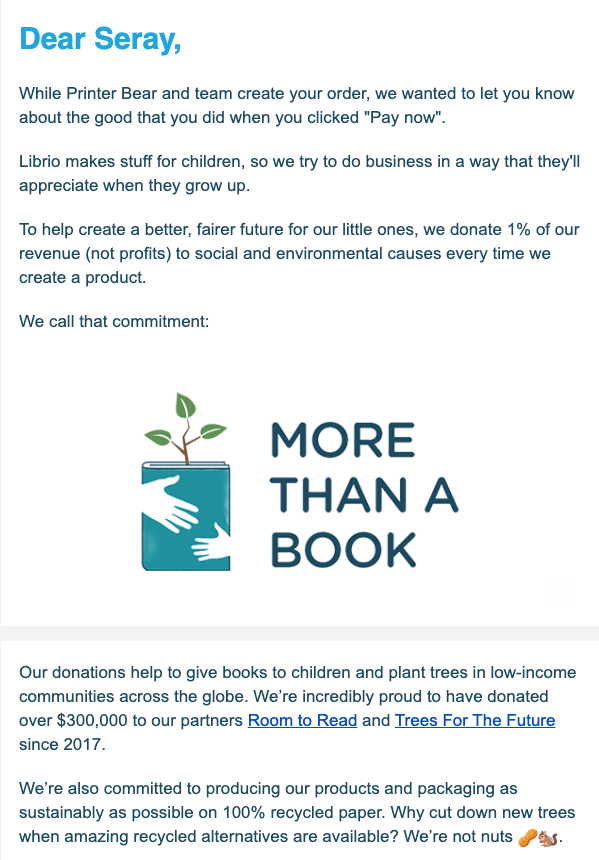 It’s a smart play. It makes the customer feel great about their purchase, and it kills any buyer’s remorse before it can creep in.
Values-led brands connect on more than price, and that connection is what keeps people coming back. Use a post-purchase email to show what your brand stands for, whether that’s sustainability, craftsmanship, or a cause your customers care about.
4. Incentivize Your Upsell (KiwiCo)
An upsell gets customers to go bigger. A more premium version, an add-on, or a multipack instead of a single item.
It’s one of the fastest ways to lift your average order value. And it’s far easier to sell to an existing customer than to win a new one.
So you should be upselling, and a post-purchase email is a great place to do it. These buyers just showed real purchase intent by ordering from you.
KiwiCo pairs the upsell with an incentive. The add-on raises the subscription price going forward, but the first upgrade comes free, so it feels like a genuine deal.
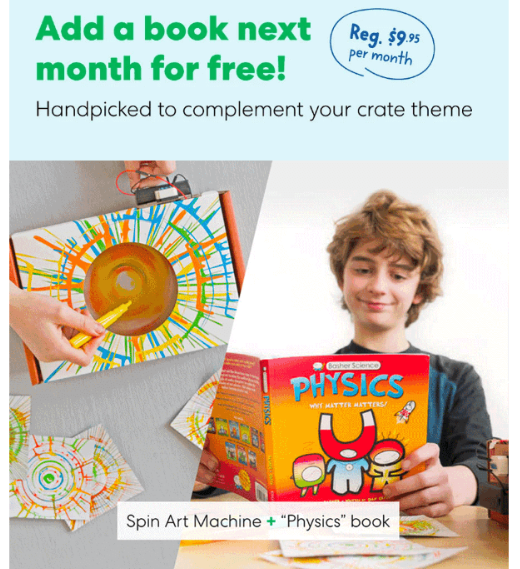
That’s the trick. For an upsell to land, the customer has to feel like they’re winning. Make it relevant to what they just bought, sweeten it with a freebie or free trial, and the yes gets a lot easier.
5. Recommend What Customers Should Buy Next (Ten Thousand)
Product recommendations belong in your post-purchase emails. Done right, with relevant picks, they help the customer as much as they help your bottom line.
When you cross-sell items that genuinely fit the customer’s needs, you build satisfaction and longer relationships. Research has shown that smart cross-selling can lift sales by roughly 20 percent and profits by 30 percent.
A shipping confirmation is a natural home for a cross-sell. The order is done, and now you’re inviting the next one. Ten Thousand does this by asking customers to complete their kit with matching gear.
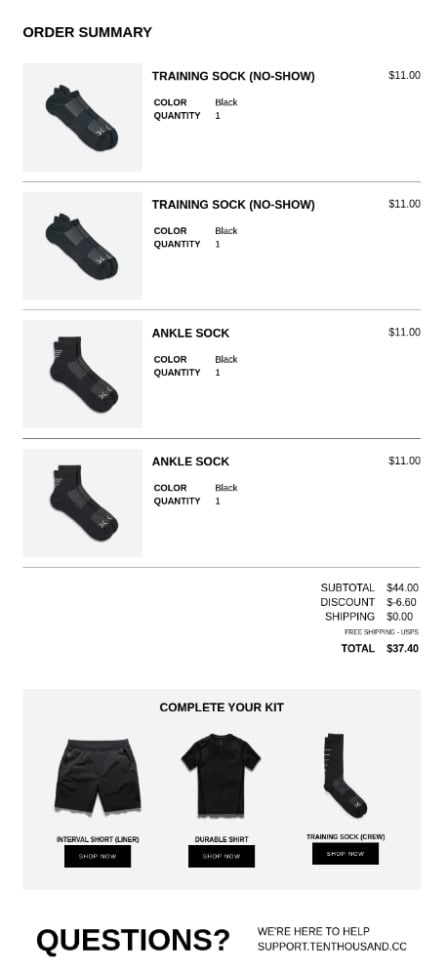
You’ve probably seen the apparel version: “complete the look.” But the tactic works in any category. Sold a camera? Recommend a ring light to go with it.
You can also lean on social proof with a “customers also bought” block, or sweeten the deal with free shipping if they come back for the complementary item.
6. Turn Happy Customers Into Referrers (Librio)
A happy new customer is your best marketer. So ask them to spread the word while the excitement is fresh.
Librio builds a referral offer right into its post-purchase emails. Every message carries a friend code that gives friends 20 percent off, and rewards the customer with a free book in return.
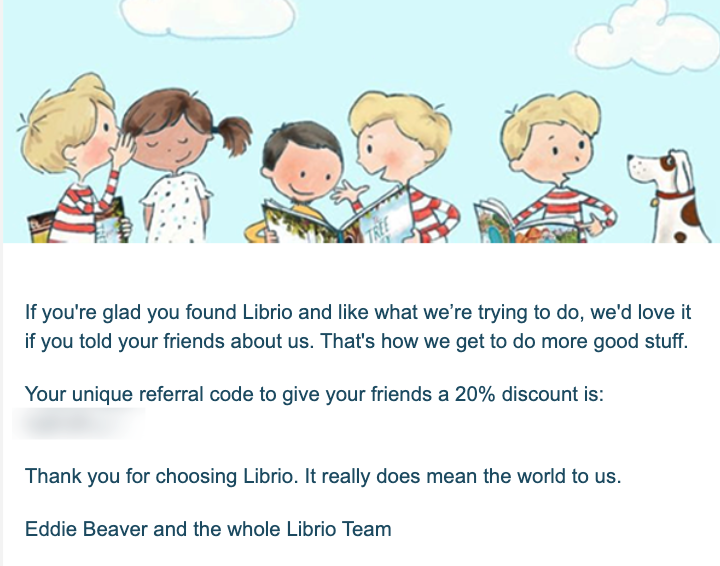 It works because the timing is perfect. The customer just chose you, so they’re primed to recommend you, and a two-sided reward gives everyone a reason to act.
Add a referral ask to your own sequence. A shipping or thank-you email is a natural spot, and a two-sided incentive, something for the friend and something for the customer, turns a single sale into a stream of new ones.
7. Send a Timely Reminder for a Refill (Fullscript)
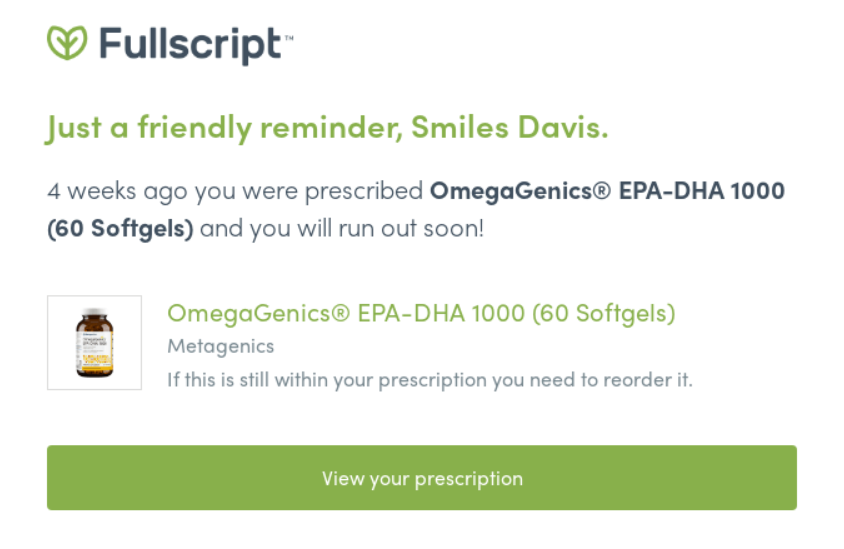
If your products run out and need replacing, remind customers when it’s time to restock. It’s an easy automation that quietly boosts repeat sales.
Fullscript nails this with a reminder that the customer’s about to run out of their Omega 3. For a product like that, the math is simple: you know how many pills are in a bottle and how often they’re taken.
Your products might need a little more thought. Say you sell razors. One group shaves daily, another shaves now and then, so a single reminder schedule won’t fit everyone.
That’s where segmentation earns its keep. Drip’s dynamic segments let you group customers by purchase history and behavior, so the daily shavers hear from you every three weeks and the occasional ones every three months.
Whatever the cadence, send the reminder before they run dry. You don’t want them grabbing a replacement at the store down the road instead of reordering from you.
8. Share Useful Information (Rooted)
Send helpful emails after a purchase to make the whole experience better. There are often things customers need to know so they don’t hit a snag with your product.
Rooted does this with a tutorial that shows customers how to unbox their plants the right way. It’s genuinely useful, and it anticipates a problem before the customer even knows they have one.
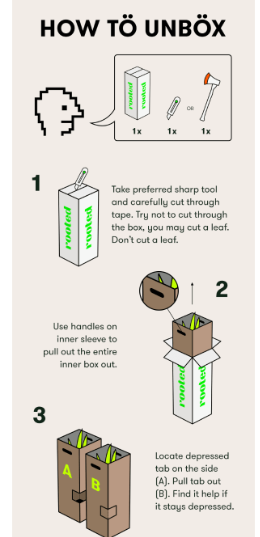
That’s how you create a superior experience. To pull it off, you need a deep understanding of your products and the roadblocks customers tend to face, which comes from research and testing.
It’s also smart to share tips that help people get more out of what they bought. Extra guides, use cases, and inspiration all count.
Because here’s the thing. You don’t want your product gathering dust in a drawer. When customers get real value from it, they keep using it, buy more, and tell their friends.
9. Check In With Your Customers (Loop)
The feedback request is another pillar of the post-purchase sequence. One small email, a whole lot of upside.
Feedback helps you improve your product and service, which helps you keep customers and win new ones. You can also put that feedback to work, like a “1,000 customers loved this” note on a product page.
Loop Earplugs makes it almost effortless. Their “Got a minute?” email puts the star rating right inside the message, so you can rate your experience in a single click without leaving your inbox.
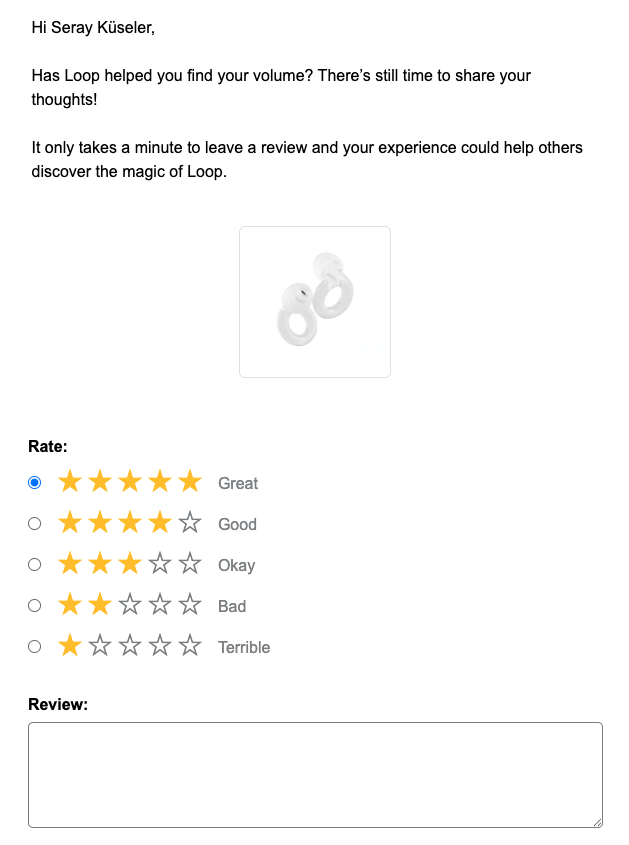 That low friction is the whole point. The fewer steps between the ask and the answer, the more responses you’ll get.
Do the same in your own review request. Embed the rating, keep it to one question, and give a gentle out for anyone who hasn’t received the product yet.
Post-Purchase Email Best Practices
You’ve seen the tactics. A few ground rules will help every one of them land harder.
Get the timing right. An order confirmation should arrive within minutes, while review requests work best a week or two after delivery, once the customer has actually used the product.
Give each email one job. Confirmation, education, feedback, and offers each deserve their own send, so the message stays clear and the next step is obvious.
And segment before you send. A first-time buyer and a loyal repeat customer shouldn’t get the same email, so tailor the message to where each person sits in their journey.
Wrapping Up
A post-purchase email is so much more than a receipt. It’s your best chance to make another sale and build a relationship that lasts.
You might have noticed Librio show up a few times here. That’s the real lesson. The best brands treat the whole post-purchase sequence as one connected experience, not a string of one-off notifications.
So plan these emails with intent. Get the timing right, share relevant info and recommendations, and delight customers with every follow-up. That’s how one-time buyers turn into regulars.
Ready to put this into action?
Drip makes it easy to build automated post-purchase sequences that upsell, cross-sell, and win repeat buyers, using pre-built workflows and dynamic segmentation built for ecommerce. Start your 14-day free trial today, no credit card required.
Start Your Free Trial →